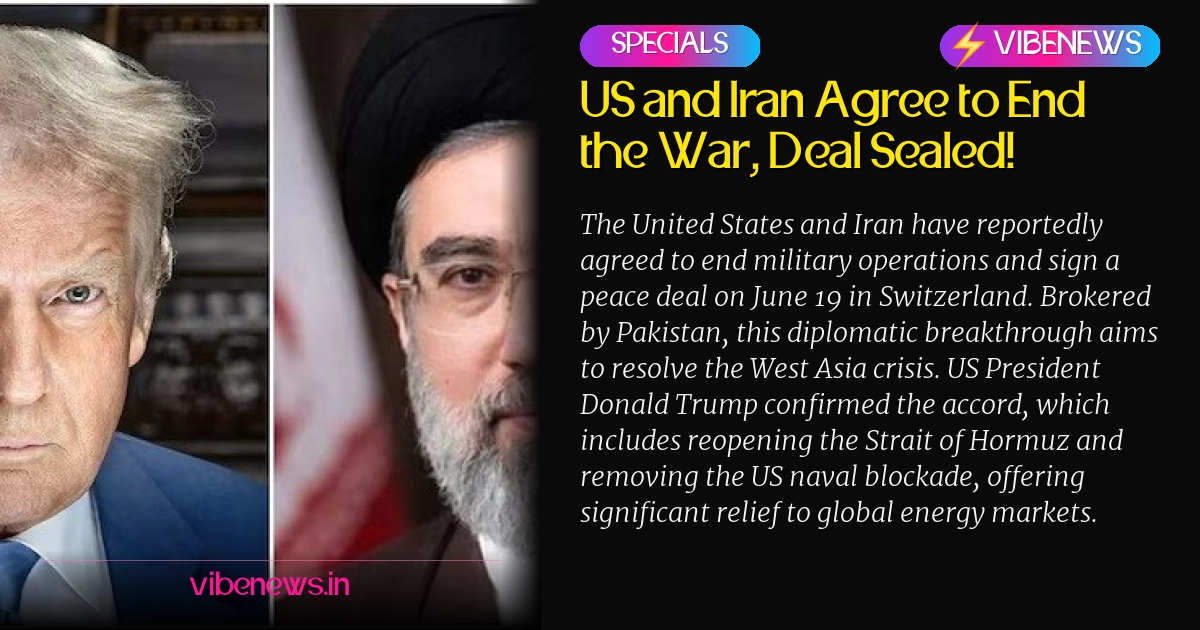
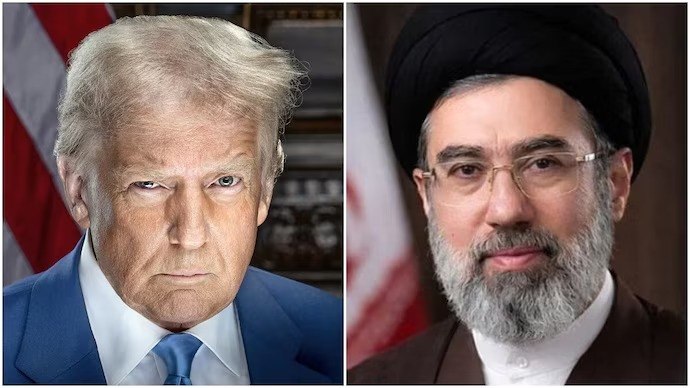
The United States and Iran have reportedly reached a landmark agreement to cease all military operations, signaling a significant diplomatic breakthrough aimed at resolving the protracted West Asia crisis. This development, confirmed by US President Donald Trump through a social media post, promises to restore normalcy to a region plagued by months of conflict. The peace deal is slated for formal signing in Switzerland on June 19.
Intense diplomatic negotiations, skillfully brokered by Pakistan under the leadership of Prime Minister Shehbaz Sharif, paved the way for this accord. Both nations have committed to halting all war activities across various fronts, including in Lebanon, where tensions have frequently flared. This mutual commitment marks the first comprehensive peace agreement since the conflict erupted in February of this year, following numerous failed attempts at de-escalation.
A crucial component of the agreement involves immediate measures concerning maritime activity in the vital Gulf region. President Trump announced the full reopening of the Strait of Hormuz to commercial shipping, a critical artery for global oil supplies. He also ordered the prompt removal of the US naval blockade, which had significantly disrupted international trade and contributed to regional instability. The Strait of Hormuz, a narrow waterway connecting the Persian Gulf to the open ocean, is globally recognized as a strategic choke point for oil transit, with a substantial portion of the world's petroleum passing through it daily. Its closure or restriction has profound implications for global energy markets and international commerce.
The path to this agreement was fraught with challenges. Days prior to the announcement, regional tensions had escalated sharply, fueled by repeated violations of ceasefire agreements by both sides. These breaches had raised fears of the conflict spiraling into a full-blown war, intensifying calls for international intervention and a lasting resolution. The four-month-long conflict has already exerted considerable pressure on global markets, leading to persistent surges in oil and natural gas prices. Any further escalation would have undoubtedly exacerbated these economic strains, impacting economies worldwide.
For months, the international community watched anxiously as diplomatic efforts struggled to yield concrete results. While several rounds of talks occurred, they consistently failed to produce a proper deal, often leading to renewed military activity across the Middle East. This new agreement, therefore, represents a pivotal moment, offering a glimmer of hope for a more stable future in the region. The involvement of Pakistan as a mediator highlights the growing role of regional powers in facilitating complex international negotiations.
The global implications of this peace deal are substantial. Beyond the immediate cessation of hostilities, the reopening of the Strait of Hormuz and the removal of the naval blockade are expected to stabilize energy markets. This could lead to a moderation in oil and natural gas prices, providing much-needed relief to consumers and industries globally. The economic ripple effects of the conflict have been far-reaching, affecting supply chains and inflation rates in numerous countries.
All eyes now turn to June 19 in Switzerland, where the formal signing ceremony is anticipated. The success of this agreement hinges on the complete and faithful implementation of the commitments made during these intensive diplomatic negotiations. Should both the United States and Iran uphold their pledges, this deal has the potential to bring a permanent end to a conflict that has destabilized a critical part of the world and impacted global economic stability. The international community will closely monitor the proceedings, hopeful that this breakthrough marks the beginning of a new chapter of peace and cooperation.
TL;DR
- The United States and Iran have agreed to cease all military operations and sign a peace deal.
- The agreement, confirmed by US President Donald Trump, aims to resolve the ongoing West Asia crisis.
- Pakistan, under Prime Minister Shehbaz Sharif, brokered the intense diplomatic negotiations.
- The formal peace deal is scheduled to be signed in Switzerland on June 19.
- Key provisions include the full reopening of the Strait of Hormuz to commercial shipping and the removal of the US naval blockade.
- This marks the first comprehensive peace agreement since the conflict began in February, following months of heightened tensions.
- The deal is expected to bring significant relief to global markets, which have seen surging oil and natural gas prices due to the conflict.
- The international community now awaits the official signing and full implementation of the commitments for a lasting peace.