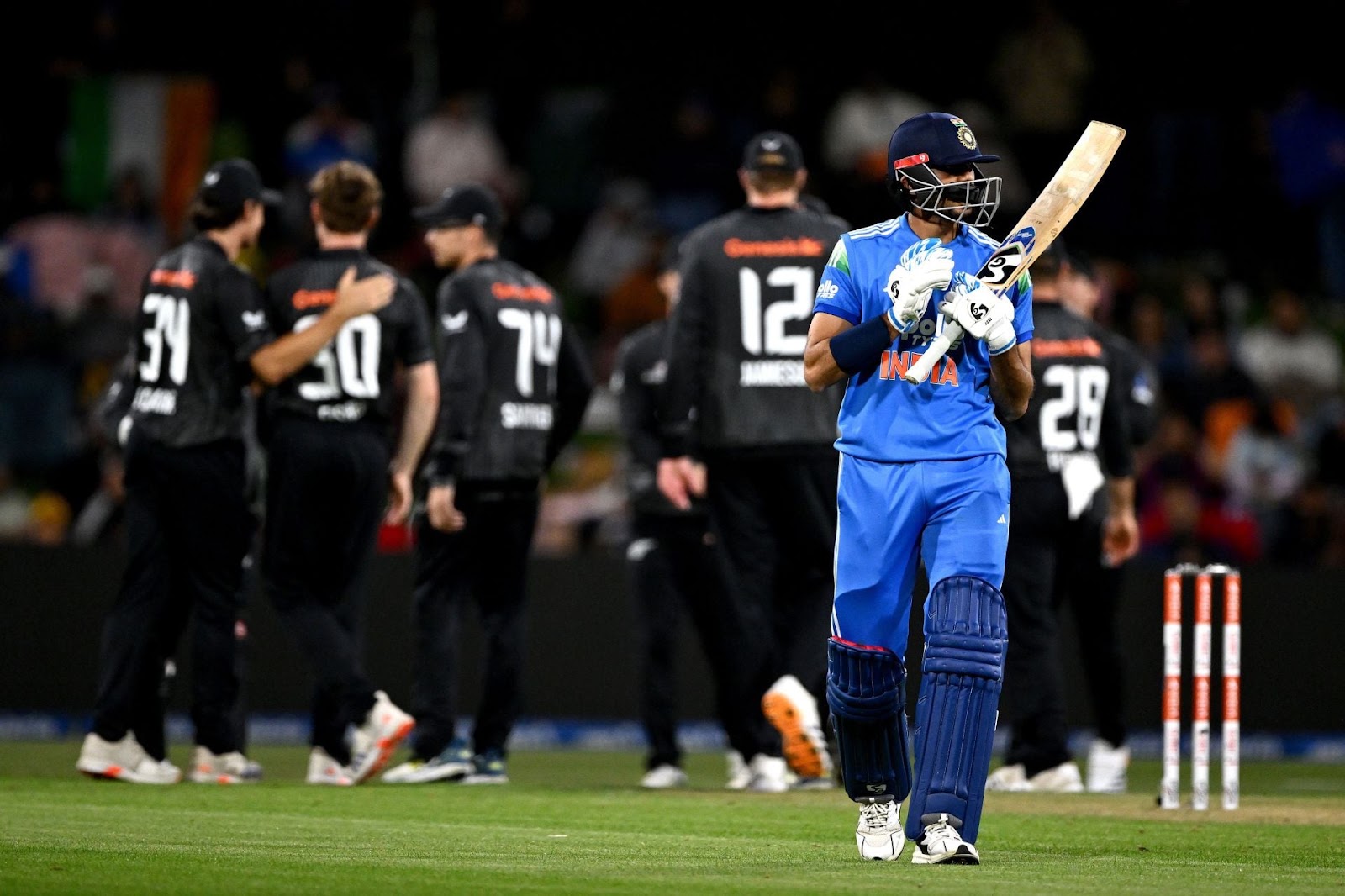
India were bowled out for 89 in a chase of 334 against New Zealand in the fourth ODI, a 244-run defeat at the Bay Oval in Mount Maunganui on Friday, November 13. The batters were gone in 26.4 overs, and the contest was effectively settled before the innings had reached its midpoint.
Matt Henry did much of the damage early. He claimed three wickets in the first over, and the collapse never really slowed down after that. Former opener Aakash Chopra, speaking in a discussion about the match, did not hide his frustration with the batting effort.
Henry’s opening spell set the tone
Henry removed Rohit Sharma, who was caught at slip for a golden duck after the ball moved away from him. Virat Kohli was dismissed for 0 by a nip-backer, and Shreyas Iyer was trapped lbw for 0 by a delivery that came back in. Three of India’s most experienced top-order batters were out without scoring.
The bowler was returning from injury. Henry’s first international appearance since the second T20I in Christchurch on October 24 came in this ODI. He had been ruled out of the T20I series midway through because of an injury. The 34-year-old did not look rusty on his comeback, and that was the problem for India.
Gambhir’s stance and Chopra’s response
Head coach Gautam Gambhir said after the match that there are no unplayable deliveries in international cricket. Chopra backs that view. He accepted that India’s batters faced tough conditions, but he was clear that the visitors should have produced a much better display.
He did not dismiss the bowling. He called it great bowling. But he wanted the Indian batters to understand that great bowling is not an excuse for a total collapse. The sharpest line of the discussion came when he spoke about the mindset required in those moments.
"You can’t completely surrender. You will have to find a way."
Chopra also offered a partial explanation for how things unravelled. He said India had played quite a few matches on the tour and should have been better prepared for the challenge. The speed of the wickets, he argued, left the batters no time to recover, regroup or reassess and play differently. That explanation is fair, but it does not fully answer the scale of the defeat.
Why Henry is so hard to play in ODIs
Chopra was specific about why Henry becomes a problem in the 50-over format. He said Henry did not look as menacing in the T20Is. The picture changes once the format gets longer. With two new balls and some help in the surface, Henry becomes very difficult to negotiate early on, when the ball is new.
The real trouble, Chopra said, is that there is very little to read from Henry’s hand. The ball does not show much before it pitches, and it is hard to tell which way it will move after landing. For a batter facing the opening overs, that uncertainty is what makes the spell so dangerous.
That is the context in which India’s top order was tested and found wanting. The conditions were difficult, and the bowling was good. Chopra’s argument is that the batters still had to fight, and in this match they did not do enough of it.
The fifth ODI is next
The series moves on quickly. The fifth ODI of the India-New Zealand series will be played at Mount Maunganui on Sunday, November 15. The question for India is no longer only about the scale of the defeat in the fourth match. It is whether the batting line-up can show the resistance that Chopra and Gambhir both said was needed.
TL;DR
- India were bowled out for 89 chasing 334, losing the fourth ODI to New Zealand by 244 runs at Mount Maunganui.
- Matt Henry took three wickets in his first over, dismissing Rohit Sharma, Virat Kohli and Shreyas Iyer for ducks.
- Gautam Gambhir said there are no unplayable deliveries in cricket; Aakash Chopra agreed India should have fought harder.
- Chopra said: ‘You can’t completely surrender. You will have to find a way.’
- Henry was returning from injury, his first international since October 24, and did not look rusty.
- The fifth ODI is scheduled at Mount Maunganui on Sunday, November 15.