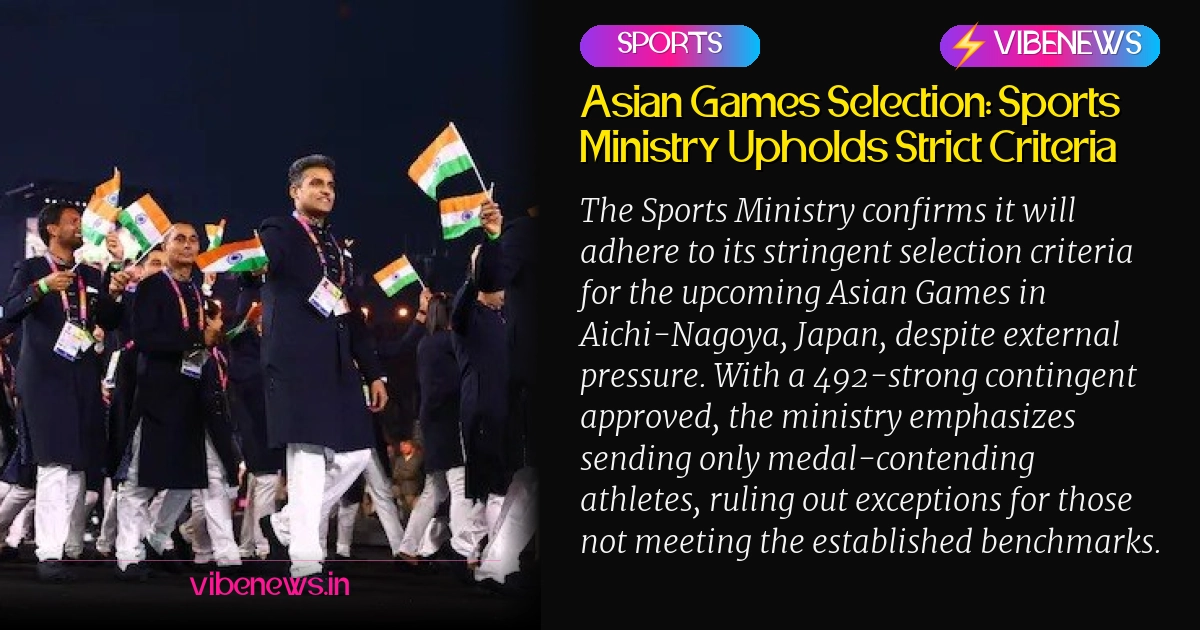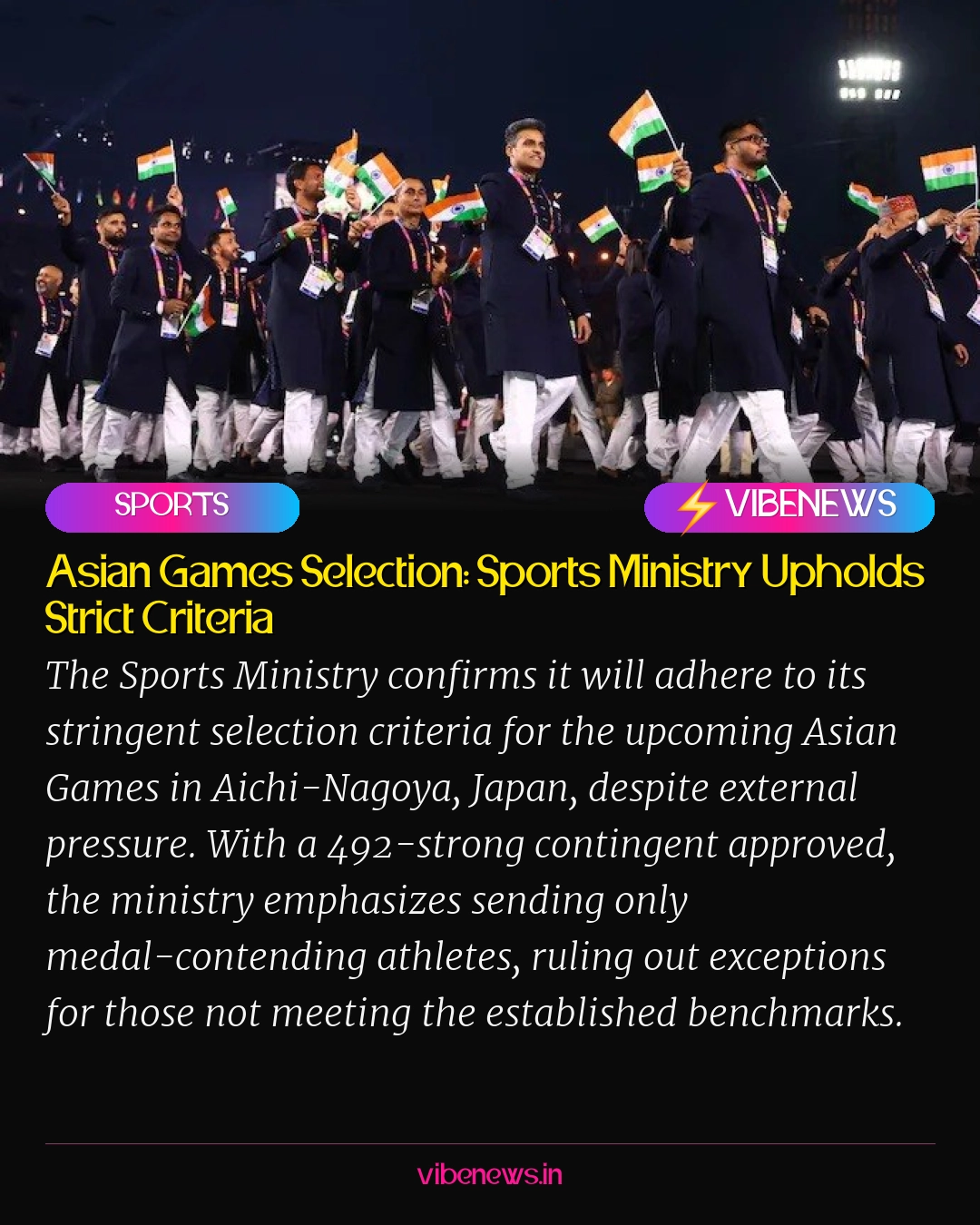
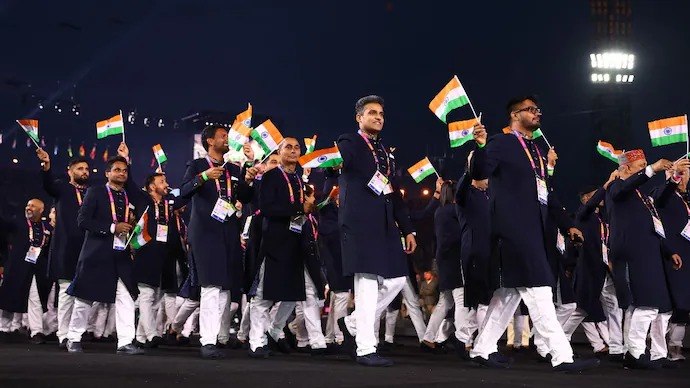
The Indian Sports Ministry has firmly committed to its stringent selection criteria for athletes participating in the upcoming Asian Games, scheduled for Aichi-Nagoya, Japan, from September 19 to October 4. This resolute stance persists despite considerable pressure from various stakeholders, including parents and sports federations, advocating for the inclusion of athletes who do not meet the established benchmarks.
A 492-strong contingent has already received approval, with athletics comprising the largest segment at 73 names. While minor additions might occur pending Olympic Council of Asia approval, the ministry has made it clear that such inclusions will not compromise the integrity of the selection process, first unveiled in September 2025.
A New Era for Sports Selection
The ministry’s approach signifies a decisive shift from participation-centric contingents to performance-driven ones. Sports Minister Mansukh Mandaviya previously emphasized that multi-sport events like the Asian Games are not mere exposure trips. The focus is now squarely on sending only those with a "realistic chance of winning a medal" to represent the nation.
This stringent criterion mandates athletes must rank among the top six in Asia in their respective disciplines for eligibility. The process includes rigorous, videographed selection trials overseen by independent observers, ensuring transparency. This policy aims to maximize India’s medal prospects, a goal often diluted by larger, less competitive contingents in the past.
Historical Challenges and Legal Precedents
Finalizing India’s contingent for major multi-sport events has historically been challenging, often leading to public disputes and legal interventions. Athletes omitted from squads have frequently resorted to legal avenues to challenge their non-inclusion, highlighting the intense competition and high stakes involved.
Equestrian Anush Agarwalla’s high-profile case, where he contested non-selection in the Delhi High Court, was ultimately dismissed by the Supreme Court. This reinforced the judiciary’s deference to established selection protocols when properly applied. Such instances underscore the deep professional and emotional investment athletes have in representing their country.
The Tennis Team Controversy
The ministry’s unwavering adherence to its criteria recently sparked a fresh controversy concerning the Indian tennis contingent. The All India Tennis Association (AITA) initially picked a squad, but five names were subsequently omitted by the ministry. This decision leaves Sumit Nagal as the sole men’s singles player, while several recommended women players, including India’s number one Sahaja Yamalapalli, were excluded.
The AITA has strongly criticized the ministry’s decision, arguing it undermines the sport’s representation and potential medal chances. Veteran player Rohan Bopanna also publicly voiced disapproval, suggesting such cuts could harm Indian tennis morale. The ministry, however, maintains the criteria were announced well in advance, allowing athletes ample time to meet standards.
Wider Implications for Indian Sports
This policy’s impact extends beyond individual athletes and specific sports. The Indian football team, for example, was an early casualty, ruled out of the Asiad due to its continental rankings falling outside the top six. This decision, while controversial, signals the ministry’s resolve to apply criteria uniformly.
This strategic shift is expected to foster a more competitive environment within Indian sports, pushing federations and athletes towards higher international rankings. It also implies a more focused resource allocation, directing support towards disciplines and athletes with genuine medal potential, rather than spreading it thinly.
Editorial Context
The Sports Ministry’s firm commitment to rigorous selection criteria for the Asian Games marks a significant turning point in India’s approach to international multi-sport events. This policy, while causing immediate friction and controversy, reflects a long-term vision to elevate India’s global sporting standing.
Historically, India often sent large contingents, sometimes prioritizing participation over genuine medal prospects. This new directive signals a pragmatic shift towards quality over quantity. A leaner, more competitive team is expected to yield a higher medal tally and instill a culture of excellence and accountability within the national sports ecosystem.
However, balancing this pursuit of excellence with nurturing emerging talent and providing exposure remains a challenge. While the current policy prioritizes immediate medal potential, parallel development programs are crucial for a robust pipeline of future champions. The policy’s ultimate success will be measured not just by medal counts in Aichi-Nagoya, but by its sustained impact on India’s sporting prowess and equitable athletic development over decades.
TL;DR
- The Sports Ministry maintains strict selection criteria for the Asian Games 2026 in Aichi-Nagoya, Japan.
- India’s contingent of 492 athletes has been approved, with athletics forming the largest group.
- Selection criteria demand athletes be ranked among the "top six in Asia" and possess a "realistic chance of winning a medal."
- Recent controversies include the omission of five players from the Indian tennis squad, drawing criticism from AITA and Rohan Bopanna.
- The policy aims to send a "lean but effective contingent," explicitly stating that the Games are not for exposure trips.
- Past legal challenges to non-selection, such as equestrian Anush Agarwalla’s case, have been dismissed by the Supreme Court.