Babar Azam’s Ranking Plunge
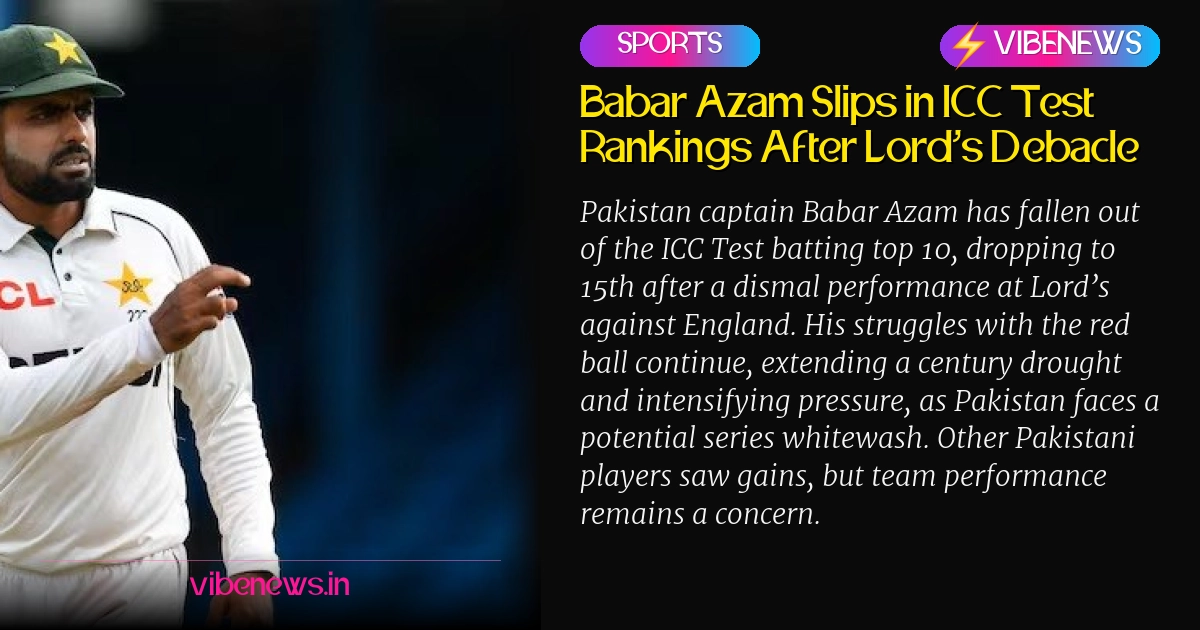
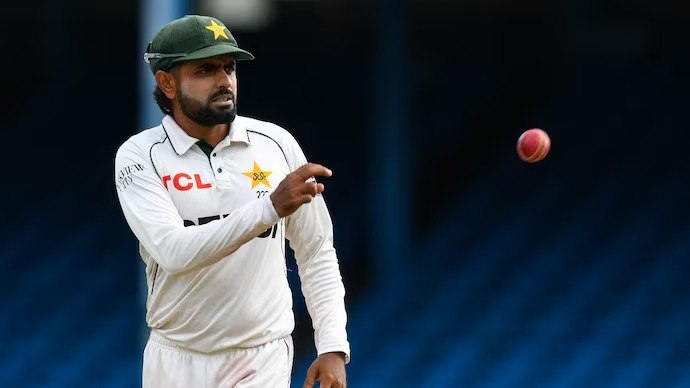
Pakistan’s captain, Babar Azam, has experienced a significant setback in his Test career, slipping out of the International Cricket Council’s top 10 Test batting rankings. This latest drop follows a disappointing performance at Lord’s against England, where his contributions with the bat were minimal.
The 31-year-old batter now finds himself at 15th position, a fall of five places. His scores of 14 runs across two innings in the recent Test match proved costly, undoing the progress he had made just weeks prior.
A Brief Resurgence Interrupted
Babar Azam had only recently re-entered the elite top 10 bracket in August, marking his first return since September 2024. This resurgence was fueled by strong performances against the West Indies, where he scored 88 and an unbeaten 24, propelling him five places up the rankings.
However, this period of renewed form has proven to be short-lived. The struggles at Lord’s have once again cast a shadow over his red-ball credentials, raising questions about his consistency at the highest level of Test cricket.
Pakistan’s Series Woes in England
Babar Azam’s individual struggles mirror the broader challenges faced by the Pakistan team in their ongoing Test series against England. The visitors have suffered two heavy defeats, first an innings loss and then a 194-run defeat at Lord’s, leaving them 2-0 down in the three-match series.
At Lord’s, Pakistan’s batting lineup faltered significantly, being bowled out for a mere 110 in their first innings. They managed only 194 in the second, failing to chase England’s target of 389, highlighting a collective batting collapse.
Individual Bright Spots Amidst Team Gloom
Despite the team’s overall performance and Babar Azam’s slide, some Pakistani players saw their rankings improve. Fast bowler Mohammad Abbas was a notable beneficiary, climbing 10 places to joint-15th in the Test bowling rankings after an impressive nine-wicket haul in the match.
Mohammad Ali also made significant strides, moving up 11 spots to 81st after securing five wickets. Among the batters, Saud Shakeel enjoyed a substantial jump, rising 15 places to 18th, making him Pakistan’s second-highest-ranked Test batter, thanks to his determined knock of 97 in the second innings.
The Weight of Captaincy and Batting Form
Babar Azam’s prolonged drought without a Test century has now stretched to 36 innings, with his last triple-figure score dating back to December 2022. This extended period without a significant red-ball score, coupled with the pressures of captaincy, has intensified scrutiny over his leadership and batting form.
The role of a captain in Pakistan cricket often comes with immense public and media expectation, and Babar’s current form is undoubtedly adding to that burden. His ability to convert starts into big scores, a hallmark of top Test batters, has been conspicuously absent in recent times, impacting both his personal statistics and the team’s fortunes.
Looking Ahead to Edgbaston
With the series already lost, Pakistan now heads to Birmingham for the third and final Test, commencing on September 9. The match at Edgbaston presents an opportunity for the team to salvage some pride and avoid a humiliating series whitewash.
For Babar Azam, this Test will be crucial not just for the team’s morale but also for his own confidence and standing. A strong performance could help alleviate some of the pressure, while continued struggles might lead to further questions about his long-term role as Test captain and premier batter.
Editorial Context
The fluctuating fortunes of Babar Azam in the ICC Test rankings are more than just a statistical anomaly; they reflect a deeper narrative within Pakistan cricket. As the team’s undisputed star and captain across formats, his form is intrinsically linked to the national side’s performance and public perception. A prolonged dip in his Test batting, especially when juxtaposed with his white-ball prowess, raises critical questions about player management, workload, and the specific demands of the longest format.
This development matters over the long term because it impacts the stability of Pakistan’s leadership and batting core. If Babar’s Test form continues to waver, it could trigger debates about captaincy succession and the need for other batters to step up consistently. Furthermore, it highlights the challenge for modern cricketers to excel across all formats, especially for those burdened with captaincy. The team’s ability to bounce back from a potential whitewash and the individual resilience of its key players, particularly Babar, will be a significant indicator of their future trajectory in Test cricket.
TL;DR
- Babar Azam has dropped five places to 15th in the ICC Test batting rankings after a poor performance at Lord’s.
- He scored only 14 runs across two innings against England, contributing to Pakistan’s 194-run defeat.
- This slide follows a brief return to the top 10 in August, after nearly two years outside the elite bracket.
- Babar’s Test century drought has now extended to 36 innings, with his last century recorded in December 2022.
- Pakistan is currently 2-0 down in the three-Test series against England, facing a potential whitewash.
- Mohammad Abbas, Mohammad Ali, and Saud Shakeel saw significant upward movement in their respective ICC rankings.