India’s Unyielding Grip in Colombo
The second Test in Colombo saw India maintain its commanding position against Sri Lanka, despite a spirited batting display from the hosts on a rain-interrupted Day 3. Sri Lanka, starting the day at a precarious 8 for 2, managed to reach 265 for 8 before inclement weather forced an early close of play. They still trail India’s formidable first-innings total of 503 for 9 declared by a significant 238 runs, underscoring the visitors’ firm control over the match.
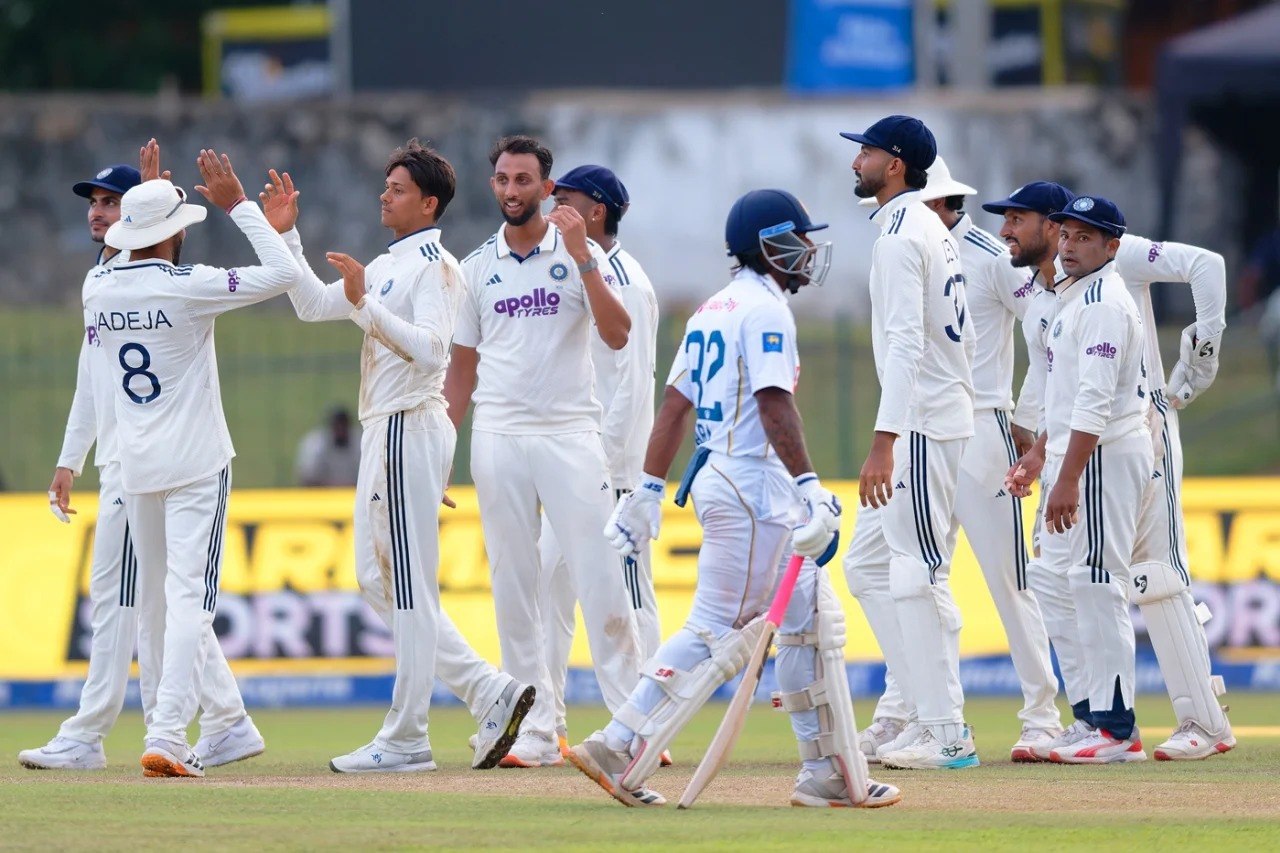
India’s bowlers, particularly the pace of Prasidh Krishna and the guile of Ravindra Jadeja, ensured that while Sri Lanka found moments of respite, they were never truly allowed to build a match-altering platform. The day was characterized by India’s strategic patience, consistently breaking partnerships just as they threatened to blossom into something substantial.
Sri Lanka’s Early Resistance
The morning session began with India hoping for a quick collapse, and Prasidh Krishna delivered an early blow. He dismissed opener Kamil Mishara for 19, finding extra bounce that led to a simple catch for wicketkeeper Dhruv Jurel. This early wicket could have triggered a familiar Sri Lankan batting collapse, but Pasindu Sooriyabandara and Kamindu Mendis had other plans.
The pair stitched together a crucial 87-run partnership, frustrating the Indian attack for nearly two hours. Sooriyabandara, playing only his second Test, displayed remarkable composure, bringing up his maiden Test fifty from 76 balls. Mendis, while more aggressive, also contributed significantly, including a six off Manav Suthar, signaling Sri Lanka’s intent to not merely survive but to score.
India’s Persistent Pursuit
Just as the partnership began to look threatening, India found its breakthrough. Prasidh Krishna, returning to the attack, delivered a short ball that Mendis pulled straight to Ravindra Jadeja at mid-wicket, ending his innings at 42. This dismissal was a testament to India’s strategy of maintaining pressure and waiting for the opportune moment.
The visitors continued to chip away. Manav Suthar, the left-arm spinner, found the edge of Dhananjaya de Silva’s bat, with KL Rahul holding on at first slip. Sri Lanka went to lunch at 130 for 4, still facing an uphill battle but having shown a commendable fight in the morning session.
The Middle Order’s Stand
Following a rain delay that pushed back the start of the second session, India resumed its relentless pursuit. Pasindu Sooriyabandara’s valiant innings of 80 came to an end when Ravindra Jadeja bowled one close to his body, disturbing his stumps. Two runs later, Mohammad Siraj removed Niroshan Dickwella, further denting Sri Lanka’s hopes of a significant recovery.
However, Sonal Dinusha then took up the mantle of resistance. He batted with impressive patience, reaching his fifty from 84 balls and finding useful support from Keshara Nuwantha. Their 57-run stand provided another moment of defiance for Sri Lanka, preventing a rapid collapse of the lower order. Suthar eventually broke this partnership, removing Nuwantha for 13.
Dinusha remained unbeaten on 85 when rain once again intervened, bringing an early end to the day’s play. His innings, much like Sooriyabandara’s earlier effort, was crucial in preventing a much heavier defeat on the day, giving some shape to Sri Lanka’s innings despite the overwhelming deficit.
Editorial Context
This Test match, and particularly Day 3, offers a microcosm of the current dynamics in subcontinent cricket. India’s sustained dominance, built on a deep pool of talent across batting and bowling, continues to be a formidable challenge for any team. Their ability to maintain pressure, even when partnerships develop, speaks volumes about their strategic planning and execution.
For Sri Lanka, the performances of young batters like Pasindu Sooriyabandara and Sonal Dinusha are significant. While they couldn’t alter the match’s trajectory, their resilience against a top-tier bowling attack provides valuable experience and a glimmer of hope for the future. These individual battles against adversity are crucial for the development of a rebuilding side, offering insights into player temperament and technique under pressure.
The match also highlights the importance of patience in Test cricket, a quality India demonstrated effectively. They didn’t panic when wickets weren’t falling in clusters but trusted their process to eventually break through. This approach is a hallmark of successful Test teams and underscores why India remains a powerhouse in the format, especially in conditions that often favor spin and disciplined pace.
Looking ahead, the outcome of this Test will further solidify India’s position in the global Test rankings and provide valuable data points for player selections. For Sri Lanka, it’s about identifying the core of players who can consistently perform and build a competitive unit for future challenges, learning from every moment of resistance and every strategic misstep.
TL;DR
- India leads Sri Lanka by 238 runs with only two wickets remaining for the hosts after Day 3.
- Prasidh Krishna secured crucial early wickets, including Kamil Mishara and Kamindu Mendis, maintaining India’s pressure.
- Pasindu Sooriyabandara (80) and Sonal Dinusha (85*) anchored Sri Lanka’s innings with resilient half-centuries.
- India’s bowlers, including Ravindra Jadeja and Manav Suthar, consistently broke partnerships, preventing any significant Sri Lankan recovery.
- Rain brought an early end to Day 3, delaying India’s final push for victory in the Colombo Test.