India Secures Opening Victory Amidst Batting Wobble
The Indian women’s cricket team commenced their Women’s Asia Cup campaign with a 94-run victory over Thailand at the Dubai International Cricket Stadium. While the margin of victory was substantial, the match highlighted a concerning batting collapse for India, tempering an otherwise dominant performance.
Asked to bat first, India posted a total of 159/9, a score that initially seemed within reach for Thailand given India’s mid-innings struggles. However, a clinical bowling display ensured Thailand was bowled out for a mere 65 runs in 16.1 overs, securing a comfortable win for the Indian side.
The Initial Onslaught
India’s innings began with aggressive intent, particularly during the powerplay. Smriti Mandhana provided an early impetus, scoring 19 runs off just 10 balls, including four boundaries, before being run out. Debutant Pratika Rawal also contributed positively with 22 runs off 18 deliveries, maintaining the scoring rate.
The cornerstone of India’s strong start was Shafali Verma, who unleashed a fearless attack on the Thai bowlers. She reached her 19th T20I half-century in just 26 balls, propelling India to 101/2 after 10 overs and setting the stage for a formidable total exceeding 180 runs.
Thailand’s Spirited Fightback and India’s Collapse
Despite India’s commanding position, Thailand mounted a spirited comeback. The dismissal of Rawal in the ninth over provided the initial breakthrough, which was quickly followed by the crucial wicket of Shafali Verma, caught and bowled by Suleeporn Laomi for a superb 64 off 36 balls. Laomi emerged as the chief architect of Thailand’s resurgence, finishing with impressive figures of 3/26, including the golden duck dismissal of Richa Ghosh.
This sudden shift in momentum triggered a significant collapse in India’s middle order. The team slumped from 112/4 to 137/9, losing five wickets for just 25 runs. Captain Harmanpreet Kaur struggled to find rhythm, and Deepti Sharma was run out, exposing vulnerabilities in India’s batting depth.
A crucial late flourish from Kranti Gaud, who smashed an unbeaten 15 off eight balls, including a six and a four, helped India reach a more respectable total of 159/9. While this total was below what seemed possible earlier, it proved to be more than sufficient against the Thai batting lineup.
A Clinical Bowling Performance
In response, Thailand needed a strong start to challenge India’s total, but the Indian bowlers quickly asserted their dominance. Kranti Gaud initiated the breakthroughs, removing Natthakan Chantham early. Nandani Sharma and Shree Charani then systematically chipped away at the Thai batting order, with Nandani claiming 3/18 and Charani returning 2/10.
Prema Rawat maintained tight control, conceding only 11 runs from her four overs, further stifling Thailand’s chase. The pressure was relentless, and the Thai batters found it difficult to build partnerships or accelerate the scoring.
Deepti Sharma’s Record-Breaking Milestone
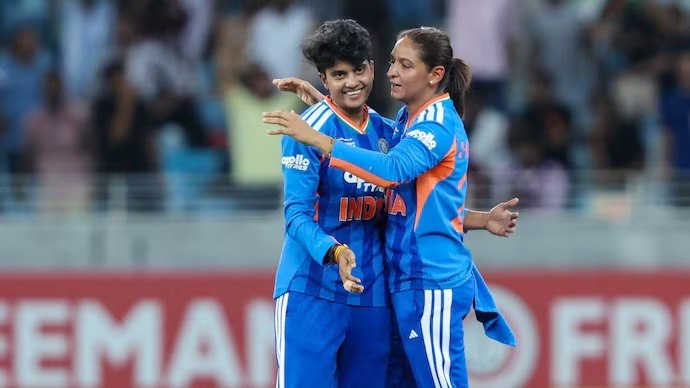
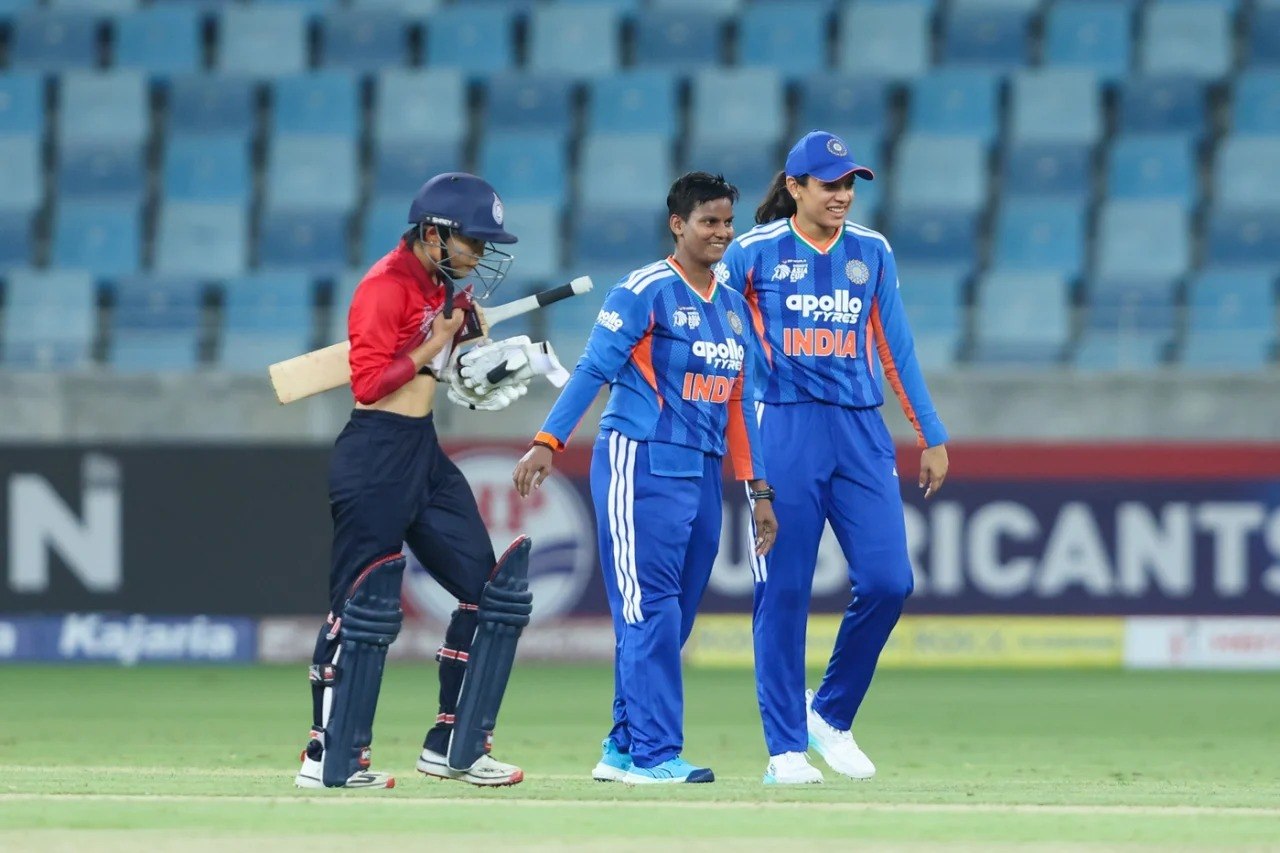
The standout bowling performance came from Deepti Sharma, who marked her 150th T20I appearance with a remarkable spell of 3/0 in just 1.1 overs. She struck with her very first delivery, claimed two wickets in her opening three balls, and returned to take the final wicket of Nannapat Koncharoenkai.
This final dismissal carried immense significance, as it propelled Deepti Sharma past Thailand captain Thipatcha Putthawong to become the all-time leading wicket-taker in Women’s T20 Internationals. It was a historic moment, underscoring her consistent excellence in the format.
Nannapat Koncharoenkai was the lone resistance for Thailand, fighting valiantly for 41 runs off 48 balls. However, with wickets falling rapidly around her, her efforts were insufficient to keep Thailand in the contest, and they were eventually bowled out for 65.
Looking Ahead for the Indian Squad
While India’s bowling performance was clinical, their fielding showed some lapses, with two catches dropped. These errors did not prove costly against Thailand but highlight an area for improvement as the team progresses in the tournament. The victory places India at the top of Group A, but tougher challenges lie ahead, including matches against Hong Kong and a highly anticipated clash with arch-rivals Pakistan.
Captain Harmanpreet Kaur and the team management will undoubtedly be reviewing the batting collapse and fielding inconsistencies, aiming to sharpen these aspects before facing stronger opposition. The Asia Cup serves as a crucial platform for India to fine-tune their strategies and combinations ahead of future international commitments.
Editorial Context
This opening victory for India in the Women’s Asia Cup, despite its comfortable margin, offers valuable insights into the team’s current state and the broader landscape of women’s cricket. India, a powerhouse in the sport, is expected to dominate regional tournaments, and their initial batting struggles against an emerging team like Thailand underscore the need for consistent performance across all departments, even against lower-ranked opponents.
The tournament itself is vital for the development of women’s cricket in Asia, providing exposure and competitive experience for teams like Thailand, who are steadily improving their game. Thailand’s spirited fightback with the ball, particularly through Suleeporn Laomi, demonstrates the growing depth and skill in these developing cricketing nations, pushing established teams to maintain high standards.
Deepti Sharma’s record-breaking achievement is a significant milestone, not just for her personally but for Indian women’s cricket. It highlights the individual brilliance within the squad and reinforces India’s position as a leading force in the global game. However, the batting collapse serves as a strategic warning, indicating that reliance on individual brilliance might not always suffice against top-tier teams. The long-term success of the Indian team hinges on addressing these vulnerabilities, ensuring a robust middle order and consistent fielding, which will be crucial for their aspirations in major ICC tournaments.
TL;DR
- India defeated Thailand by 94 runs in their opening Women’s Asia Cup Group A match.
- Shafali Verma scored a rapid 64 off 36 balls, including eight fours and three sixes.
- India experienced a significant batting collapse, losing seven wickets for 36 runs, slumping from 112/4 to 137/9.
- Deepti Sharma took 3/0 in 1.1 overs, becoming the all-time leading wicket-taker in Women’s T20Is on her 150th appearance.
- Thailand was bowled out for 65 in 16.1 overs, with Nannapat Koncharoenkai top-scoring with 41.
- Concerns remain over India’s middle-order batting stability and fielding ahead of tougher matches.