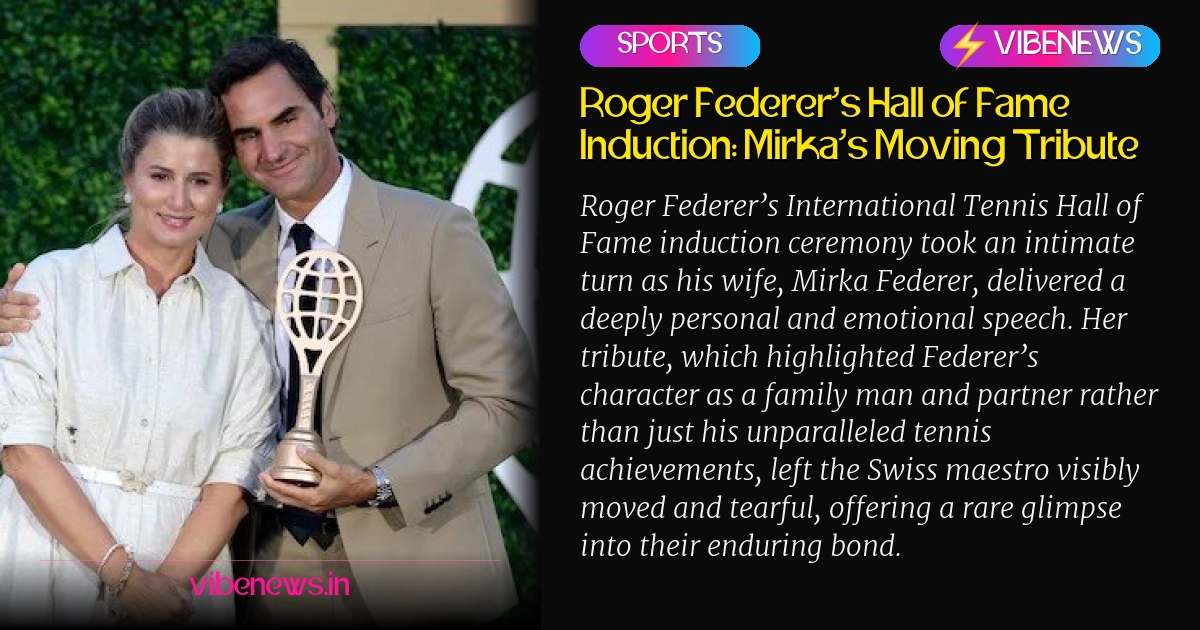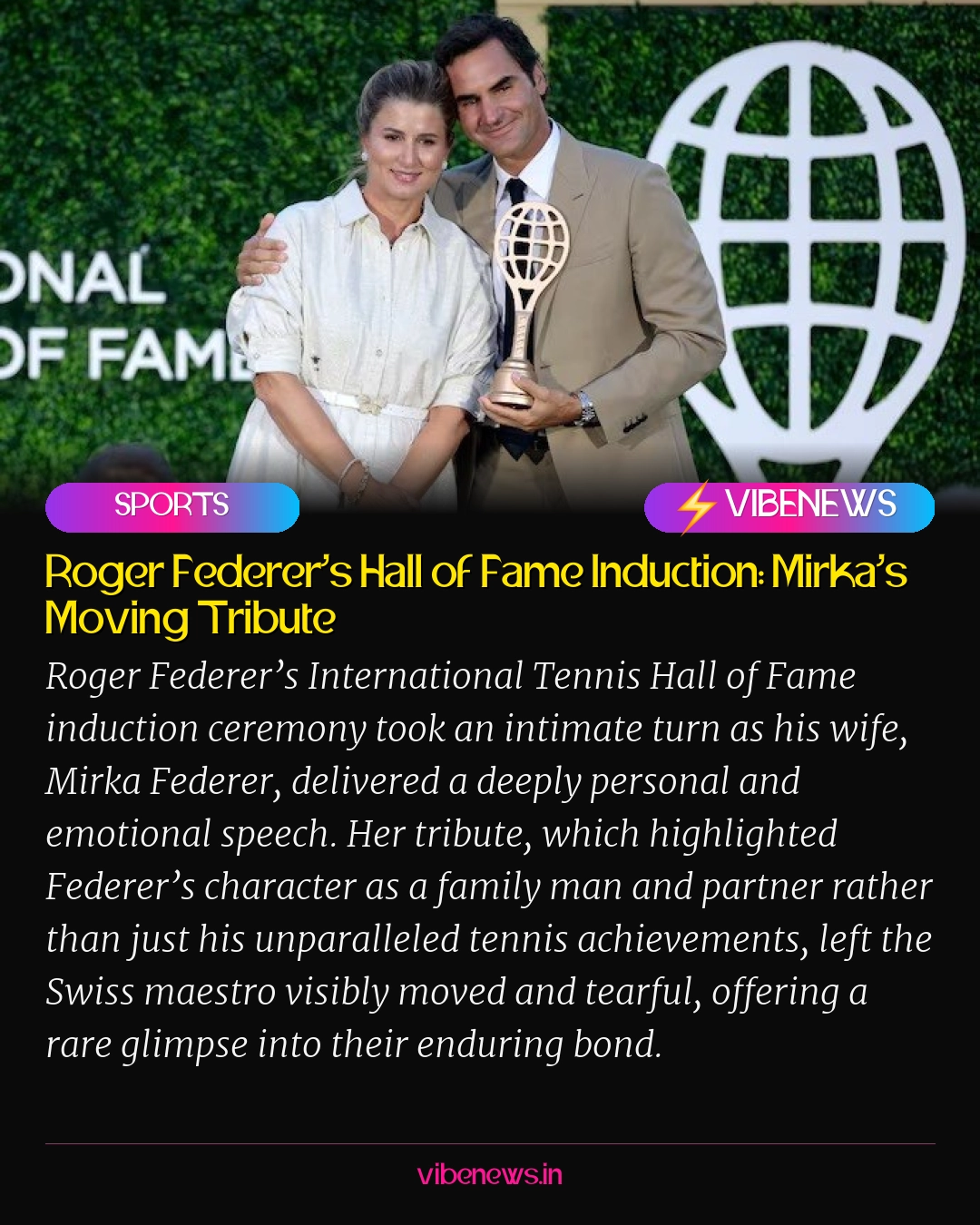
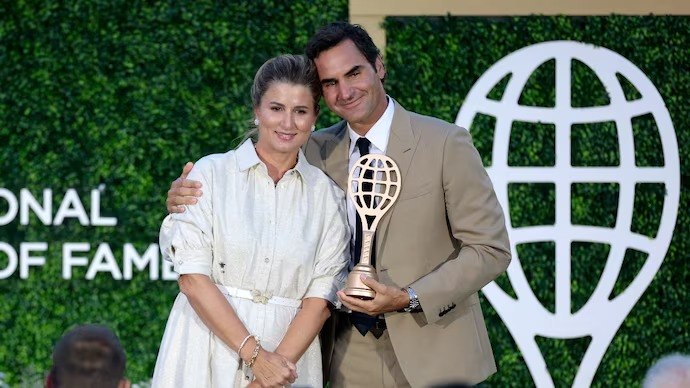
The International Tennis Hall of Fame in Newport, Rhode Island, recently witnessed an induction ceremony that transcended the usual celebration of athletic prowess. While the evening was dedicated to honoring Roger Federer, one of tennis’s most iconic figures, it was his wife, Mirka Federer, who unexpectedly steered the narrative towards a deeply personal and profoundly moving tribute, leaving the usually composed Swiss maestro visibly emotional.
Mirka, who introduced her husband, delivered a speech that deliberately sidestepped the litany of his unparalleled achievements – the 20 Grand Slam titles, the 103 ATP titles, or his record weeks at world No. 1. Instead, she painted a vivid portrait of the man behind the legend, focusing on his character, his values, and their shared journey from the nascent stages of his career.
A Partnership Forged in Early Ambition
Her address began by recalling their initial encounter at the Sydney Olympics in 2000. Mirka, then 21, humorously noted her age advantage over the 18-year-old Federer, quipping, "Yes, I was the older woman. Apparently, Roger decided right away that age was just a number. He pursued me anyway and thankfully, he was persistent." This anecdote immediately set a tone of warmth and intimacy, a stark contrast to the grandeur of a Hall of Fame induction.
She further emphasized the humble beginnings of their relationship, highlighting that when they met, Federer had "exactly zero ATP titles." Mirka then reflected on her presence through "all 103 that followed," underscoring her unwavering support and integral role in his ascent. A former professional player herself, Mirka’s understanding of the sport was profound, often extending to helping Federer warm up before matches, a detail she humorously recalled through Andy Roddick’s post-match quip about losing to a player whose girlfriend warmed him up.
The Man Beyond the Medals
The core of Mirka’s speech, however, delved into Federer’s qualities as a person. She spoke of his innate desire to keep loved ones close, a trait she admired deeply. This commitment extended beyond the court, shaping his decisions and priorities throughout his illustrious career. She acknowledged the immense work, discipline, and commitment that went into making his game appear effortless, yet insisted that the man behind the illusion was "even more remarkable."
A particularly poignant moment came when Mirka recounted the discovery of their first set of twins. Concerned about the logistical challenges of touring with two infants, she expressed her belief that her travelling days were over. Federer’s immediate response – "Then I won’t play anymore" – revealed the depth of his commitment to family. This was not a dramatic statement, she clarified, but a genuine reflection of his priorities. They ultimately found a way, transforming the demanding tennis tour into a family home, complete with strollers, toys, and eventually, a second set of twins.
Their four children, Myla, Charlene, Leo, and Lenny, knew Federer not as the "Swiss Maestro" but simply as "Papa." Mirka painted a picture of a father who read bedtime stories, played games, ran baths, and made them laugh, always making time for them regardless of his match outcomes. This intimate portrayal offered a rare glimpse into the private life of a global icon, humanizing the legend.
A Legacy Beyond Trophies
Mirka also credited Federer’s parents, Robert and Lynette, for instilling in him the values of humility, gratitude, and kindness, and for teaching him to treat everyone with respect. For her, Federer’s greatest achievements were not the trophies and records, extraordinary as they were, but "who he is when nobody’s watching." This sentiment resonated deeply, suggesting a legacy far richer and more enduring than mere sporting statistics.
By the time Mirka concluded, Federer was visibly moved, struggling to compose himself. "Watching your career gave me one of the greatest privileges and joys of my life," she told him. "And sharing your life has been even a greater one." Her simple introduction – "My husband, my best friend, and now the newest member of the International Tennis Hall of Fame" – brought the audience to its feet.
Federer’s Emotional Response
When Federer finally took the stage, he was overwhelmed with emotion, joking that he needed "tissues and sunglasses." He echoed Mirka’s sentiments, calling her "my wife, which is greatest understatement I can make." He acknowledged her multifaceted role as coach, hitting partner, reality check, and stylist, humorously referencing Roddick’s earlier remark. Federer confessed that Mirka was the one who taught him to focus on tennis while finding joy in everything else, describing their partnership as one where "She and I grab each other’s hands, and we run through walls."
His own speech, while acknowledging his career, also focused on the sport itself, the people who shaped him – including childhood hero Stefan Edberg and longtime coach Severin Lüthi – and the friendships forged. He reiterated that "fame was never the goal," but rather a life spent doing what he loved with people who shared that passion. He spoke of his childhood as a ball boy, his gratitude to parents, coaches, rivals, and fans, and his ongoing "love letter to tennis."
Editorial Context
Roger Federer’s induction into the International Tennis Hall of Fame, particularly with Mirka’s deeply personal address, marks a significant moment in the narrative of sports legends. It underscores a growing appreciation for the human element behind extraordinary athletic careers. In an era often dominated by statistics and public image, this event served as a powerful reminder that the most enduring legacies are often built on character, personal relationships, and the values upheld away from the glare of the spotlight.
This intimate portrayal offers a valuable counter-narrative to the relentless pursuit of records, suggesting that true greatness encompasses not just professional triumphs but also the integrity and dedication shown in personal life. For future generations of athletes and fans, it highlights the profound impact of a supportive partnership and the importance of maintaining a strong sense of self and family amidst global fame. It reframes the definition of a champion, emphasizing that the ‘Swiss Maestro’ was not just a tennis player, but a devoted husband, father, and friend, whose personal journey is as compelling as his professional one.
TL;DR
- Mirka Federer’s speech at Roger Federer’s Hall of Fame induction was deeply personal, focusing on his character rather than his tennis achievements.
- She recounted their meeting at the Sydney Olympics in 2000 and his early career when he had zero ATP titles, highlighting her unwavering support.
- Mirka emphasized Federer’s dedication to family, including his willingness to quit tennis for their first set of twins, showcasing his priorities.
- Federer was visibly emotional and struggled to speak after Mirka’s heartfelt tribute, admitting she gave him a tough act to follow.
- Both Mirka and Roger emphasized that his greatest legacy lies in his personal values, relationships, and who he is off the court, not just his records.
- The event offered a rare, intimate look at the man behind the "Swiss Maestro" persona, humanizing the global icon.