India’s cricket captain, Shubman Gill, demonstrated remarkable composure and strategic acumen on Day 4 of the first Test against Sri Lanka in Galle. His decisive, last-second review of an LBW decision against Pasindu Sooriyabandara not only secured a crucial wicket but also ignited a wave of excitement among fans and commentators alike, underscoring the high-stakes drama inherent in Test cricket.
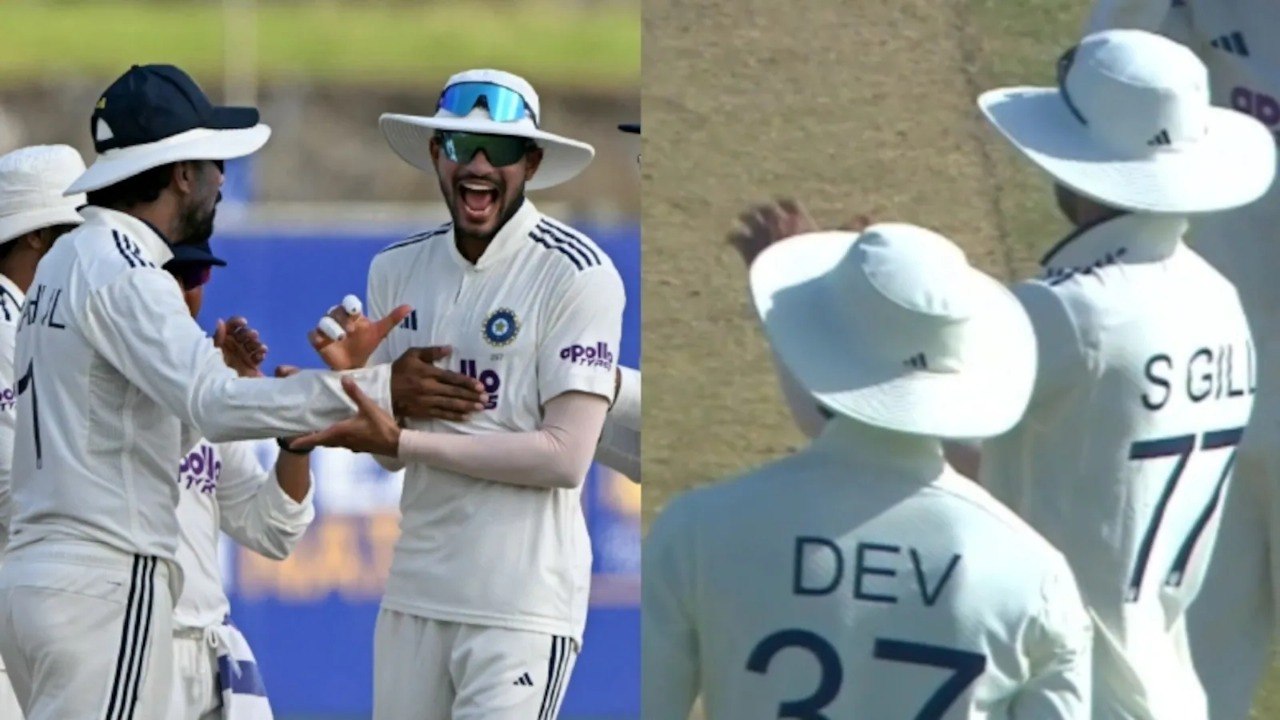
The pivotal moment unfolded during the eighth over of Sri Lanka’s second innings. Spinner Manav Suthar delivered a flighted ball that struck Sooriyabandara’s pads. Despite the on-field umpire’s initial not-out signal, a tense discussion ensued among the Indian fielders. With merely one second remaining on the DRS timer, Gill made the bold decision to challenge the call. Replays subsequently confirmed the ball’s trajectory, showing it was indeed hitting the leg stump, leading to an eruption of celebrations from the Indian camp and widespread praise for Gill’s sharp judgment.
A Debut Under Unusual Circumstances
The wicket of Pasindu Sooriyabandara carried an additional layer of narrative, as he had entered the match as a concussion substitute for the injured Dinesh Chandimal. Chandimal, a veteran Sri Lankan batter, sustained a neck and shoulder injury earlier on Day 4 while attempting to save a boundary. Following precautionary scans that thankfully showed no internal damage, the match referee approved Sooriyabandara’s inclusion, marking a rare instance in Test cricket history.
Sooriyabandara’s debut made him only the fifth player in Test cricket to earn his maiden cap as a substitute, joining a select group that includes Brian Mudzinganyama, Khaya Zondo, Matt Parkinson, and Bahir Shah. This unique pathway to Test cricket highlights the evolving protocols around player safety and concussion management in the sport, ensuring that teams can maintain competitive balance even when unforeseen injuries occur mid-match.
Sooriyabandara’s Journey to the Test Arena
Despite the unusual circumstances of his debut, Pasindu Sooriyabandara is not an unfamiliar name in Sri Lankan domestic circles. The 26-year-old boasts a commendable first-class record, having accumulated 4893 runs in 102 innings at an impressive average of 54.36. His career includes 14 centuries and 23 half-centuries, showcasing his consistent ability to score big runs at the domestic level. He had also featured in a tour match against India, scoring 35 and four runs, indicating his prior exposure to the Indian bowling attack.
His inclusion, while necessitated by injury, offered him an unexpected opportunity on the grand stage. For any cricketer, making a Test debut is a dream, and for Sooriyabandara, it arrived in a manner that will undoubtedly be etched into cricketing lore. His dismissal, though a setback for Sri Lanka, became a talking point due to the dramatic nature of Gill’s review.
India’s Dominance and Batting Prowess
India had set a formidable target of 372 runs for Sri Lanka, having been bowled out for 193 in their second innings. The Indian batting effort was spearheaded by Rishabh Pant, who played a characteristically aggressive knock of 66 runs from just 69 balls, reaching his 20th Test half-century. Supporting contributions came from KL Rahul (35) and Devdutt Padikkal (44), who helped consolidate India’s strong position.
The second innings saw a slight delay due to drizzle, pushing the start of the third session. However, India’s batters maintained their focus, ensuring that Sri Lanka faced a daunting chase on a pitch that was showing increasing signs of wear and tear, typical of a Day 4 surface at Galle International Stadium, known for its spin-friendly conditions as the match progresses.
Sri Lanka’s Bowling Efforts
While India’s batters built a significant lead, Sri Lanka’s bowlers toiled hard to keep the scoring in check. Asitha Fernando emerged as the standout performer, claiming four wickets with his probing short-pitched deliveries that consistently challenged the Indian batsmen. Prabath Jayasuriya, the left-arm spinner, continued to impress with three wickets, leveraging the turning conditions. Lahiru Kumara and Keshara Nuwantha also contributed with two and one wicket respectively, showcasing moments of brilliance amidst India’s strong batting display.
Their efforts, though commendable, were ultimately insufficient to prevent India from setting a challenging total. The battle between India’s aggressive batting and Sri Lanka’s determined bowling set the stage for a compelling final day, with the DRS incident adding another layer of strategic intrigue.
The Strategic Game of DRS in Modern Cricket
Shubman Gill’s successful DRS call serves as a potent reminder of the Decision Review System’s profound impact on modern Test cricket. Introduced to minimize umpiring errors, DRS has evolved into a critical strategic tool, demanding sharp observational skills and quick decision-making from captains. The ability to accurately assess a dismissal in real-time, often under immense pressure and with limited time, can significantly alter the course of a match.
Gill’s incident highlights the fine margins involved. A fraction of a second longer, or a slightly less confident assessment, could have meant a missed opportunity. Such moments not only test a captain’s leadership but also add an unpredictable, thrilling dimension to the game, keeping players and spectators on the edge of their seats until the very last second of the review timer.
Editorial Context
The events of Day 4 in Galle transcend the immediate match result, offering several long-term insights into the evolving landscape of international cricket. Shubman Gill’s decisive DRS call, executed with just one second remaining, is more than just a successful review; it’s a testament to his growing maturity as a captain and his acute understanding of the game’s nuances. This moment will likely be remembered as a key indicator of his leadership potential, demonstrating his ability to perform under pressure and make high-stakes decisions that directly influence the team’s fortunes.
Furthermore, the debut of Pasindu Sooriyabandara as a concussion substitute underscores the increasing importance of player welfare in professional sports. The implementation of concussion protocols ensures that player safety is prioritized, even if it means introducing a player mid-match under unprecedented circumstances. This development reflects a broader commitment by cricketing bodies to safeguard athletes, setting a precedent for how teams manage injuries and maintain competitive integrity.
Finally, the entire match, punctuated by dramatic moments like Gill’s review and the unique substitute debut, reinforces the enduring appeal of Test cricket. It showcases the blend of strategic depth, individual brilliance, and unexpected turns that make the longest format of the game so compelling. These narratives contribute to the rich tapestry of cricketing history, providing fans with memorable moments that resonate far beyond the final score, shaping perceptions of players and the sport itself for years to come.
TL;DR
- Shubman Gill successfully reviewed an LBW decision against Pasindu Sooriyabandara with just one second left on the DRS timer.
- The incident occurred on Day 4 of the first Test between India and Sri Lanka in Galle, leading to Manav Suthar’s wicket.
- Pasindu Sooriyabandara made his Test debut as a concussion substitute for the injured Dinesh Chandimal, a rare occurrence in Test cricket history.
- India set a challenging target of 372 runs for Sri Lanka, with Rishabh Pant scoring a quickfire 66.
- Sri Lankan bowlers Asitha Fernando (4 wickets) and Prabath Jayasuriya (3 wickets) were key performers in India’s second innings.
- Gill’s decisive call highlighted his strategic acumen and leadership under pressure, thrilling fans and commentators.