Gavaskar’s Call for Stricter No-Ball Penalties
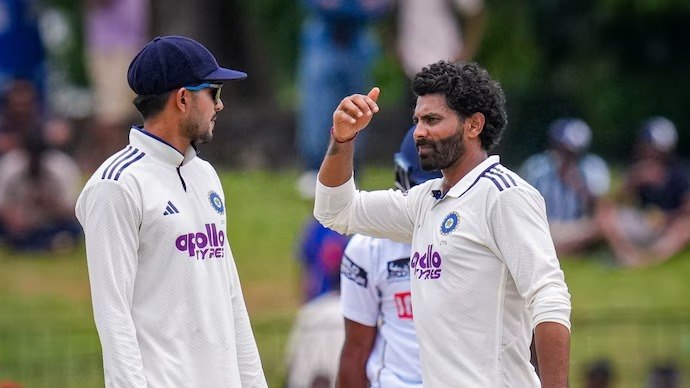
Legendary Indian cricketer Sunil Gavaskar has voiced strong concerns over the persistent issue of no-balls in Test cricket, particularly highlighting the repeated overstepping by Indian bowlers. His critique follows the recent two-match Test series against Sri Lanka, where Ravindra Jadeja and debutant Saransh Jain frequently bowled illegal deliveries.
Gavaskar, a revered figure in the sport, believes it is high time for a more stringent approach to curb this indiscipline. He has proposed a system of financial penalties for bowlers, with fines escalating for every subsequent transgression. This suggestion aims to instill greater accountability and prevent momentum-shifting errors.
The Persistent Problem of Overstepping
The recent Test series against Sri Lanka brought the no-ball issue into sharp focus, with Ravindra Jadeja, a seasoned left-arm spinner, being a primary offender. Data indicates that Jadeja has bowled over 85 no-balls since 2021, a statistic that underscores a concerning pattern of front-foot errors. Debutant Saransh Jain also struggled with his landing, contributing to the team’s tally of illegal deliveries.
No-balls are not merely minor infractions; they grant the batting side an extra delivery, often at a crucial juncture, and can overturn a wicket, dramatically altering the course of a match. Such errors can erode a team’s hard-earned advantage and provide opponents with unexpected opportunities, making them a significant tactical and psychological setback.
Historically, front-foot no-balls were the sole responsibility of the on-field umpire. However, with the advent of technology, the third umpire now meticulously reviews every delivery for overstepping, ensuring greater accuracy but also bringing every infraction into clear view. This technological scrutiny makes the continued prevalence of no-balls even more perplexing to observers like Gavaskar.
Gavaskar’s Radical Proposal
Writing in his column for Mid-Day, Gavaskar emphasized that bowling within the crease is one of the few aspects of the game entirely within a player’s control. He argued that with modern tools like tape measures for run-ups, there should be no legitimate excuse for overstepping the bowling crease. This perspective highlights a fundamental expectation of professional discipline.
His proposed solution involves a financial penalty for each no-ball, with the fine doubling for every subsequent offence within a match or series. This escalating penalty structure is designed to create a strong deterrent against repeated errors, making the cost of indiscipline progressively higher for the bowler.
Gavaskar’s suggestion extends beyond individual players. He advocates for the bowling coach to also bear a portion of the financial responsibility, proposing a fine equivalent to half the amount imposed on the bowler. This measure aims to foster a shared sense of accountability within the team’s coaching staff, ensuring that technical flaws are addressed proactively.
Rejecting the Free Hit Concept
The discussion around no-balls often includes the idea of introducing a "free hit" in Test cricket, a concept borrowed from limited-overs formats. India’s spin bowling coach, Sairaj Bahutule, had even jokingly suggested this as a potential deterrent. However, Gavaskar firmly rejected this notion for the longest format of the game.
Gavaskar argued that Test cricket’s essence lies in its challenge and the hard-earned nature of runs. He believes that introducing a free hit would further simplify run-scoring for batters, a trend he already observes with restrictions on bouncers and smaller boundaries. His stance underscores a desire to preserve the traditional rigour and strategic depth of Test match play.
The former captain’s resistance to the free hit reflects a broader sentiment among purists who fear the erosion of Test cricket’s unique character. They contend that while innovations are welcome, they should not fundamentally alter the balance between bat and ball or diminish the value of a hard-fought wicket.
Accountability Beyond the Bowler
Gavaskar’s proposal to fine bowling coaches alongside players introduces a significant layer of accountability. It suggests that the responsibility for technical discipline, especially regarding fundamental aspects like the front foot, extends beyond the individual player to the coaching staff tasked with their development and oversight. This could lead to more rigorous training and monitoring.
Furthermore, Gavaskar suggested that teams could implement their own internal fine systems for other on-field lapses, such as not backing up a throw. He envisioned this as a collective decision-making process, where the team votes on whether an offence warrants a penalty. This approach could foster greater team cohesion and a shared commitment to high standards.
Such internal disciplinary measures, Gavaskar noted, could serve a dual purpose: improving on-field performance and acting as a fun, bonding activity for the team. The fines collected, he playfully suggested, could even be used for a team dinner, turning a disciplinary action into a collective benefit.
The Broader Debate in Test Cricket
The debate ignited by Gavaskar’s comments touches upon the evolving nature of Test cricket and the constant tension between tradition and modernity. While some advocate for adaptations to make the game more appealing, others, like Gavaskar, champion the preservation of its core challenges and unique characteristics.
No-balls, while seemingly minor, represent a fundamental breakdown in discipline that can have disproportionate impacts on match outcomes. In a format where every run and every wicket is fiercely contested, such unforced errors can be particularly costly, undermining the strategic efforts of the team.
The recent India-Sri Lanka series itself provided a stark example of how such errors can prevent a decisive result. Despite India taking a substantial first-innings lead of 213 runs in the second Test, they could not force a victory, with Sri Lanka holding on for a draw. While not solely attributable to no-balls, such lapses contribute to a broader narrative of missed opportunities.
Editorial Context: Upholding Test Cricket’s Integrity
Sunil Gavaskar’s impassioned plea for stricter penalties against no-balls transcends a mere critique of individual player performance; it represents a significant call to uphold the fundamental integrity and competitive balance of Test cricket. Overstepping the crease is a basic error, yet its cumulative impact can be profound, shifting momentum, extending innings, and even denying deserved wickets. By advocating for financial accountability for both bowlers and their coaches, Gavaskar is pushing for a systemic change that reinforces professional discipline at all levels.
This development matters over the long term because it addresses a core aspect of player responsibility that has, perhaps, been overlooked in the modern game. In an era where technology meticulously scrutinizes every delivery, the continued prevalence of no-balls suggests a need for stronger deterrents than mere admonishment. Gavaskar’s proposal could set a precedent for how cricket boards and teams approach player discipline, potentially leading to a more rigorous standard of play and a renewed focus on fundamental skills. It underscores the ongoing debate about how to maintain Test cricket’s purity while ensuring players meet the highest standards of professionalism.
TL;DR
- Sunil Gavaskar proposes financial fines for bowlers who bowl no-balls in Test cricket, with penalties doubling for repeated offenses.
- The suggestion is prompted by Ravindra Jadeja’s consistent overstepping, having bowled over 85 no-balls since 2021, and similar issues with debutant Saransh Jain.
- Gavaskar rejects the introduction of "free hits" in Test cricket, arguing it would make run-scoring too easy and dilute the format’s challenge.
- He advocates for bowling coaches to also be fined half the amount imposed on the bowler, emphasizing shared accountability for technical discipline.
- Gavaskar suggests teams could implement internal fine systems for other on-field lapses, fostering team bonding and collective responsibility.
- The proposal aims to uphold the integrity of Test cricket by ensuring fundamental player discipline and preventing momentum-shifting errors.