A Moment of Confusion on the Pitch
The opening day of the first Test between India and Sri Lanka in Galle witnessed a dramatic and controversial dismissal, as young Indian opener Yashasvi Jaiswal was run out following a bizarre mix-up with his batting partner, KL Rahul. The incident, occurring in the 11th over of India’s innings, left spectators and commentators alike questioning the sequence of events that led to Jaiswal’s departure for 32 runs off 37 deliveries.
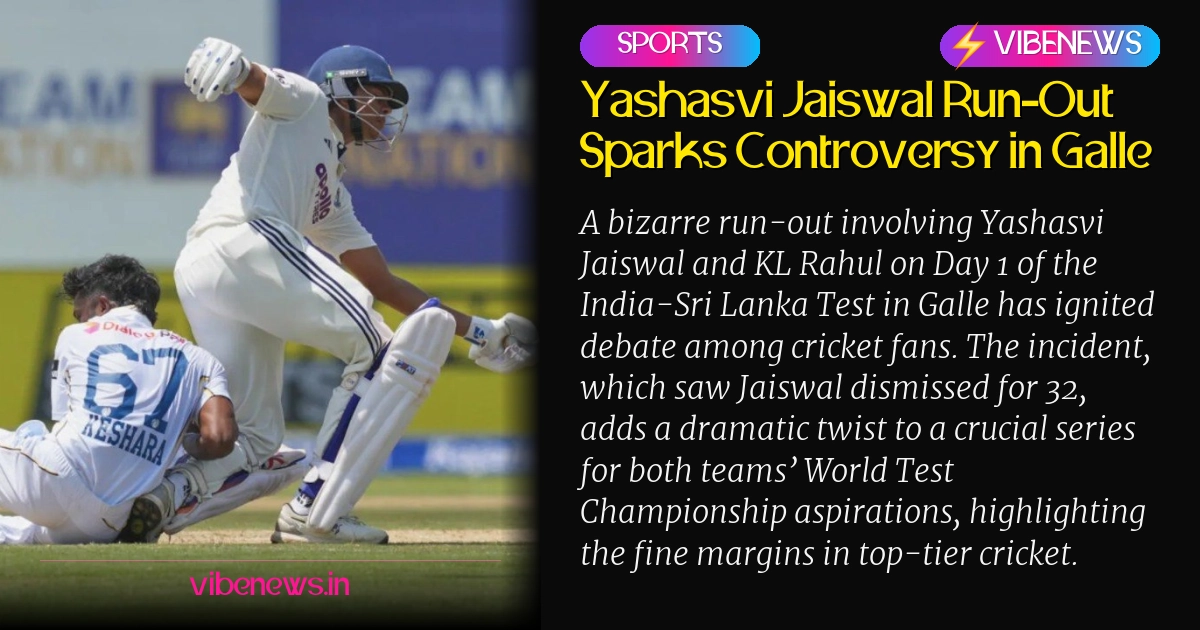
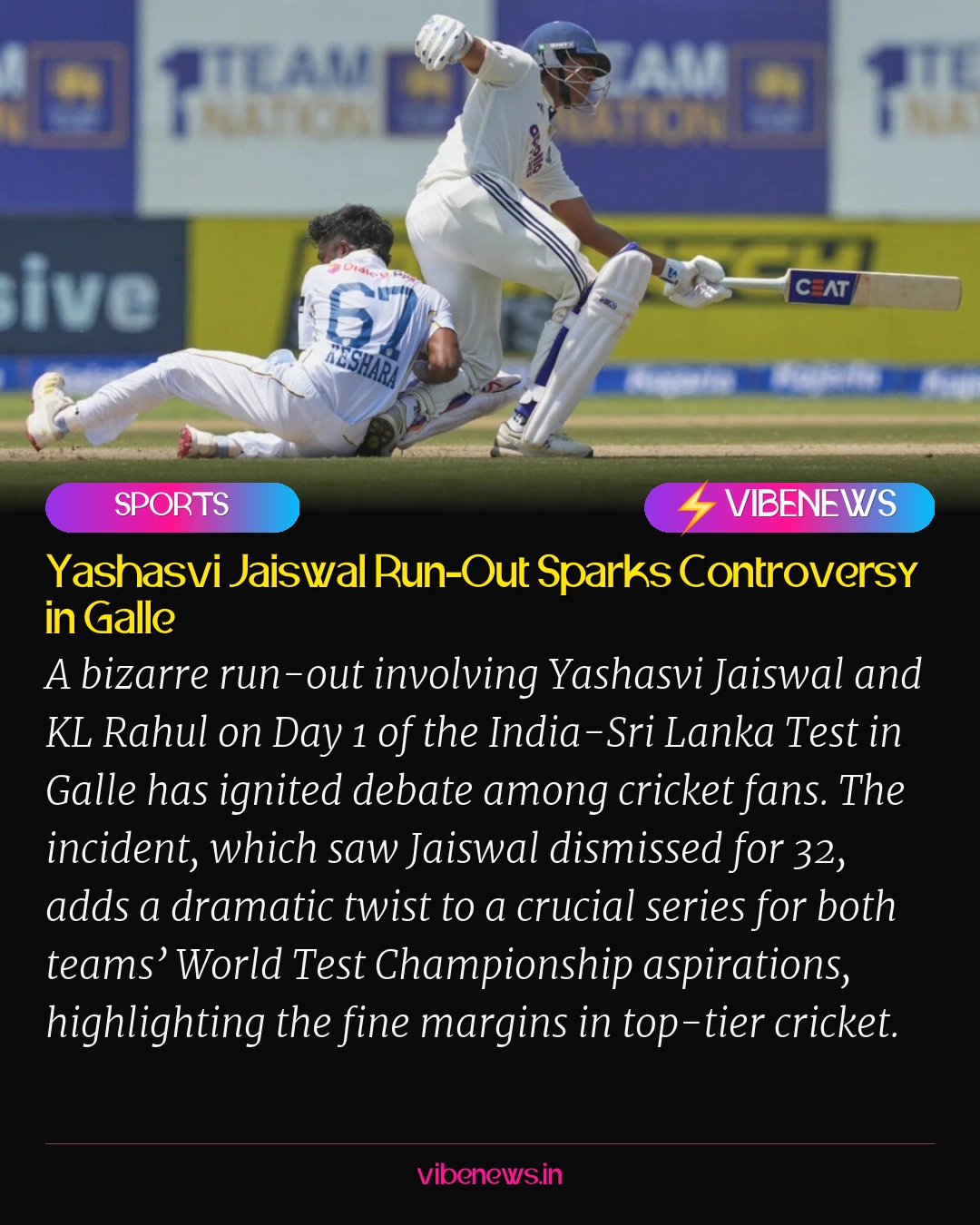
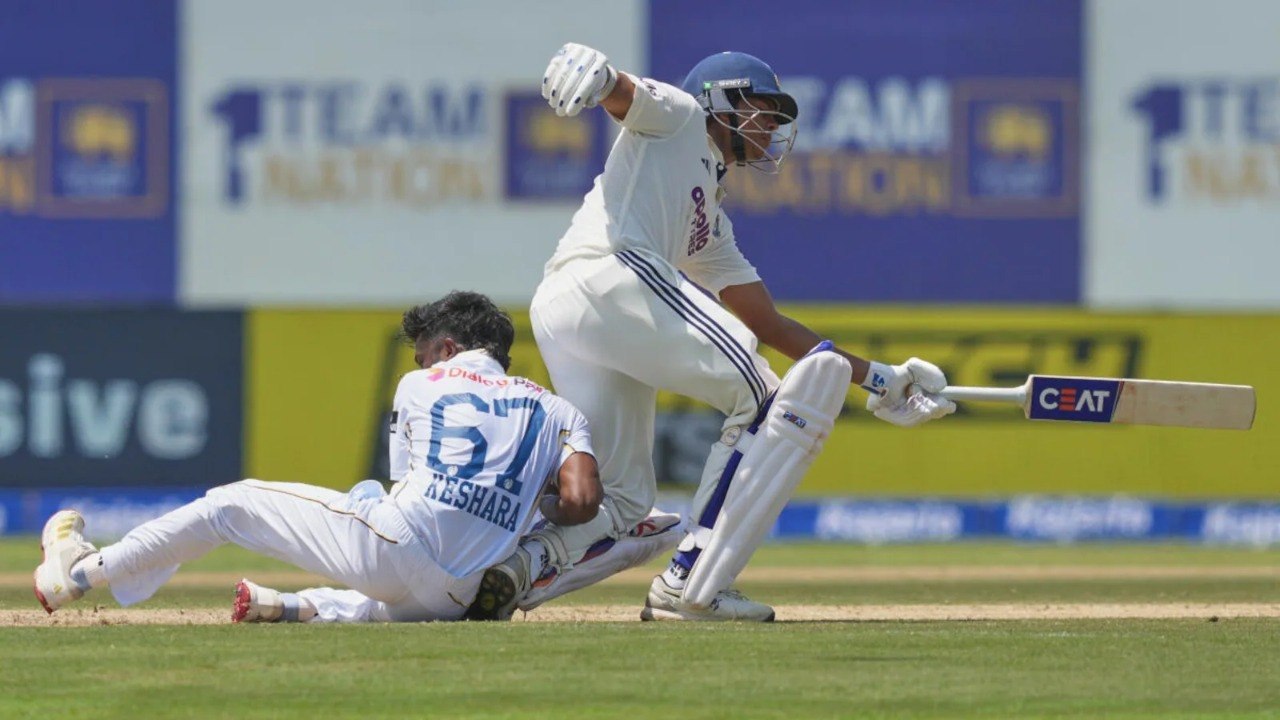
The play unfolded when KL Rahul gently pushed a delivery from debutant Sri Lankan spinner Keshara Nuwantha towards the bowler and called for a quick single. In an attempt to field the ball, Nuwantha inadvertently collided with Jaiswal at the non-striker’s end, momentarily knocking the left-hander off balance. This collision created a critical moment of confusion, leading both batsmen to converge at the non-striker’s end.
As the chaos ensued, Sri Lankan fielder Prabath Jayasurya swiftly collected the ball and threw it to wicket-keeper Niroshan Dickwella, who dislodged the bails. The Sri Lankan team, including captain Dhananjaya de Silva, initially deliberated whether to appeal for the dismissal, given the unusual circumstances. However, they ultimately decided to proceed, and replays confirmed that while both batsmen were at the same end, KL Rahul had grounded his bat first, making Jaiswal the unfortunate victim.
Echoes of Past Misunderstandings
The run-out quickly became a talking point across social media platforms, with many fans drawing parallels to previous instances of miscommunication between Indian batsmen. Some online commentators were quick to point fingers, recalling similar run-outs involving KL Rahul and other partners, such as Rishabh Pant at Lord’s or Shubman Gill in a recent match where the bowler obstructed him. These comparisons fueled a debate about running between wickets and the responsibility of each partner in high-pressure situations.
Such incidents, while rare, underscore the intense pressure and split-second decision-making inherent in Test cricket. A moment of hesitation or a slight misjudgment can drastically alter the course of an innings, especially when a new batsman is looking to establish himself at the crease. Jaiswal, who had looked fluent during his brief stay, was visibly disappointed by the manner of his dismissal, a sentiment that can ripple through the dressing room.
Strategic Stakes in the Series
Beyond the immediate drama of the run-out, this two-Test series holds significant strategic importance for both India and Sri Lanka, as they vie for crucial points in the 2027 World Test Championship (WTC) cycle. India currently occupies the fifth position in the WTC standings, while Sri Lanka is placed sixth. A strong performance in this series is imperative for either team to improve their chances of qualifying for the final.
The WTC, introduced to add context and significance to bilateral Test series, awards points for wins, draws, and even ties, with percentages determining standings. Every match, every session, and indeed, every run, contributes to a team’s overall standing. India, having reached the final in the inaugural WTC cycle but falling short, is keen to make a strong statement early in this new cycle. A loss of a key wicket, particularly in such an unexpected fashion, can shift momentum and put added pressure on the subsequent batsmen to stabilize the innings and post a competitive total, directly impacting their WTC aspirations.
Team Compositions and Debutants
Both teams entered the series with carefully considered line-ups. Sri Lanka opted for a spin-heavy attack on the Galle pitch, fielding two fast bowlers and four spinners, including their captain Dhananjaya de Silva and left-arm spinner Sonal Dinusha. The match also marked the Test debut of 25-year-old off-spinner Keshara Nuwantha, whose first Test wicket came under extraordinary circumstances.
India, on the other hand, mirrored a similar strategy to their last match against Afghanistan in June, selecting three spinners alongside two pacers. Their spin contingent included the experienced Ravindra Jadeja, Kuldeep Yadav, and Manav Suthar. The Indian squad also saw Devdutt Paddikal come in for Sai Sudharsan, who was ruled out due to a stress fracture, while pace spearhead Jasprit Bumrah was sidelined with a knee injury, necessitating adjustments to the bowling attack.
Milestones and the Galle Fortress
India’s 80th Independence Day, celebrated on the same day as its 600th Test, served as a poignant reminder of the nation’s journey and its deep-rooted connection with cricket. From its humble beginnings to becoming a global powerhouse, Indian cricket has mirrored the nation’s growth and aspirations. This milestone underscores decades of dedication, evolution, and success on the international stage, reflecting the nation’s deep passion for the sport and its enduring legacy.
Concurrently, the iconic Galle International Stadium, hosting its 50th Test match, is renowned for its picturesque setting beside the Indian Ocean and its reputation as a spin-friendly fortress for Sri Lanka. Historically, teams have found it challenging to overcome the home side here, especially as the pitch wears down. The initial assessment suggested a surface that would favor batsmen on the first two days, offering good bounce and carry, before gradually deteriorating to provide significant turn and assistance to spinners as the game progresses, setting the stage for a challenging and evolving contest.
Editorial Context
The bizarre run-out of Yashasvi Jaiswal, while an isolated incident, carries broader implications for the Indian team’s campaign in the World Test Championship. Such moments of miscommunication can erode confidence and create unnecessary pressure, especially for a young player like Jaiswal who is still cementing his place in the Test squad. The incident will undoubtedly prompt discussions within the team management about improving running between wickets and ensuring clarity in high-stakes situations.
Furthermore, the outcome of this series will significantly impact India’s trajectory towards the 2027 WTC final. Every point is vital, and early setbacks, even those stemming from unfortunate circumstances, can prove costly in the long run. The team’s ability to bounce back from such a dramatic dismissal and maintain focus will be a key indicator of their resilience and championship aspirations. For Sri Lanka, the incident provided an unexpected boost, highlighting how small moments can swing momentum in Test cricket.
TL;DR
- Yashasvi Jaiswal was controversially run out on Day 1 of the first Test between India and Sri Lanka in Galle.
- The dismissal resulted from a bizarre mix-up with KL Rahul after a collision with debutant bowler Keshara Nuwantha.
- Jaiswal was out for 32 runs, with replays confirming KL Rahul had grounded his bat first at the non-striker’s end.
- The incident sparked widespread debate among cricket fans and drew comparisons to previous similar run-outs involving Indian batsmen.
- This two-Test series is crucial for both India and Sri Lanka’s standings in the 2027 World Test Championship cycle.
- The match also marked India’s 600th Test, coinciding with its 80th Independence Day, while Galle International Stadium hosted its 50th Test.