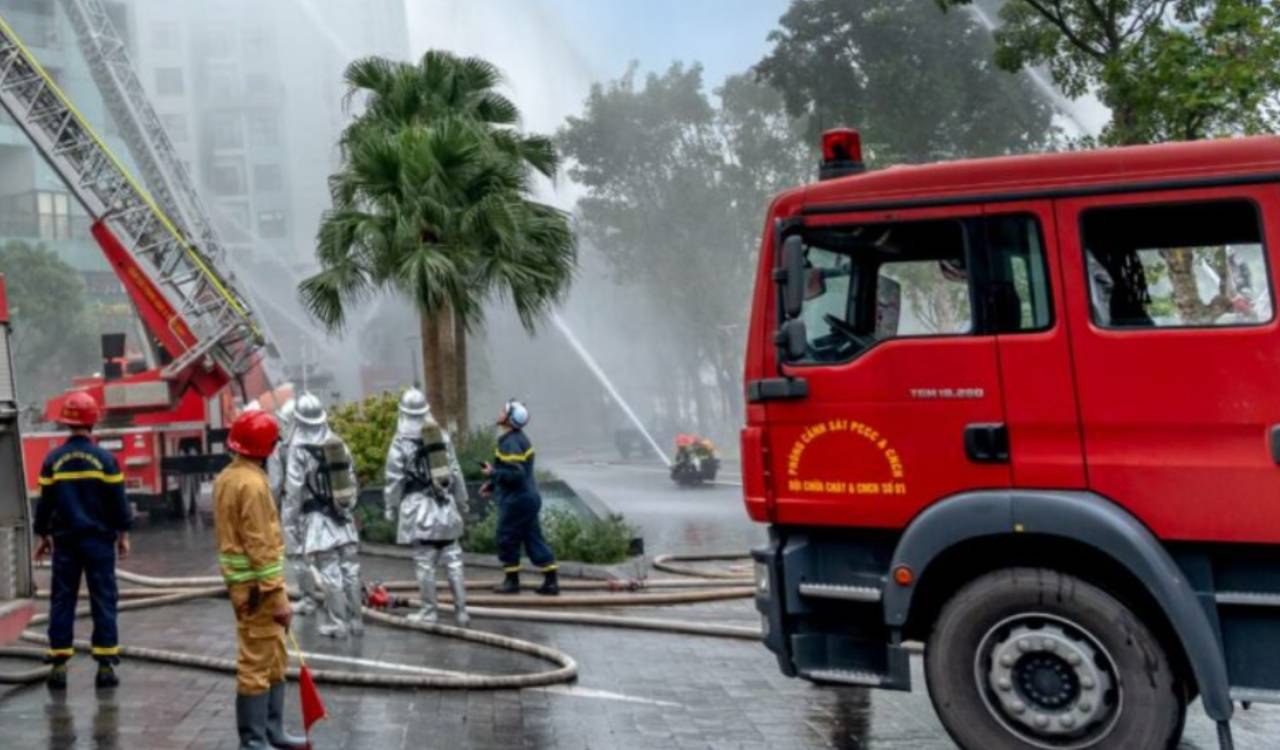
Hyderabad’s Fire Department is preparing alternative firefighting methods because water for major blazes could run short, officials said. The warning comes as rising temperatures, record electricity demand and a spate of fire incidents put pressure on the city’s water supply.
The concern is not theoretical. Rising temperatures linked to El Niño, record electricity demand and fire incidents have raised fears about whether firefighters can get enough water to tackle large fires in the city. Officials acknowledge the threat is real, even as they insist they can cope.
The numbers explain why. Major fires in commercial complexes, warehouses and high-rise buildings may require anywhere between 50,000 litres and several lakh litres of water. That supply must be uninterrupted for hours. During extreme heat, even a minor fire can spread quickly, which pushes water requirements higher.
Groundwater and lakes under strain
The water problem goes beyond what happens during a single blaze. Declining groundwater levels and the drying up of local lakes and ponds could further complicate the situation, according to the report. Fewer nearby water bodies mean fewer options when a fire engine runs low.
Fire engines largely depend on Hyderabad Metropolitan Water Supply and Sewerage Board (HMWS&SB) filling stations and nearby water bodies to replenish their tanks. Any restriction on municipal supply or any water shortage could directly affect firefighting operations. Distance is another problem. Valuable time may be lost while fire engines travel back and forth to refilling points.
What the fire department says it will do
Hyderabad District Fire Officer T Venkanna said firefighters were well trained to tackle emergencies while minimising water consumption. His message was direct.
"Our men are already trained in minimal usage of water during firefighting, as saving water is extremely important during any emergency until we get backup," he said.
The department plans to move away from relying entirely on water wherever it can. Alternative firefighting methods under consideration include CO2 gas, chemical sprays and traditional fire-beating techniques. Each one reduces the amount of water that must be pulled from tanks and hydrants during a crisis.
LPG cylinder fires get a different approach. Firefighters would focus on cutting off the gas or oxygen supply to stop the flames from spreading further. In a kitchen or household blaze, that means stopping the fuel source rather than drowning the fire.
Why Hyderabad residents should take this seriously
For residents of Hyderabad, the most important part of the warning is what officials said about prevention. Venkanna stressed that prevention was the best way to avoid water-intensive firefighting operations. He urged citizens to take necessary precautions in their homes and surroundings to prevent fire accidents.
That message matters more in a city where a single large fire can draw heavily on water that is already under pressure. Every fire prevented is water saved for the next emergency. Every household precaution reduces the chance that a fire engine has to wait for a tanker or travel a long route to refill.
The local impact is direct. Telangana’s capital is dealing with heat, power demand and fire risk at the same time, and the supply that firefighters depend on is the same supply residents draw on every day. The concern here is not a distant crisis. It is a question of whether the next major blaze in Hyderabad can be fought in time.
The official position for now
For the moment, officials say there is no shortage of water for firefighting. The water department is extending full cooperation during emergencies. That reassurance comes with a condition. Officials also said alternative arrangements would be explored if water scarcity does arise.
The gap between those two statements is where the risk sits. A city can be fully supplied on a calm day and still face trouble when several large fires break out during a heatwave. The department’s plan depends on using less water, switching methods and keeping refill routes open. Whether that holds will be tested the next time a major blaze breaks out in the city.
TL;DR
- Hyderabad’s Fire Department is preparing alternative firefighting methods as fears grow over water scarcity in the city.
- Major fires can need between 50,000 litres and several lakh litres of water, supplied without interruption for hours.
- Declining groundwater and drying lakes and ponds could make the situation harder for fire engines.
- Fire District Officer T Venkanna says firefighters are trained to minimise water use during emergencies.
- CO2 gas, chemical sprays and traditional fire-beating techniques will be used wherever possible.
- Officials say there is currently no water shortage for firefighting, but alternatives will be explored if one arises.