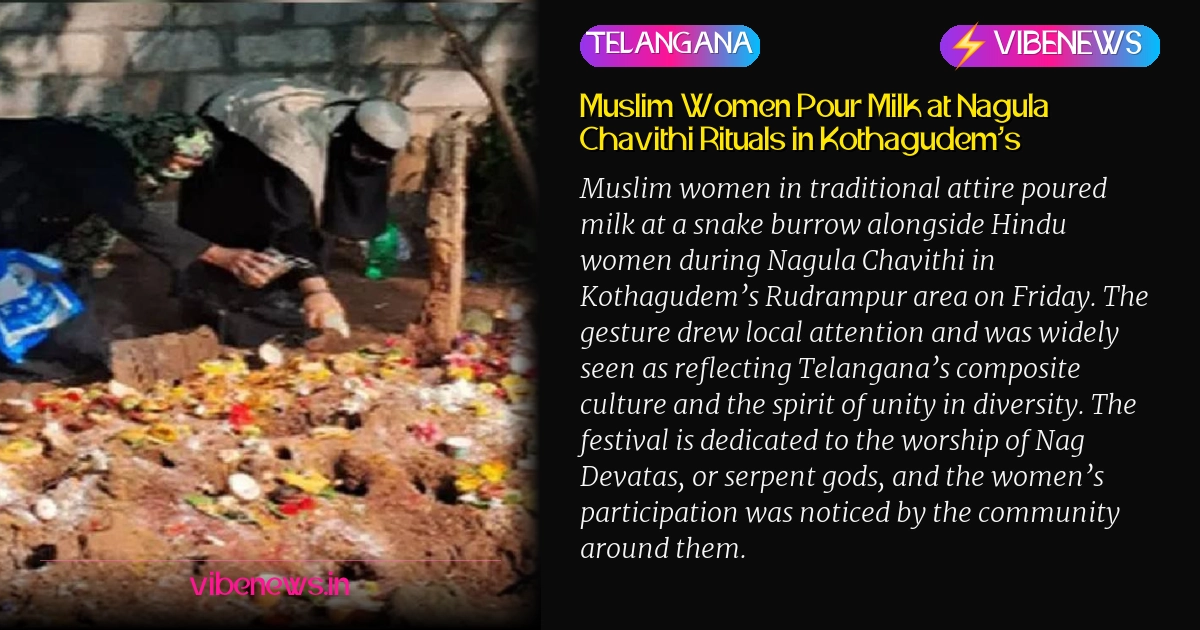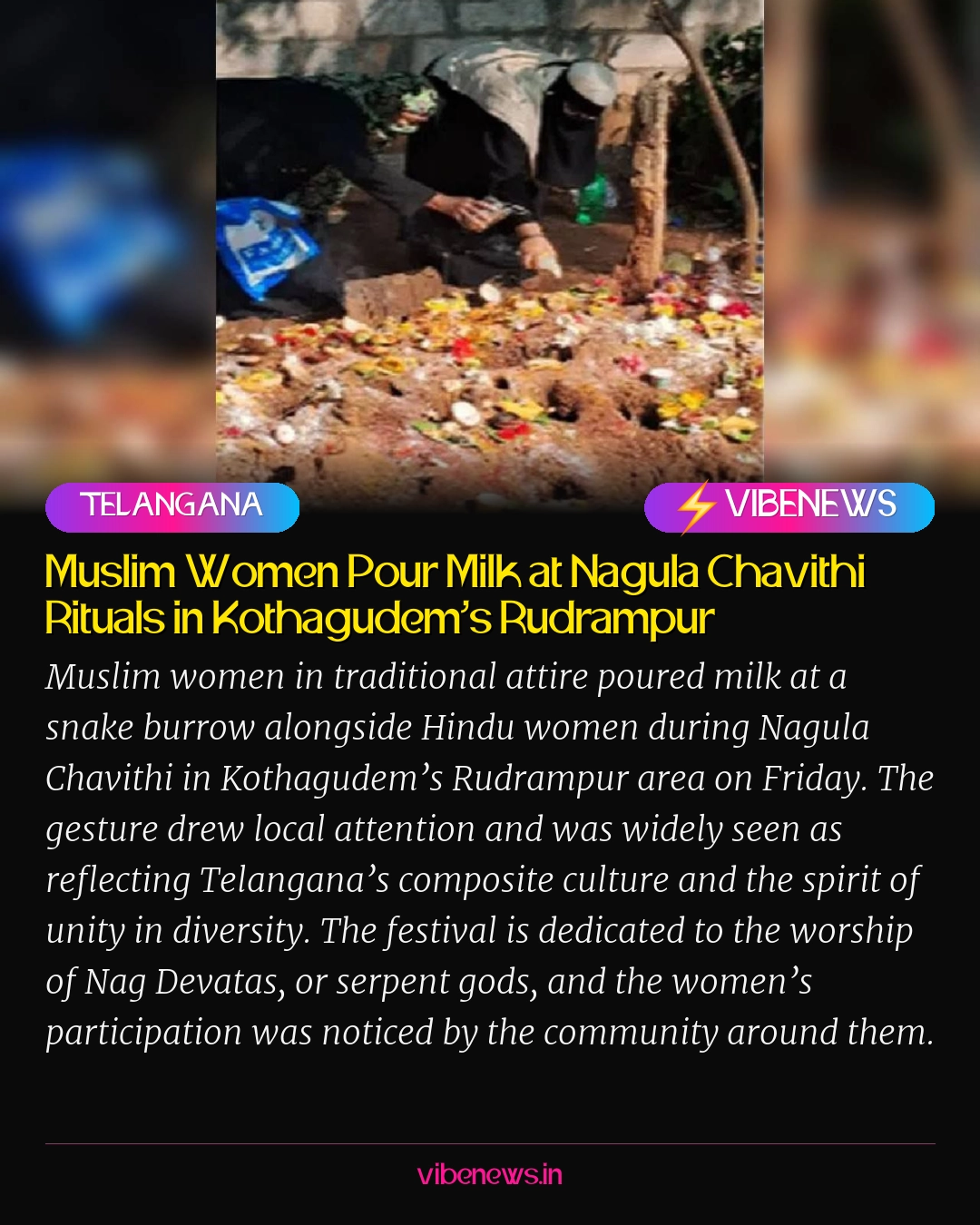
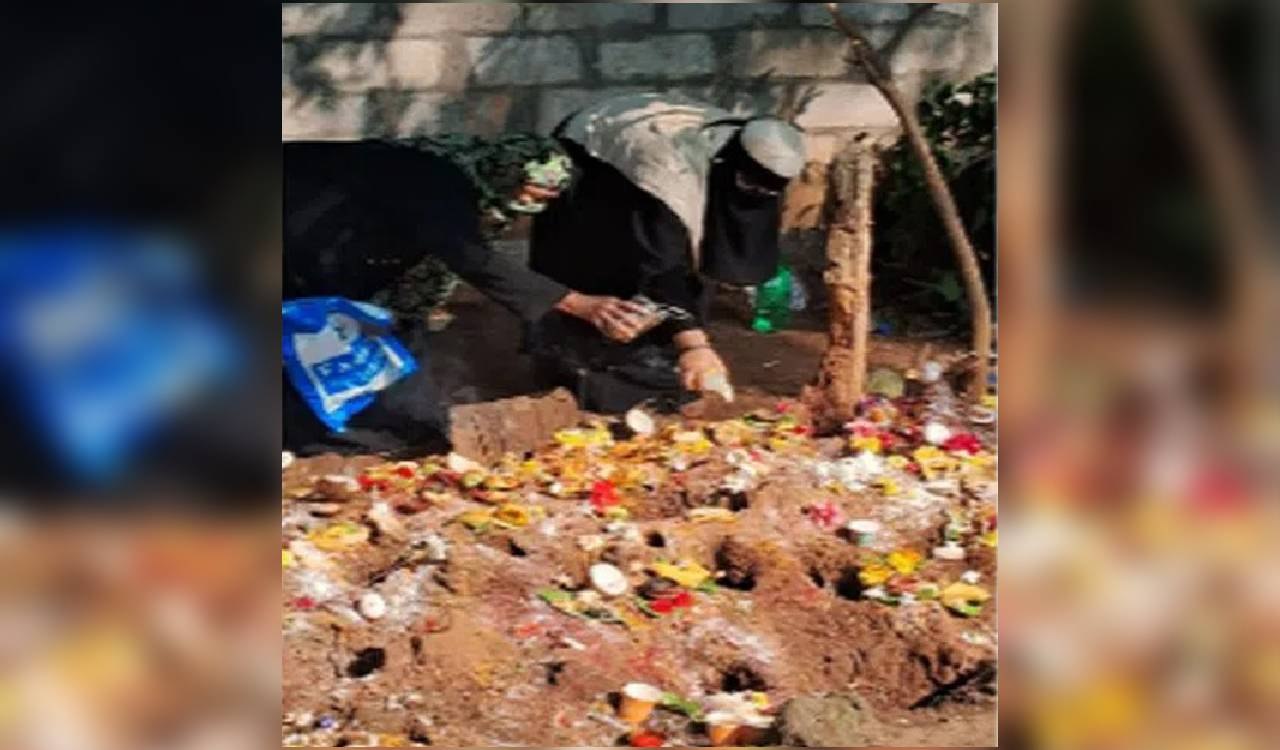
Muslim women joined Hindu women in Nagula Chavithi rituals at a snake burrow in Kothagudem’s Rudrampur area on Friday, and the sight quickly caught the attention of the local community.
Dressed in their traditional attire, the women poured milk at a ‘Nagulaputta’, the snake burrow where devotees worship during the festival. Nagula Chavithi is dedicated to the worship of Nag Devatas, or serpent gods. The Muslim women did not stand at the edges. They took part in a ritual rooted in Hindu faith, alongside the women who had gathered there for the worship.
A idea rooted in Telangana’s politics and public life. The moment echoed a theme that former Chief Minister and BRS chief K Chandrashekhar Rao often returned to. He consistently stressed secularism, religious tolerance and the composite culture of Telangana, and he frequently invoked the concept of Ganga-Jamuna Tehzeeb. The phrase compares Hindu-Muslim harmony and friendship to the confluence of India’s two great rivers, the Ganga and the Yamuna, which stand for peaceful coexistence among all communities.
Rao’s image of a confluence is easy to picture in a real setting, and the Rudrampur scene seemed to give it a human face. Local residents saw the participation as more than a religious courtesy. The women showed up for a ritual that belongs to another faith, and they did it in plain view of the people around them.
The report describes the gesture in strong terms. By respecting the customs and traditions of others, transcending the barriers of caste and religion, the women exemplified the greatness of Indian culture. That reading came from the people who witnessed the scene and from the way the story was framed around it.
By respecting the customs and traditions of others, transcending the barriers of caste and religion, they exemplified the greatness of Indian culture.
Many who spoke about the event described it as a reflection of India’s unique ethos of unity in diversity. That idea is not new to Telangana, but seeing it play out during a local festival gave it a fresh and personal edge. Nobody needed a speech to make the point. Pouring milk at a snake burrow, side by side with neighbours from a different faith, said it well enough.
What the report does not tell us. The account does not say how many Muslim women took part in the Rudrampur rituals. It does not name any of the women, and it does not describe any formal organisation or initiative behind the gathering. What it does establish is the core of the story: on Friday, in a Kothagudem neighbourhood, Hindu and Muslim women performed a festival ritual together, and the community noticed.
For Telangana, the event lands at a time when the state’s composite culture is often discussed in political terms. Rao’s speeches gave the phrase Ganga-Jamuna Tehzeeb a wide audience, and the Rudrampur scene offered a small, unscripted example of what the phrase describes. It happened in a rural and local setting rather than on a political stage, which is part of why it resonated.
Festivals like Nagula Chavithi bring families and neighbourhoods to the same spot, often around shared rituals and offerings. When women from different faiths join in, the moment carries a message that does not need translation. The milk was poured, the burrow was honoured, and the community took note. That is the kind of story that tends to travel by word of mouth, and in this case it has done so.
TL;DR
- Muslim women joined Hindu women in Nagula Chavithi rituals in Kothagudem’s Rudrampur area on Friday.
- The women poured milk at a Nagulaputta, a snake burrow, during worship of Nag Devatas, or serpent gods.
- The gesture was widely seen as reflecting Telangana’s composite culture and India’s unity in diversity.
- Former CM and BRS chief K Chandrashekhar Rao often invoked Ganga-Jamuna Tehzeeb to stress harmony and secularism.
- The report does not say how many women took part or name any of them.