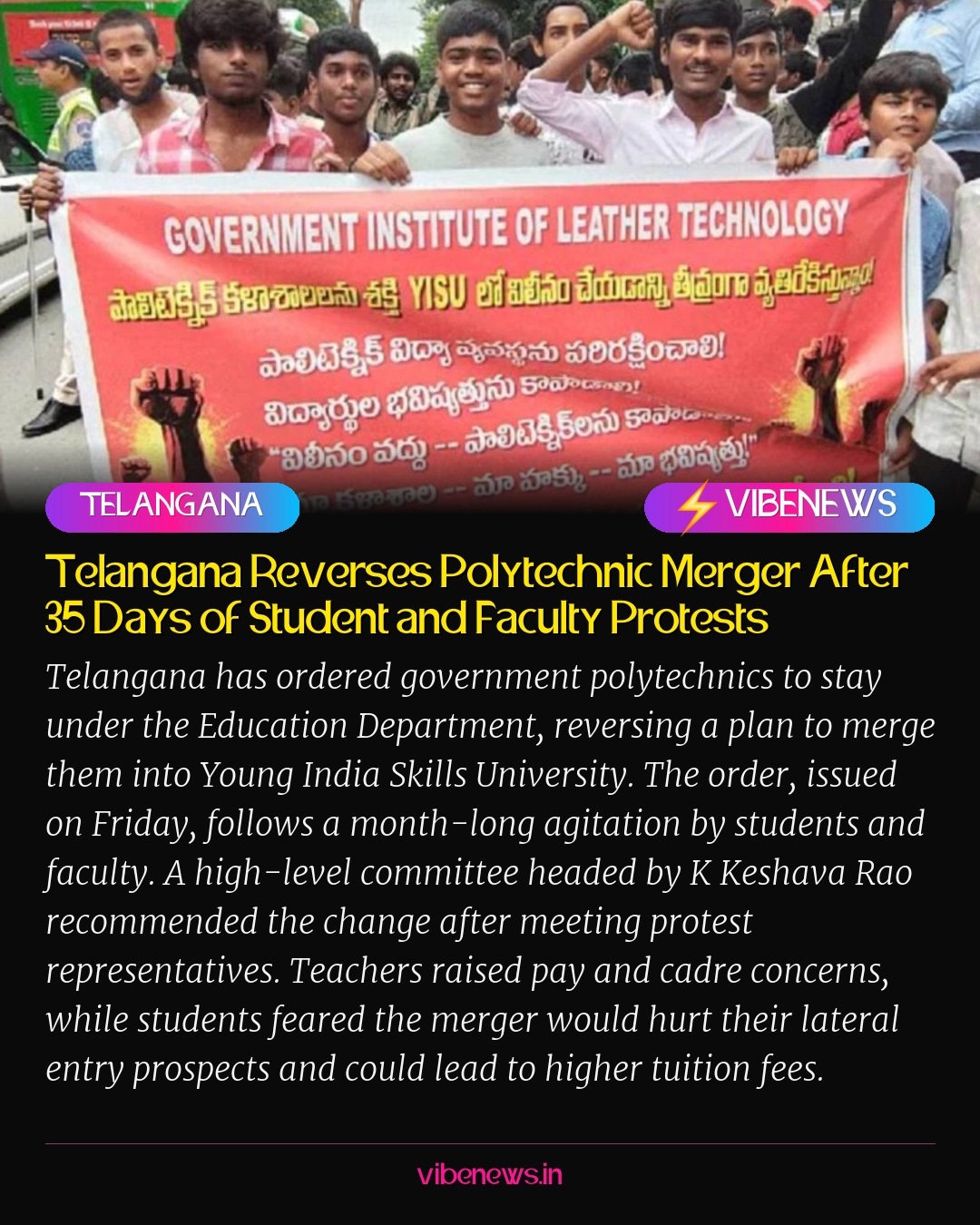
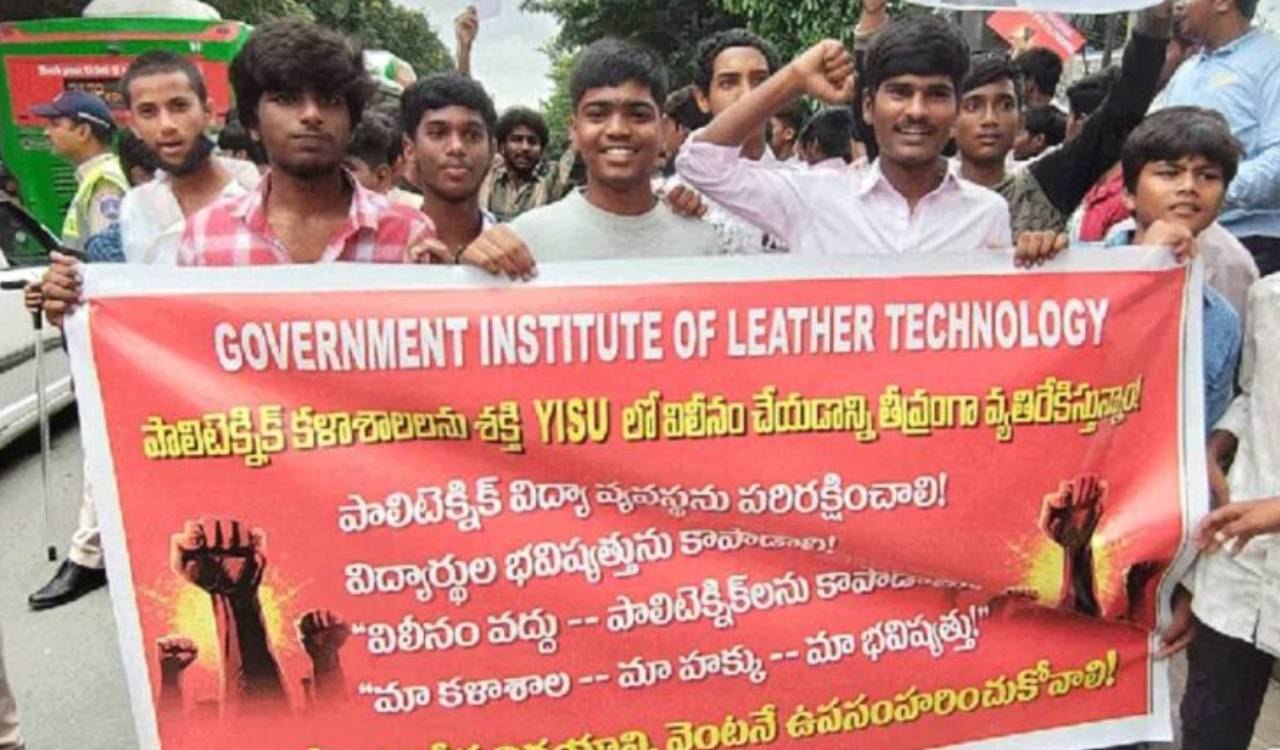
The Telangana government has decided to keep government polytechnics under the administrative control of the Education Department, scrapping an earlier plan to fold them into Young India Skills University (YISU). Chief Secretary Sanjay Jaju issued the order on Friday.
The government did not move on its own timetable. It moved after students and faculty members spent more than a month on the streets and in protest meetings, and after a high-level committee recommended the change. For a government that had pushed the merger through, the reversal is a sharp retreat.
What the new order actually does
Under the order, both YISU and the government polytechnics will function under the administrative control of the Higher Education Department. The Industrial Training Institutes (ITIs) and Advanced Technology Centres (ATCs) will still operate under the Shakti department, but their curriculum will be regulated by YISU.
The order also tells YISU to take the steps needed to secure approvals from the All India Council for Technical Education (AICTE) and other competent authorities. Those approvals are required before the university can expand its academic programmes.
How the merger happened in the first place
YISU was set up as a public-private partnership under the Shakti department, which was formerly the Labour department. The government later moved polytechnics, along with ITIs and ATCs, under the university. That move set off protests from teachers and students almost immediately.
The protests were not a single complaint. They came from two groups with different fears, and both sides had reasons to push back.
The teachers’ objection
Teachers argued that their pay scales, cadres and promotion levels were entirely different from those of staff in the institutions now being merged. They also pointed out that AICTE pay scales apply to them. Under a single university framework, they feared those structures would not survive intact.
The students’ fears
Students were blunt about what they saw at stake. They said the merger would reduce them to the status of labourers. That is the line that carried the protest beyond campus gates, because it turned a administrative question into a question of dignity and future prospects.
Students had raised concerns that the merger would reduce them to the status of labourers.
Their practical worries were more specific. Many feared they would no longer be able to move into undergraduate engineering through lateral entry via the ECET exam once the institutions were integrated with YISU. Lateral entry is a route that polytechnic students in Telangana depend on to continue their education, so the fear was not abstract.
Students also worried that the university, established under the YISU framework, could sharply raise tuition fees. Those concerns were raised before any fee structure had been announced, and the reporting available does not say whether the new order addresses them directly.
Why the committee mattered
The reversal rests on recommendations from a high-level committee headed by K Keshava Rao. The panel held a series of meetings with representatives of the Telangana Polytechnic Joint Action Committee and with students who had been protesting for about 35 days.
That process gave the protesters a seat at the table, and the government’s decision follows the panel’s recommendations. For students who spent weeks organising, that matters as much as the outcome itself.
What still hangs in the balance
The order fixes who controls the polytechnics. It does not settle everything. ITIs and ATCs remain under the Shakti department, with YISU regulating their curriculum. Anyone who wanted the whole merger scrapped will notice that the reversal is partial.
Several questions remain open. YISU still has to win AICTE and other approvals for its expansion plans. The protest groups’ concerns over lateral entry through ECET and possible fee hikes are not resolved by anything in the reporting. Students and teachers will be watching the next round of orders closely, because the test of this decision will come in how it is implemented, not in the order itself.
TL;DR
- Telangana has kept government polytechnics under the Education Department, reversing its earlier merger with Young India Skills University.
- The order, issued on Friday by Chief Secretary Sanjay Jaju, follows more than a month of protests by students and faculty.
- A high-level committee headed by K Keshava Rao recommended the reversal after meeting protest representatives and students.
- Teachers said their pay scales, cadres and promotion levels differed from those of YISU-linked staff.
- Students feared the merger would hurt lateral entry through ECET and could lead to higher tuition fees.
- ITIs and ATCs will still operate under the Shakti department, with curriculum regulated by YISU.