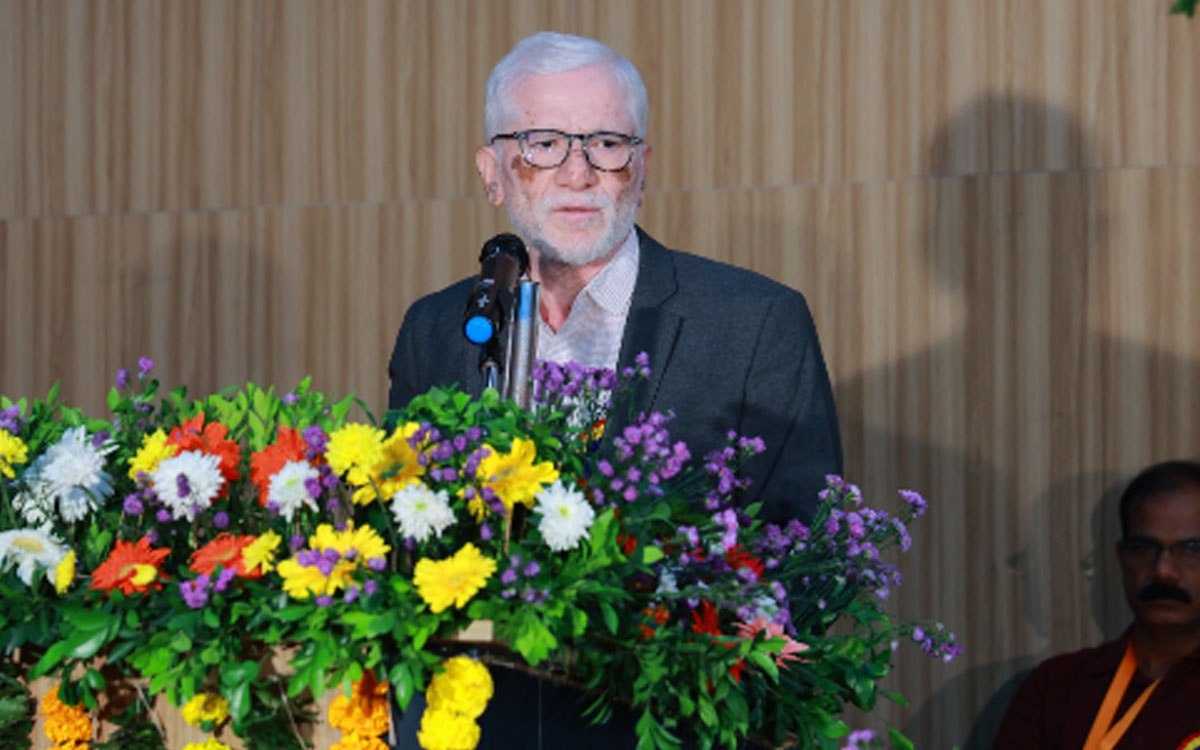
The 45th South Indian History Congress opened on Friday at Mahatma Gandhi University in Nalgonda, bringing professors, historians and research scholars from across the country to a three-day meet that runs through November 15.
The inaugural session had the energy of a major academic gathering. Scholars filled the venue, and students staged cultural performances during the opening hours. The university’s Vice Chancellor, Khaja Altaf Hussain, formally inaugurated the congress.
In his remarks, Hussain argued that the study of history plays a central role in building a new India on the foundations of democracy and social justice. He said a historical understanding is needed to read society rationally and to build a better future through inclusive development. He also urged historians to go beyond recording past events. In his view, history should analyse social change and point the way toward equality and progress.
Keynote with a wider lens
The sharpest message of the day came from SK Mastanvali of Bengaluru University, who delivered the keynote address. He pushed back against a version of history built around rulers alone.
History should not be confined to kings, empires and wars. The people who built civilisation, including farmers, agricultural labourers, artisans, women, Dalits and Adivasis, deserve a place in the record.
Mastanvali called on historians to dig into that record. He recommended combining inscriptions, archaeological evidence, oral histories, folk traditions and the story of social movements. He also said the struggle of Telangana’s peasantry, the movements against caste discrimination and the resistance of workers deserve their rightful weight in the historical account. He suggested that artificial intelligence and digital research tools could help rebuild the histories of marginalised groups, which have often been left out of written sources.
A regional argument with national reach
The presidential address came from Professor Victor Babu of Babasaheb Bhimrao Ambedkar Central University in Lucknow, who has taken over as president of the South Indian History Congress. Babu asked scholars to stop viewing the religious and cultural traditions of northern and southern India through a single lens. He said researchers should study regional specificities and the influence the two regions have had on each other.
He also pointed to the way local deities, village beliefs, tribal customs and the major religious traditions have blended over time. In Babu’s view, those links must be examined within their social, economic and political settings. He added that historians should look critically at the biases carried into colonial-era studies. Ordinary people’s lived experience, he said, must have a proper place in the writing of history.
For Nalgonda and the wider Telangana region, the congress puts local history on a national stage. Mastanvali’s references to the peasant struggle and anti-caste movements point directly to chapters of the state’s past that scholars from other states are now discussing in the same hall. The presence of K Arjunarao, former president of the South Indian History Congress and director of the Heritage and Culture Department of the Telangana government, gave the event a state-level connection as well.
Awards, book launches and research papers
The congress also honoured researchers. Organisers presented the Kasturi Mishra Memorial Young Historians Award, along with the Professor Perrarapu Chennareddy and Dr Subhashini Best Research Paper Award and the Dr Balamaguruswamy and Smt R Uma Best Research Paper Award. Five history books written by researchers and teachers were released during the opening programme.
Afternoon sessions gave researchers a chance to present papers on political, social, economic and cultural history. Other sessions covered historiography, maritime trade history and the history of marginalised communities. The mix of topics reflected the congress’s wider aim of widening the frame around who gets counted in the past.
Lectures and cultural programme
Several memorial lectures were scheduled as part of the programme. Dr K Rajan delivered the BC Roy Memorial Lecture. Dr Parimala Khadanga gave the Kasturi Mishra Memorial Lecture, and Professor Srinath delivered the Dr Subhashini Dharmanidhi Lecture. The executive committee of the congress also met after the sessions.
Outside the lecture halls, the university’s new amphitheatre hosted cultural programmes that drew attention of their own. Students performed classical dances and Telangana folk art forms. Organisers said the performances, together with the discussions among historians, archaeologists and researchers, gave the event its distinctive character.
Who is behind the event
The congress is being run by a large team. Professor Koppula Anjireddy, Registrar of MG University, serves as convener of the conference. Dr Arunapriya, principal of the university’s Arts College, is co-convener, along with Professor Vijayababu. Dr Panasa Ramakrishna, the local secretary of the congress and a faculty member in the History and Tourism Department, also took part, along with the university’s dean, audit cell director and several faculty members. Researchers from various states attended the sessions.
With the first day complete, the congress moves into its second and third days on November 14 and 15. The sessions will keep the same mix of research papers, lectures and cultural programmes that marked the opening.
TL;DR
- The 45th South Indian History Congress opened Friday at Mahatma Gandhi University in Nalgonda.
- Sessions run November 13 to 15, drawing professors, historians and research scholars from across the country.
- Vice Chancellor Khaja Altaf Hussain said history should analyse social change, not just record past events.
- Keynote speaker SK Mastanvali urged historians to recognise farmers, artisans, women, Dalits and Adivasis in the historical record.
- The congress includes research awards, five book launches, memorial lectures and paper presentations.