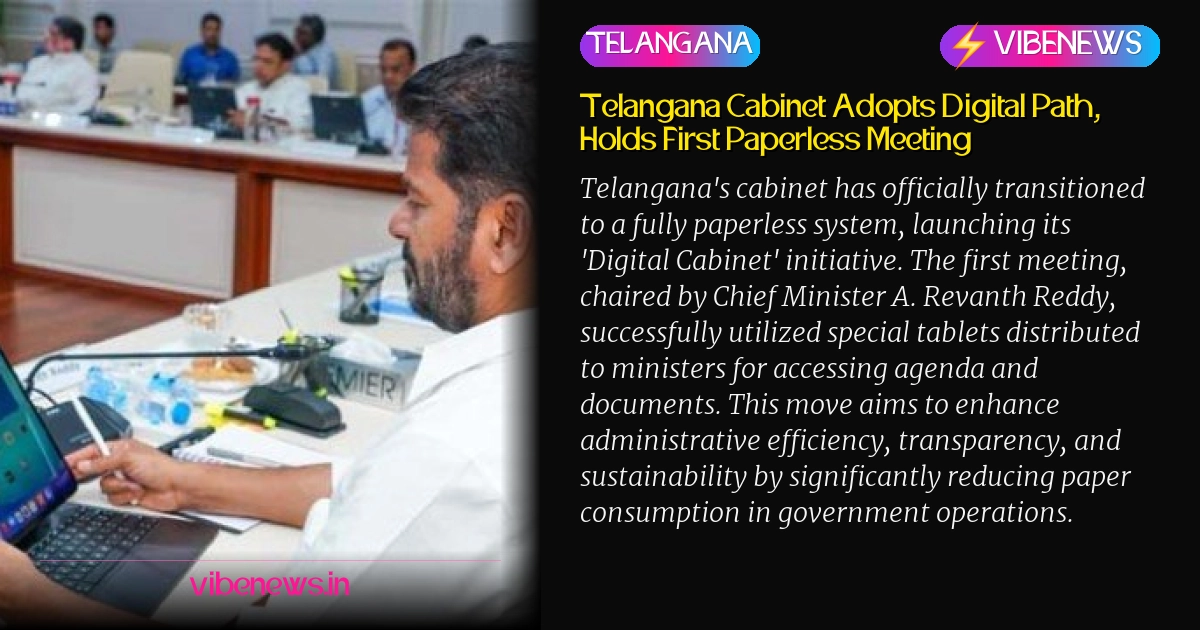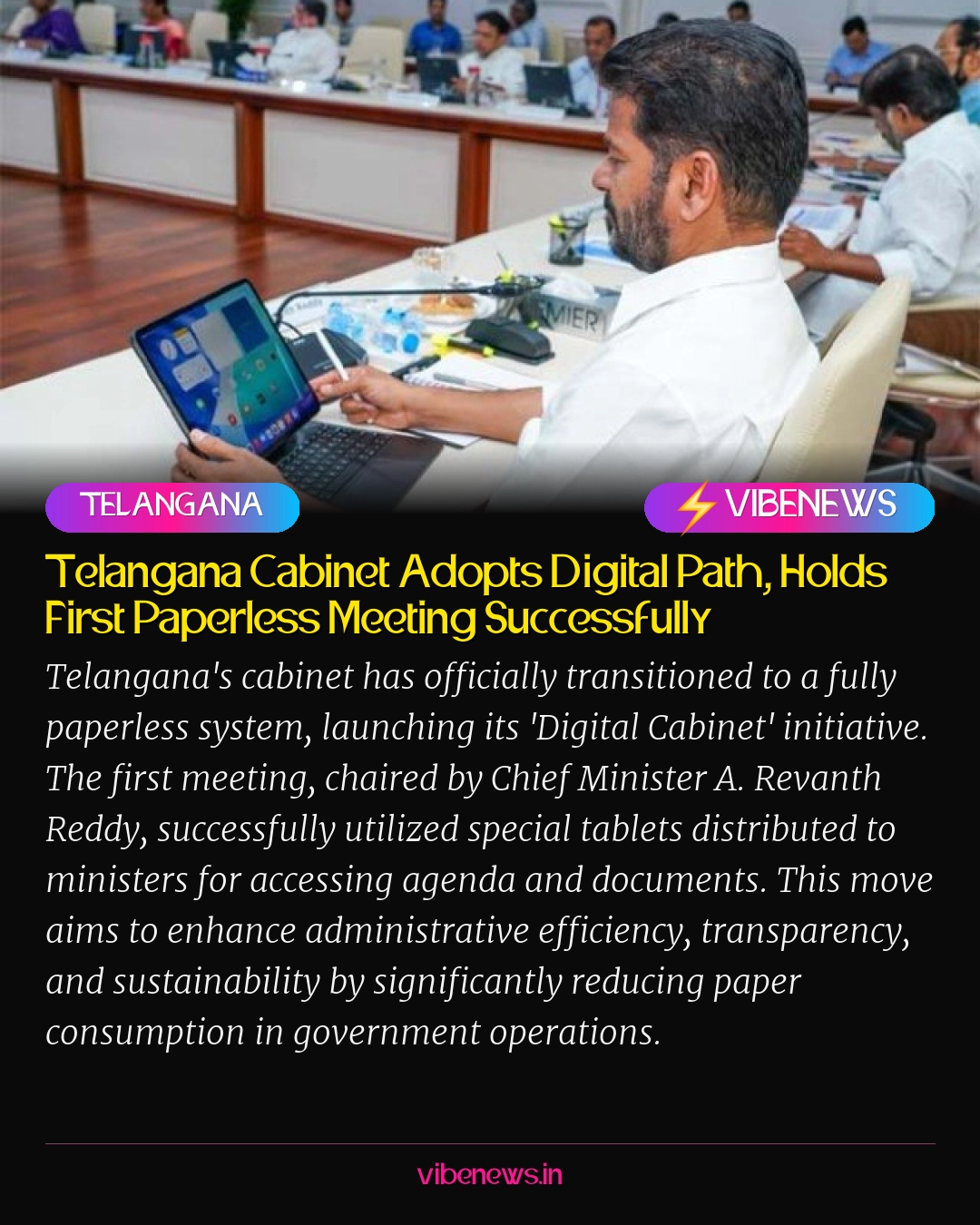
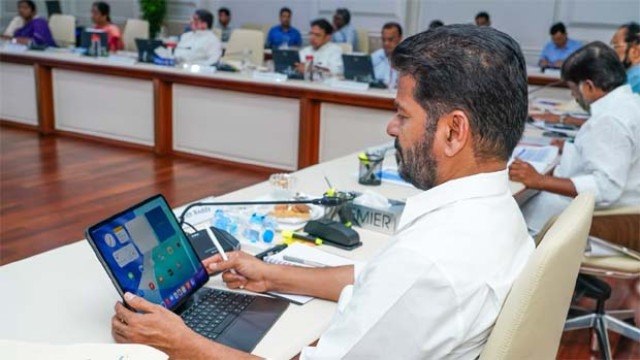
The Telangana state cabinet has officially embraced a fully paperless system for its meetings, marking a significant stride towards digital governance. On Thursday, under the chairmanship of Chief Minister A. Revanth Reddy, the cabinet convened its inaugural 'Digital Cabinet' meeting, where all official documents and agenda items were accessed exclusively through specially distributed tablets.
This initiative aims to fundamentally transform how government decisions are made, moving away from traditional printed files. IT and Industries Minister D. Sridhar Babu formally handed over these dedicated tablets to Chief Minister Revanth Reddy, Deputy Chief Minister Mallu Bhatti Vikramarka, and other cabinet ministers, symbolizing the official launch of this new era in state administration. The Chief Minister personally observed the system's functionality during the session, ensuring its smooth operation.
The primary objectives behind this digital transformation are multifaceted: to enhance administrative efficiency, foster greater transparency in governance, and promote environmental sustainability by drastically reducing paper consumption. By digitizing the entire process, the government expects to streamline discussions and accelerate decision-making, making the administrative machinery more responsive and effective. The absence of secretaries or other officials in this specific meeting underscored the cabinet's direct engagement with the digital platform.
This move by Telangana aligns with a broader national push towards e-governance, a strategy designed to leverage technology for improved public service delivery and administrative convenience. The National Informatics Centre (NIC) played a crucial role in the establishment of this digital cabinet system, providing the technical backbone and expertise necessary for its implementation. Such collaborations are vital in ensuring that state-level digital initiatives are robust, secure, and integrated with national e-governance frameworks.
Telangana is not the first Indian state to adopt such a progressive approach. Neighboring Andhra Pradesh, for instance, has also implemented similar e-cabinet systems, demonstrating a regional trend towards modernizing governmental operations. Andhra Pradesh had previously experimented with paperless meetings during Chandrababu Naidu's tenure between 2014 and 2019, pausing the initiative under a subsequent administration before restarting it with a more advanced version. This historical context highlights the evolving nature and increasing adoption of digital solutions in state governance across India.
The transition to a paperless cabinet is expected to yield several tangible benefits. Beyond the environmental advantages of reduced paper usage, it promises to make government processes more agile and less prone to delays associated with physical document handling. Ministers can access information instantly, securely, and from any location, facilitating more informed and timely decisions. This digital shift also enhances accountability, as all document access and modifications can be tracked, contributing to a more transparent administrative environment.
For the citizens of Telangana, this digital leap signifies a government committed to modern practices and efficient resource management. It sets a precedent for other departments and agencies to follow suit, potentially leading to a more interconnected and digitally empowered state administration. The successful conduct of the first paperless meeting is a strong indicator of the government's resolve to fully integrate technology into its core functions, paving the way for a more responsive and sustainable governance model in the long term.
TL;DR
- Telangana's cabinet has officially launched its 'Digital Cabinet' system, transitioning to fully paperless meetings.
- The first paperless meeting, chaired by Chief Minister A. Revanth Reddy, was successfully conducted on Thursday.
- Ministers received special tablets to access all agenda items and official documents digitally.
- The initiative aims to significantly enhance administrative efficiency, transparency, and environmental sustainability by reducing paper consumption.
- This digital transformation is part of broader e-governance efforts and was established with the collaboration of the National Informatics Centre (NIC).
- Telangana joins other states, including neighboring Andhra Pradesh, in adopting advanced paperless cabinet operations.
- The new system is expected to streamline decision-making processes and make state administration more agile and responsive.