
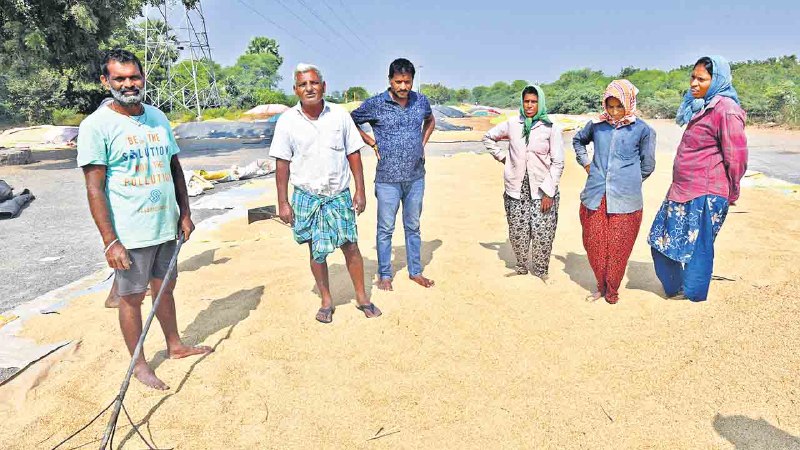
Telangana’s Civil Supplies department has changed the custom milled rice (CMR) rules for 2026-27, and rice millers will now have to sign an agreement with the department before they receive paddy. Mills that do not sign will have their allocations held back, according to reports from Hyderabad dated November 14.
The change targets a long-running problem. Under the old system, the agreement was signed after paddy had already been allocated. That meant the amount of grain a mill received had no real link to its capacity or its financial health. Officials say the arrangement left millers free to take paddy as they pleased, and to return rice in whatever way suited them. The department now wants allocations to follow the rules from the start.
Guarantees now come from other mills, not associations
One of the biggest shifts involves guarantees. Earlier, a mill seeking CMR allocation could submit a guarantee letter from the district or state committee of the Rice Millers Association. Officials concluded that these letters did little good in practice, so the department has dropped them. The association letter will no longer be considered.
In its place, each mill must now arrange guarantees from two other mills. If the mill defaults, by failing to deliver rice or by diverting paddy elsewhere, the responsibility falls on its guarantors. The losses are to be recovered from the mills that stood as guarantors. In effect, mills now have a direct stake in whether their neighbours keep their commitments.
Money at stake: certificates, bank guarantees and deposits
The financial conditions are steep. Millers must provide a solvency certificate covering 5 percent of the value of the paddy they are given. Millers with no history of default must also furnish either a bank guarantee equal to 10 percent of the paddy’s value or a security deposit of 25 percent.
The department has also decided that defaulting mills will not receive paddy under any circumstances. That single clause may matter most to mills that have run into trouble before, because it removes the chance to recover by taking fresh allocations.
The rules set out the core principle in plain terms:
Mills that default will not be allocated paddy under any circumstances, and the losses from a default will be recovered from the mills that guaranteed them.
Asset disclosure and a sworn affidavit
Reports say millers and their guarantors must also disclose the value of their assets and provide background details. The reasoning being discussed is that if a miller defaults, the department can move to attach those assets. The source material describes this as a matter of discussion rather than a formally explained measure, so the exact scope of the disclosure is not yet clear.
A further condition requires millers to submit an affidavit stating that they are taking delivery of paddy of their own free will. The move comes against a backdrop of complaints from millers that the government is effectively forcing paddy on them. The affidavit is meant to put that claim on record, in writing, before any grain changes hands.
Millers say they cannot operate under these terms
Millers are openly opposing the revised rules. They say they cannot run their mills under these conditions and cannot take delivery of paddy as things stand. Several millers have asked for some clauses to be relaxed, and until that happens, they say they will not unload paddy.
So far, agreements between the Civil Supplies department and millers have not been completed in the districts. That gap is what worries observers most. The paddy procurement season is already underway, and farmers are bringing their harvest to purchase centres.
What it means for Telangana’s farmers
For farmers in Telangana, the timing is the real concern. Paddy weighing at the procurement centres depends on mills agreeing to take delivery. If the agreements stall, farmers may be left waiting with their grain, with no clear date for when weighing will happen. Demands are already growing for the government to take steps that protect farmers from those delays, whatever happens between the department and the millers.
The reports do not say whether the department will ease any of the clauses, or when a decision on the millers’ demands might come. Until the two sides reach an agreement, the new rules remain a standoff, and the farmers bringing paddy to the centres are the ones who may feel it first.
TL;DR
- Telangana’s Civil Supplies department has revised CMR rules for 2026-27, requiring millers to sign agreements before receiving paddy.
- Mills that default will not get paddy allocations, and guarantees must now come from two other mills instead of associations.
- Millers must submit solvency certificates, bank guarantees or 25 percent security deposits, plus a sworn affidavit on taking paddy voluntarily.
- Millers say they cannot run mills under the new terms and are refusing to take paddy until some clauses are relaxed.
- No agreements have been completed in the districts yet, and farmers bringing paddy to procurement centres could face delays.