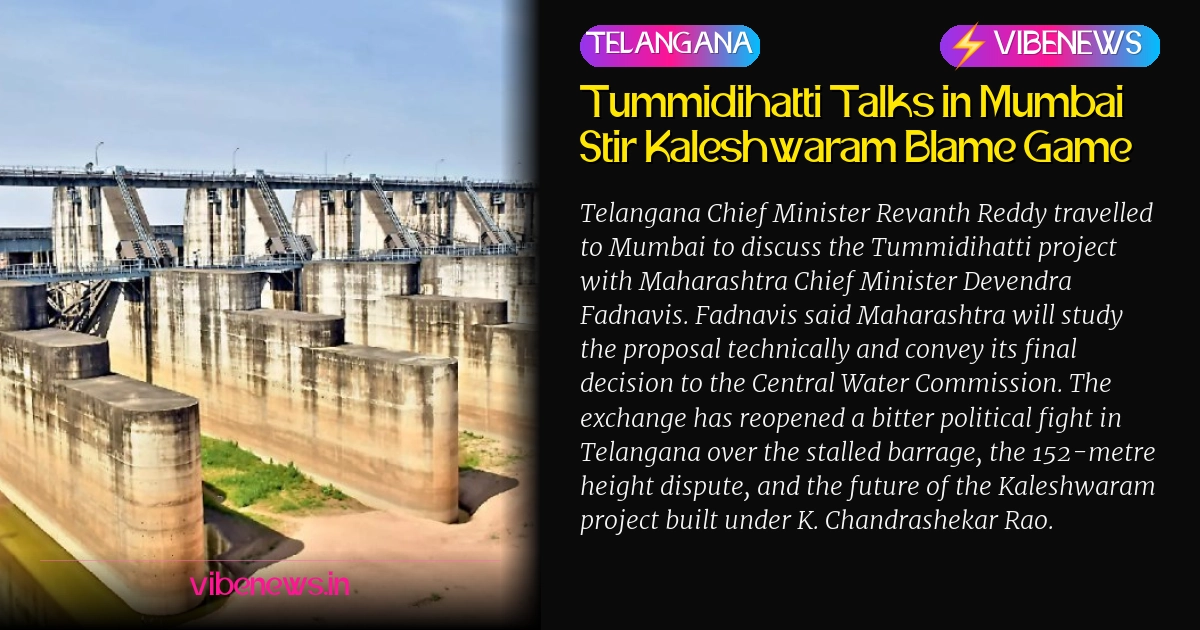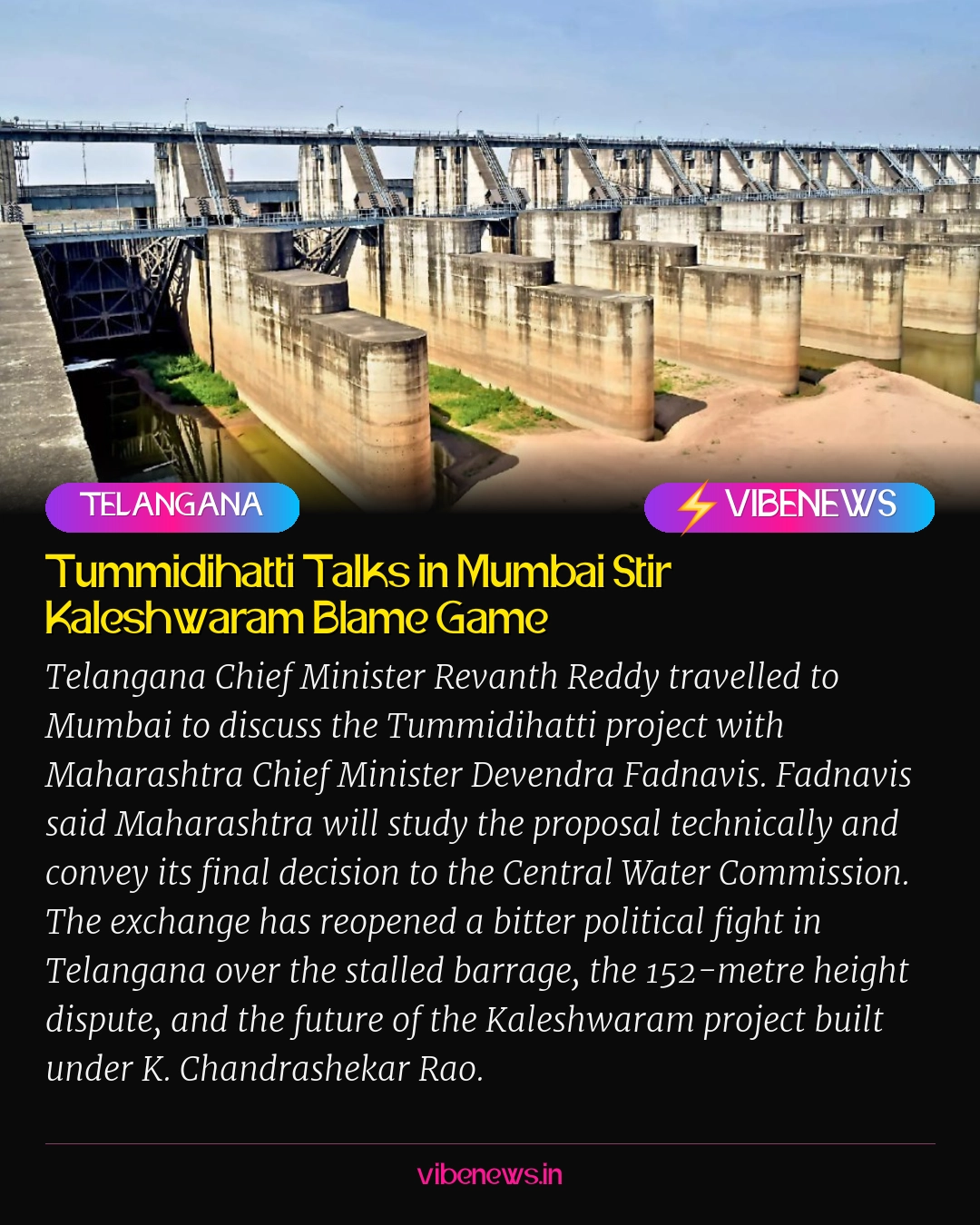
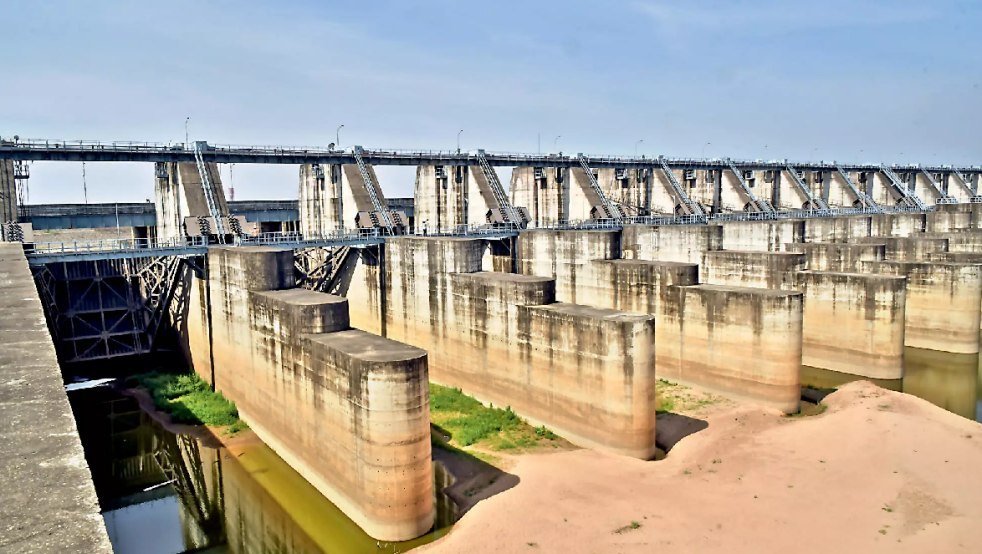
Telangana Chief Minister Revanth Reddy travelled to Mumbai to hold talks with Maharashtra Chief Minister Devendra Fadnavis on the Tummidihatti project, and the meeting has already become a political flashpoint in Hyderabad. After returning, Reddy told reporters that Fadnavis had responded positively. The Telugu daily editorial that frames this report, however, argues that the claim says far less than the government suggests.
Fadnavis did not commit to anything concrete, according to the editorial. His position, as the piece reads it, is that Maharashtra is willing to help its neighbours but that its own state interests come first. He also said Maharashtra would study the matter in depth from a technical standpoint. The final decision, he made clear, would be communicated to the Central Water Commission rather than directly to Telangana.
That detail matters. Telangana has been pushing for Tummidihatti as a way to lift water to fields in the state, but the decision will not be made in a Mumbai meeting room. It will pass through a central body that has the final word on whether the project moves ahead.
Why Tummidihatti has stayed stuck
The editorial describes Tummidihatti as a knot that has never come undone. The problem, it says, is not a shortage of water at the site. The problem is the height of the dam.
The Congress government has proposed a 152-metre height. According to the editorial, a barrage at that level is necessary to lift enough water, and anything lower would not deliver the required volume. But a structure that tall would drown large parts of Maharashtra, and a significant share of a wildlife sanctuary would go underwater with it. That clash over height is why the two states have not agreed on the project, the piece argues.
The editorial traces the history back to 2005, when Congress began talks with Maharashtra. A foundation stone was laid in 2008, three years later. Beyond that ceremony, the editorial says, little physical work followed. There were no agreements with Maharashtra, and the project did not move forward during the years Congress remained in power until 2014.
The Kaleshwaram comparison
The editorial makes the political argument explicit. When Telangana was formed in 2014, K. Chandrashekar Rao became its first Chief Minister, and he moved to find a lasting answer to the state’s water problem. Talks with Maharashtra were held first. When Maharashtra refused to accept the height the project needed, the government redesigned the scheme. The result was the Kaleshwaram lift irrigation complex.
According to the editorial, the Kaleshwaram project was completed in just three years and brought water to three lakh acres of new ayacut. It credits the scheme with helping turn Telangana into a grain-producing powerhouse. The piece also says that KCR’s government put to use canals that Congress had dug without ever completing the dam they were meant to serve.
Those claims are the editorial’s own, and they are sharply worded. The piece accuses the current Congress government of allowing Kaleshwaram’s pumps to sit idle, leaving fields dry. It says farmers are now pressing the government over why water was not lifted on time during floods. The editorial presents the renewed push for Tummidihatti as a way to shift attention away from that question.
Talks never stop, permissions never come, and work never moves forward.
That line, from the editorial, is the sharpest summary of its critique. It describes a pattern in which negotiations continue for years while projects remain on paper. The editorial argues that the same pattern has repeated for Telangana, and it says the Congress government has a long history of stretching out projects for the state over many years.
What the talks do and do not settle
On the facts available, the Mumbai meeting produced a process, not a decision. Maharashtra has said it will study the proposal technically. The final answer will go to the Central Water Commission. No public agreement on the dam height has been reported in the source material.
That leaves the Telangana government with a difficult message to explain to voters. The government has framed the outcome as positive. Its critics, represented here by the editorial, say the response contained no clear assurance and was little more than courtesy.
The editorial also raises a question about the timeline. Tummidihatti was conceived more than 21 years ago, the piece notes. Even if every obstacle cleared immediately, it asks whether Congress could build the project within another 21 years. It answers its own question with a pointed remark about the party’s electoral prospects in the next polls.
Maharashtra’s position, in the editorial’s telling, is also a warning. It says the state will never accept a proposal that harms its own interests. The piece suggests the diplomatic tone of the Mumbai meeting may hide a firm refusal on the points that matter most.
The political stakes for Telangana
The debate is not only about one dam. It is about who gets credit and who bears blame for the state’s water security. The editorial presents the current water crisis as the central issue, and it uses Tummidihatti as the lens for judging the government’s record.
Its closing call is direct. The editorial urges the Congress government to stop what it calls the politics of vengeance and to focus instead on getting the Kaleshwaram pumps running again. In its view, that is the only realistic route out of the present water crisis. Failing to act, it warns, would bring a harsh verdict from history.
Those are the editorial’s arguments, presented here as opinion. The underlying facts are narrower: a meeting in Mumbai, a stated willingness to study the proposal, a referral to the Central Water Commission, and a dam height that remains the central obstacle. Whether the talks become a turning point or another stalled chapter will depend on what comes out of that technical review and the central body’s decision.
TL;DR
- Telangana CM Revanth Reddy met Maharashtra CM Devendra Fadnavis in Mumbai to discuss the Tummidihatti project.
- Fadnavis said Maharashtra will study the proposal technically and send its final decision to the Central Water Commission.
- The core obstacle remains the dam height, with Congress proposing 152 metres.
- A higher dam would submerge large parts of Maharashtra, including much of a wildlife sanctuary.
- The editorial argues the talks produced no firm assurance and accuses the Congress government of neglecting Kaleshwaram’s pumps.