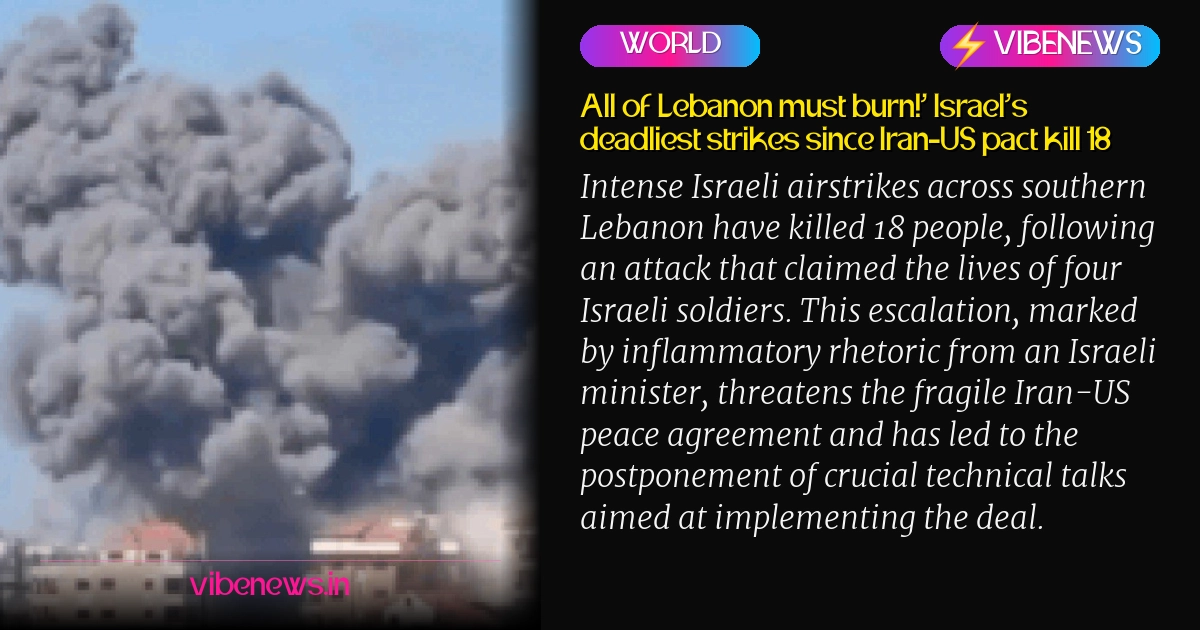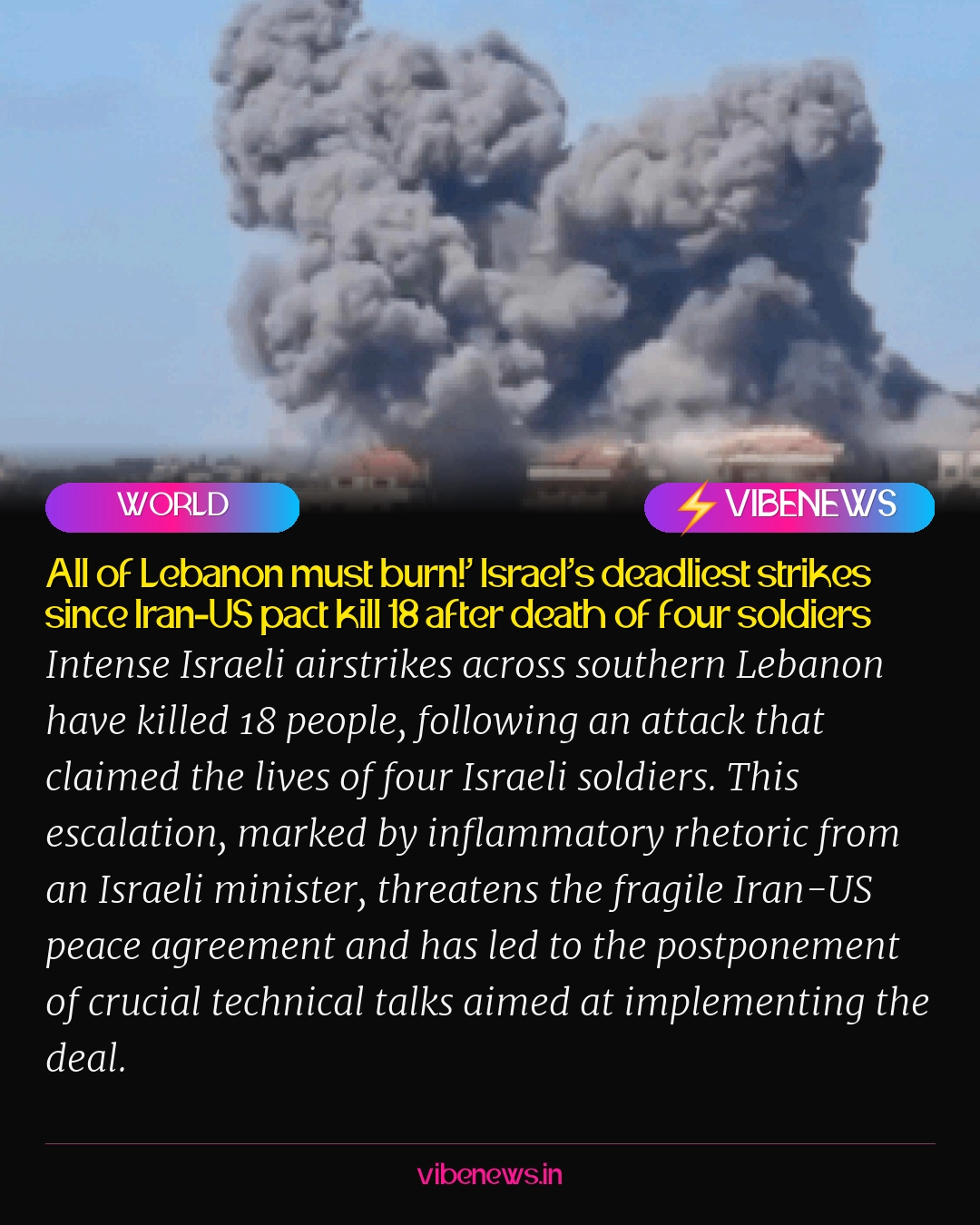
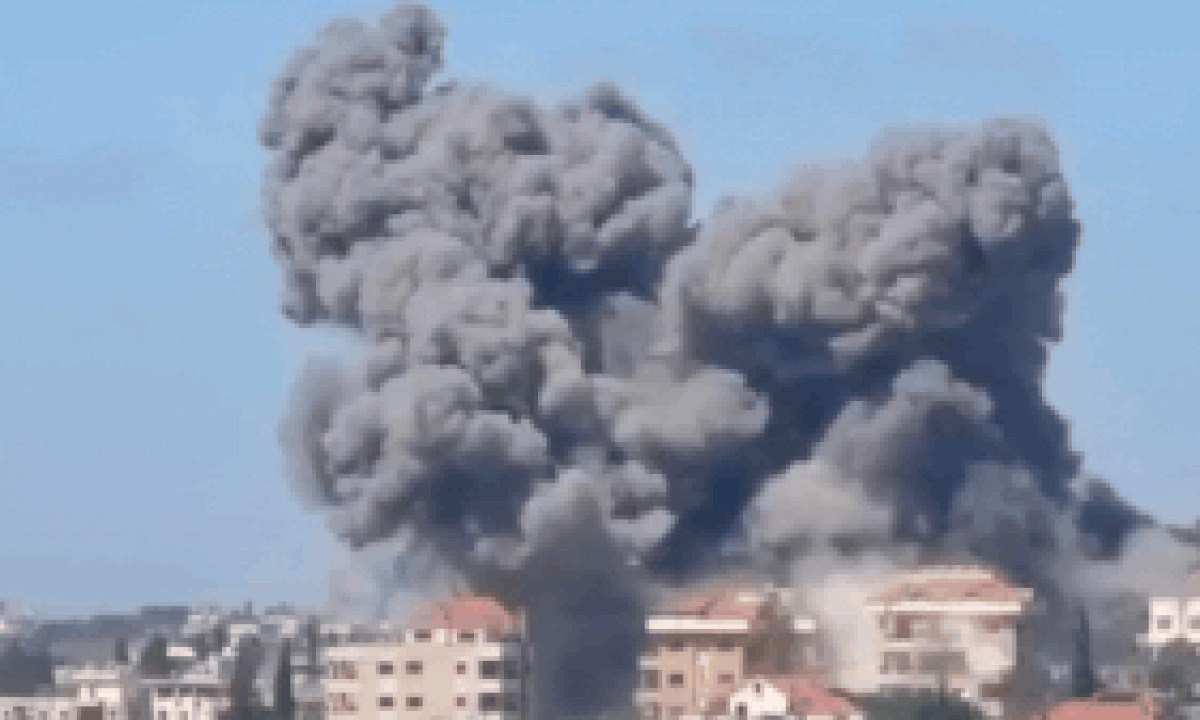
Intense Israeli airstrikes across southern Lebanon have claimed the lives of at least 18 people, marking the deadliest such attacks since a recently signed Iran-US agreement aimed to de-escalate regional hostilities. The overnight strikes, which also saw four Israeli soldiers killed in fierce fighting, have ignited fresh concerns about the stability of the Middle East and the viability of nascent diplomatic efforts.
Adding a volatile dimension to the escalating conflict, Israeli National Security Minister Ben-Gvir issued a stark warning. "All of Lebanon must burn!" he declared, asserting that for every Israeli mother's tear, a thousand Lebanese mothers must weep. He emphasized that Israel's duty to protect its citizens and soldiers takes precedence over all other considerations, advocating for an unrestrained approach in the region.
The Israel Defense Forces (IDF) confirmed it carried out multiple attacks across southern and eastern Lebanon. These operations, the military stated, were a direct response to what it described as "repeated ceasefire violations" by Hezbollah and the group's continued preparations for terrorist attacks against Israeli soldiers. The IDF maintained that Hezbollah poses an ongoing threat to Israeli forces near the border, justifying the latest strikes as essential security measures.
Lebanon's state-run National News Agency reported the 18 fatalities in southern Lebanon. The Israeli military, for its part, identified one of its fallen soldiers as a lieutenant colonel, with the identities of the other three expected to be released later. This exchange of fire underscores the deep-seated animosity and the immediate human cost of the renewed hostilities.
This latest surge in violence directly challenges provisions within the Iran-US agreement, which explicitly called for a cessation of hostilities between Israel and Lebanon. Israeli officials have consistently argued that military operations against Hezbollah must persist as long as the group retains the capability to launch attacks into northern Israel. They insist on maintaining freedom of military action in parts of southern Lebanon to counter perceived threats.
The escalating conflict has already had tangible diplomatic repercussions. Planned technical talks between the United States and Iran, scheduled to take place in Switzerland, have been postponed. These discussions were intended to focus on implementing various aspects of the Iran-US agreement and advancing negotiations towards a long-term settlement.
Switzerland's Foreign Ministry confirmed the delay, stating that while the preparatory work continues, the talks involving the US, Iran, Qatar, and Pakistan had been put off. The White House also acknowledged the postponement, with a spokesperson confirming that US Vice President JD Vance would not travel to Switzerland as initially expected, citing unfinalized logistical arrangements. The spokesperson noted the inherent complexity and unpredictability of such negotiations.
Meanwhile, Iran signaled its caution regarding the agreement's implementation. According to ISNA News Agency, the Iranian Secretariat of the Supreme National Security Council is closely monitoring developments. The council warned that any violations by the American side would be met with predetermined countermeasures, reflecting Tehran's ongoing distrust and concerns about the durability of commitments.
Further complicating the diplomatic landscape, Al-Mayadeen, a pan-Arab satellite channel aligned with Hezbollah, reported that Iran delayed sending its delegation to Switzerland specifically because of Israel's ongoing military campaign in Lebanon. While neither Tehran nor Washington officially linked the postponement to the Lebanese conflict, the continued violence undoubtedly adds significant uncertainty to an already delicate diplomatic process.
This rapid escalation highlights the extreme fragility of any peace efforts in the Middle East. It demonstrates how quickly violence can derail diplomatic progress, especially when core security concerns and highly charged political rhetoric persist. The deep-seated mistrust between regional actors makes enforcing agreements incredibly challenging in such a volatile environment.
The immediate future hinges on whether the postponed technical talks can be successfully rescheduled and if international efforts can effectively de-escalate the current fighting. Failure to do so risks further regional instability, potentially unraveling the nascent Iran-US agreement entirely and plunging the region into a deeper cycle of conflict.
TL;DR
- Israeli airstrikes in southern Lebanon killed 18 people, while four Israeli soldiers died in fighting, marking a significant escalation.
- Israeli National Security Minister Ben-Gvir issued an inflammatory statement, declaring "All of Lebanon must burn!" and advocating for aggressive military action.
- The Israel Defense Forces (IDF) stated its strikes targeted Hezbollah infrastructure in response to alleged ceasefire violations and threats to Israeli forces.
- The renewed violence directly contradicts provisions of a recently signed Iran-US agreement that called for a cessation of hostilities between Israel and Lebanon.
- Crucial technical talks between the United States and Iran, aimed at implementing the peace agreement, have been postponed amidst the escalating conflict.
- Switzerland confirmed the delay in talks, and the White House acknowledged the complexity of the negotiations.
- Iran warned against any violations of the agreement, while Hezbollah-linked media suggested Iran's delegation delay was due to Israeli military operations in Lebanon.
- The escalation underscores the extreme fragility of peace efforts in the Middle East and the challenges of enforcing diplomatic agreements in a volatile region.