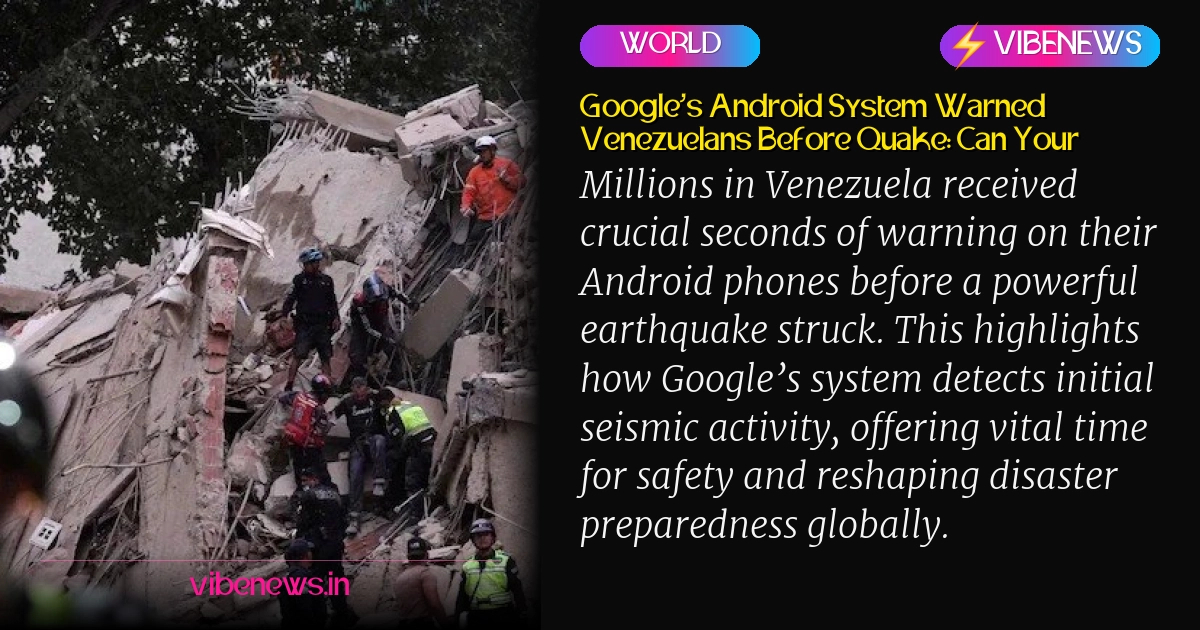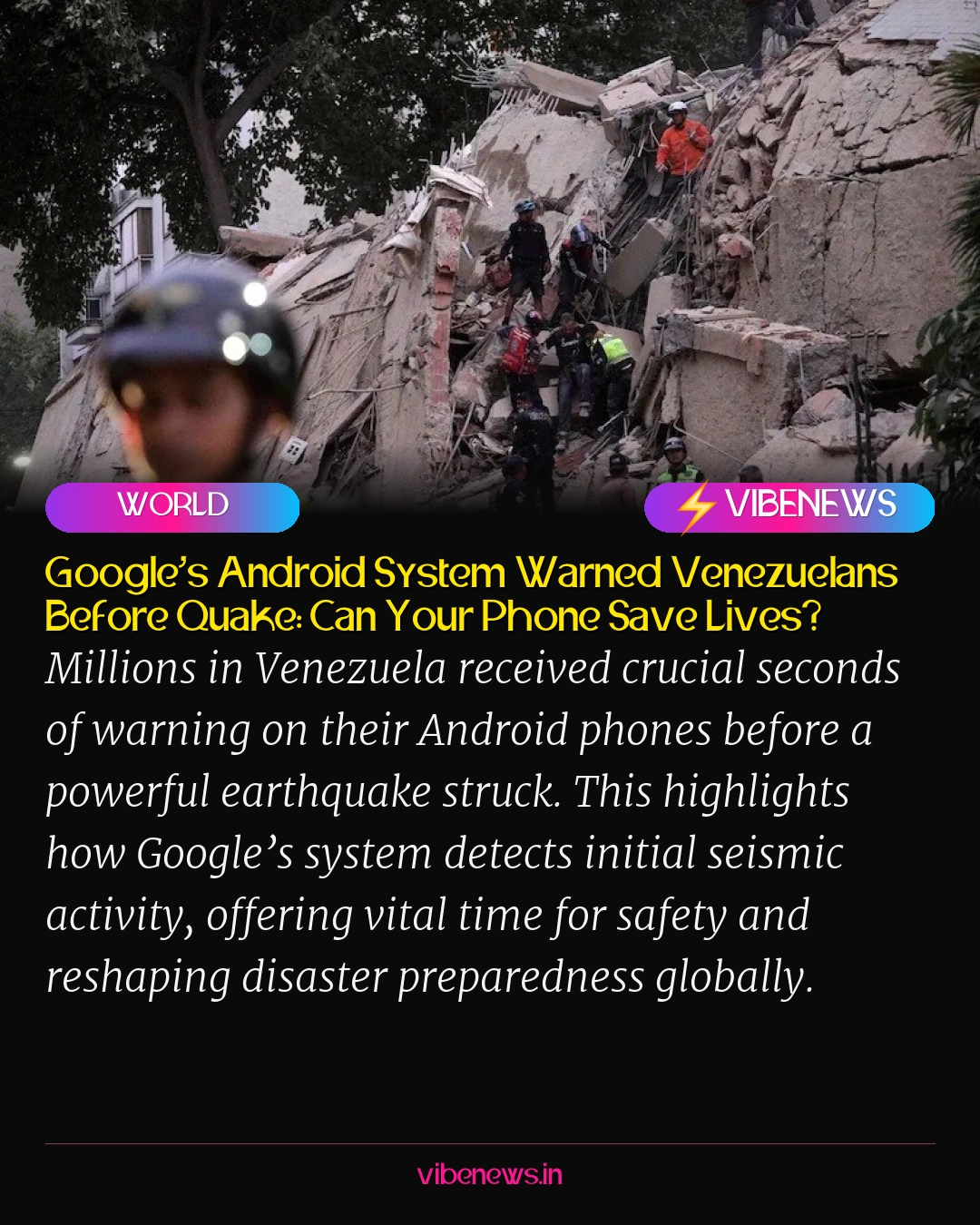
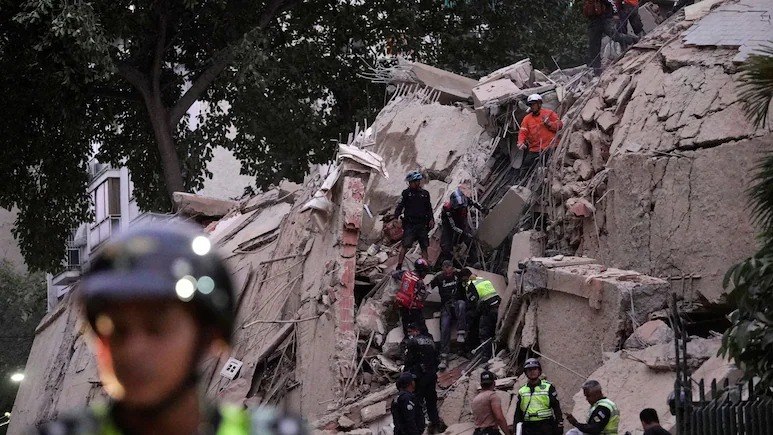
Millions of Android users in Venezuela received an unprecedented early warning on their smartphones just moments before a significant earthquake struck the nation. This event has underscored the growing capability of everyday technology to provide critical seconds for safety during natural disasters, sparking a global conversation about its life-saving potential.
Google’s Android Earthquake Alerts System detected the initial seismic activity, known as P-waves, and rapidly pushed notifications to users in the affected region. Experts clarify that this isn’t earthquake prediction, but rather an advanced form of early detection. Nikhar Arora, Director at BOTS.Ai by HR Anexi, explained the distinction, stating, "As widely perceived by many, it was not Google who predicted the occurrence of the earthquake, but rather detected the very beginning signs and sent out an alert well before the intense shaking began."
The system leverages the accelerometers embedded in billions of Android smartphones worldwide. These tiny motion sensors can detect the subtle ground movements caused by P-waves, which are faster, less destructive compressional waves. By analyzing patterns from numerous devices simultaneously, Google’s algorithms can quickly estimate an earthquake’s location and magnitude. This allows for alerts to be sent out before the arrival of the more damaging S-waves, or shear waves, which cause the violent, shaking motion typically associated with earthquakes.
While the warning window might only be a few seconds, this brief interval can be life-saving. It provides individuals with precious time to drop, cover, and hold on, move away from windows or heavy furniture, or even pause critical operations in industrial settings. These immediate actions, taken in those crucial moments, can significantly reduce injuries and fatalities, transforming a potentially chaotic situation into one where people can react proactively.
Experts believe the implications of the Venezuela incident extend far beyond seismic events. Hrishit Panthry, Co-founder of Envirocare Foundation, emphasized that this episode highlights technology’s potential to bolster disaster preparedness and enhance community resilience across various hazards. "Although it is impossible to predict earthquakes, it is possible to use technology to detect them immediately and communicate the news as quickly as possible to prevent injuries and deaths," Panthry stated, stressing the importance of such systems in an increasingly urbanized world.
This technological approach represents a significant shift in disaster management strategies. Instead of relying solely on traditional, fixed monitoring stations, authorities and tech companies are increasingly integrating connected devices, cloud computing, and real-time data networks. The widespread adoption of smartphones creates an unparalleled channel for disseminating vital safety information directly to citizens during emergencies, from floods and storms to extreme heat events. This distributed network offers a level of coverage and immediacy that traditional infrastructure often cannot match.
The lesson from Venezuela is clear for governments, scientists, and technology firms: while preventing natural disasters remains impossible, technology can provide invaluable time. Enhanced collaboration between public institutions and private tech companies will be crucial in building safer, more resilient communities globally. As natural disasters continue to increase in frequency and cost across the world, these early warning systems offer a beacon of hope, turning everyday devices into potential lifesavers. The few seconds of warning received by Venezuelans demonstrate a tangible step towards a future where technology plays a more proactive role in protecting human lives from nature’s unpredictable forces, offering a glimpse into how our phones might become our first line of defense.
TL;DR
- Google’s Android Earthquake Alerts System provided crucial seconds of warning to millions in Venezuela before a powerful earthquake struck.
- The system works by detecting initial, less destructive P-waves using smartphone accelerometers, not by predicting earthquakes.
- This early detection allows users a brief but critical window to take safety actions like dropping, covering, and holding on.
- Experts believe the technology’s success in Venezuela highlights its broader potential for disaster preparedness beyond just earthquakes.
- The incident underscores a shift towards leveraging connected devices and real-time data for improved disaster management and community resilience.
- Collaboration between public institutions and technology companies is seen as essential for developing and deploying such life-saving systems globally.