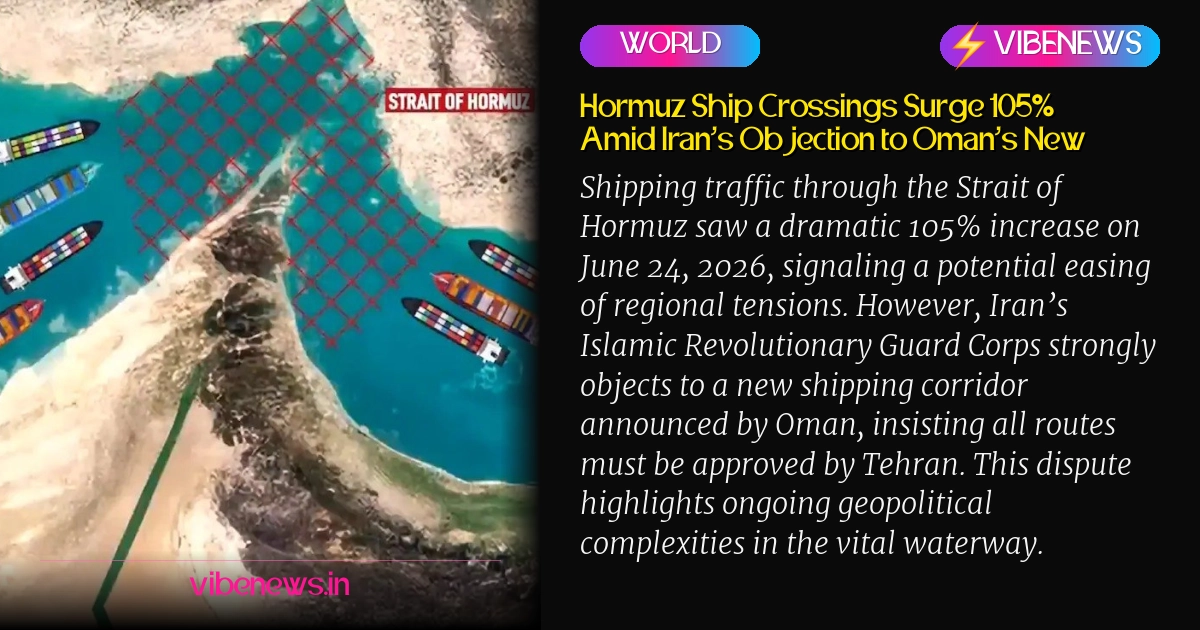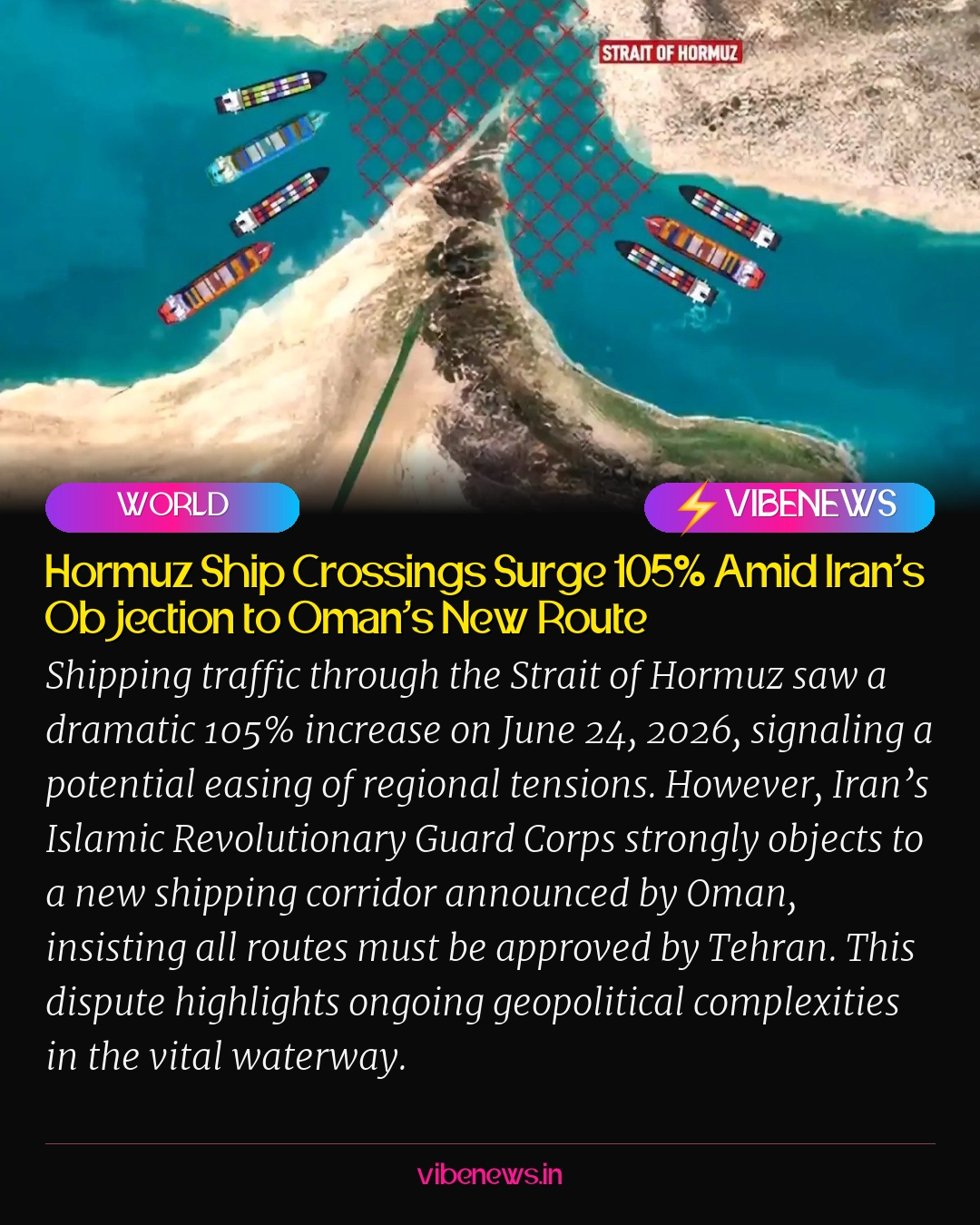
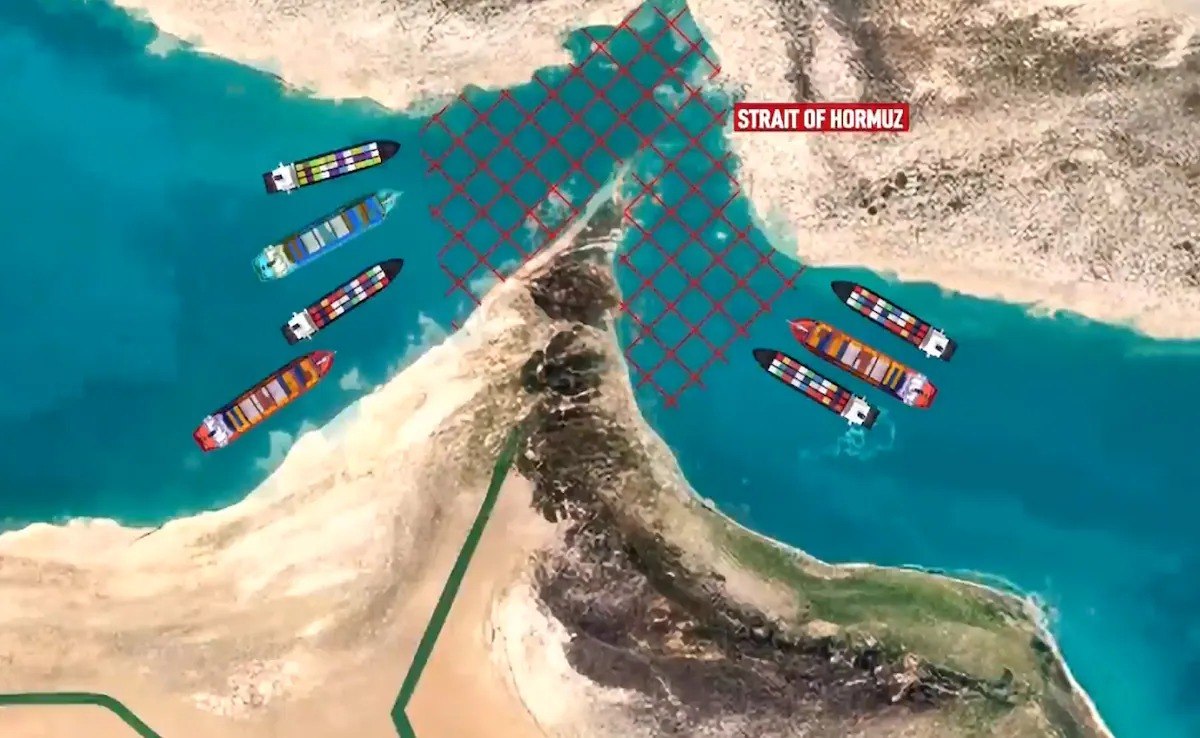
Shipping activity through the Strait of Hormuz, a critical global chokepoint for energy supplies, experienced a significant surge on June 24, 2026, with vessel crossings jumping by 105 percent. This dramatic increase, reported by maritime intelligence firm Kpler, saw the number of transits reach 70 in a single day, with 53 of these being commercial vessels deemed low-risk. The rebound suggests a cautious return of confidence among shipping operators and a potential de-escalation of tensions that have plagued the region for months.
The uptick in traffic is attributed to several factors, including ongoing demining efforts that have cleared safer passages and the increasing use of routes supported by Oman. This recovery also follows a memorandum of understanding between the United States and Iran, alongside the apparent cessation of a US naval blockade that had previously restricted movement within the strait. While these developments hint at a more stable environment, experts remain wary, pointing to persistent warnings from Iran’s Islamic Revolutionary Guard Corps (IRGC) and unresolved issues surrounding sanctions and future control of the waterway.
Adding a fresh layer of complexity to the situation, the IRGC has issued a stern warning to commercial ships, stating that only routes approved by Tehran are permissible for transit through the Strait of Hormuz. This declaration directly challenges a new shipping corridor recently announced by Oman, which was developed in coordination with the International Maritime Organisation (IMO) to enhance safe navigation after weeks of disruption. The IRGC vehemently objected to Oman’s initiative, claiming Iran was not consulted before the route’s public announcement.
In a strongly worded statement, the IRGC asserted, "Certain authorities have announced a new shipping route through the Strait of Hormuz without prior notification to or coordination with the Islamic Republic of Iran. The proposed route is unacceptable and poses serious safety risks." The force further underscored its authority, declaring, "The only authorised transit routes through the Strait of Hormuz are those designated by the Islamic Republic of Iran," and mandated that all vessels traversing the waterway must maintain contact with the IRGC Navy.
Oman’s Foreign Minister Badr Albusaidi defended the newly established corridor, emphasizing its creation to support safe navigation and adherence to international maritime rules. He affirmed Oman’s commitment to ensuring freedom of movement through the strait and clarified that no transit fees would be imposed for future arrangements related to the waterway. This diplomatic stance aims to reassure the international shipping community while navigating the complex geopolitical landscape.
The Strait of Hormuz holds immense strategic importance, facilitating a substantial portion of the world’s global energy supplies. The ongoing disagreement between Iran and Oman, despite the recent increase in traffic, highlights the fragile nature of regional stability. These developments unfold as Washington and Tehran continue delicate discussions surrounding a temporary agreement intended to permanently end what the source refers to as the "Iran war." Both sides have a 60-day window to finalize the details, yet public statements from leaders on both sides continue to inject uncertainty into the fragile arrangement.
The volatile situation was further underscored by a recent incident where a cargo ship, utilizing a United Nations-backed route within the Strait of Hormuz, was struck by a projectile. The British military reported the attack, noting damage to the vessel but no casualties or environmental impact. The identity of the attacker and the specific type of vessel involved remain unclear, but the incident occurred just hours after Iran’s warning against using unapproved routes.
US Secretary of State Marco Rubio, during a visit to the Gulf, reiterated Washington’s commitment to ensuring unimpeded passage through the strait. "If that stops, then we’re going to have a problem," Rubio stated, emphasizing the critical importance of the waterway to global trade. The reopening of alternative routes, such as the one proposed by Oman, could potentially alleviate pressure on global trade and diminish Iran’s leverage in ongoing negotiations.
Despite the improved shipping activity, traffic levels have not yet returned to their pre-conflict benchmarks. The perceived increase in stability has had a tangible impact on global markets, with oil prices briefly dipping below the pre-war level of nearly $73 per barrel. This market reaction signals an expectation of greater stability, yet the underlying tensions and the unresolved dispute over maritime control in the Strait of Hormuz suggest that the path to full normalization remains complex and fraught with potential challenges.
TL;DR
- Ship crossings through the Strait of Hormuz surged by 105% on June 24, 2026, reaching 70 vessels, according to maritime intelligence firm Kpler.
- This increase, with 53 commercial vessels, suggests a potential easing of tensions and growing confidence among shipping operators.
- The rise is linked to advancing demining efforts, new routes supported by Oman, a US-Iran memorandum of understanding, and the apparent end of a US naval blockade.
- Iran’s Islamic Revolutionary Guard Corps (IRGC) has warned ships against using any route through Hormuz not explicitly approved by Tehran.
- The IRGC’s warning directly opposes a new shipping corridor announced by Oman, developed in coordination with the International Maritime Organisation (IMO), which Iran claims was established without its consultation.
- Oman’s Foreign Minister Badr Albusaidi defended the new route, affirming its purpose for safe navigation and adherence to international rules, and clarified that no transit fees would be imposed.
- The Strait of Hormuz is a vital global chokepoint for energy supplies, and the dispute unfolds amidst ongoing, fragile US-Iran talks to finalize a temporary agreement.
- A cargo ship was recently attacked by a projectile in the Strait of Hormuz, highlighting the persistent risks in the region.