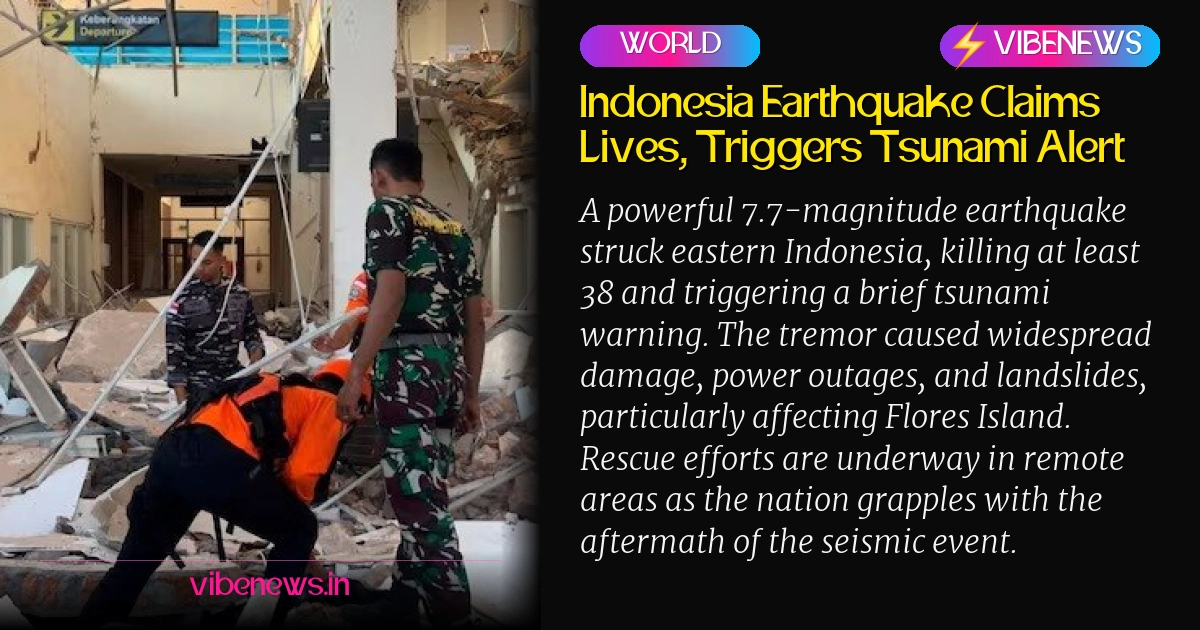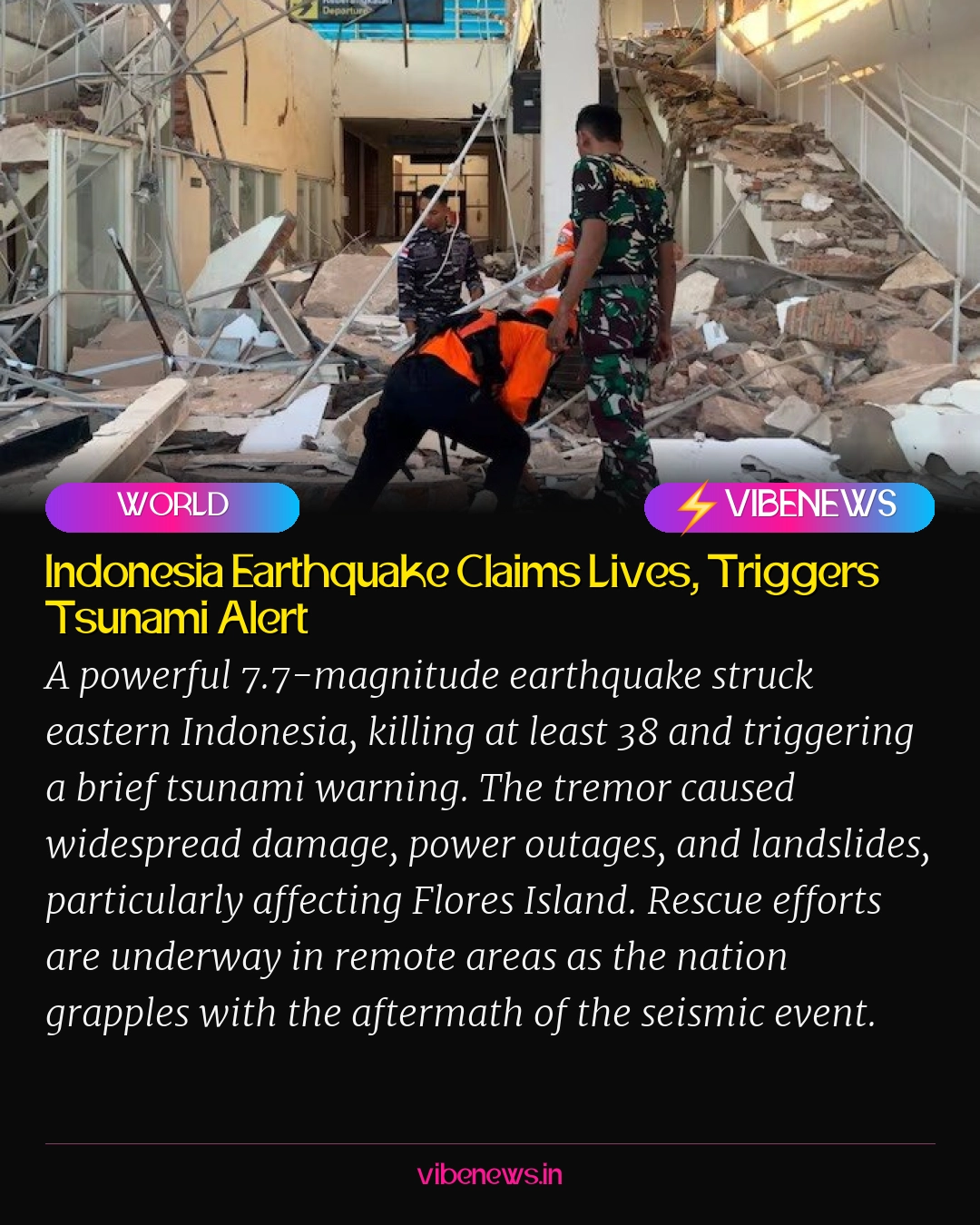
A devastating 7.7-magnitude earthquake struck off the coast of eastern Indonesia early Saturday, claiming the lives of at least 38 individuals and leaving a trail of destruction across several islands. The powerful tremor, which occurred at a shallow depth of 15 kilometers, initially triggered a tsunami warning that was subsequently lifted approximately three hours later after only minor waves were recorded.
The seismic event unfolded at 4:58 am local time, catching many residents in their sleep. The initial shock was followed by dozens of aftershocks, exacerbating the fear and chaos among the affected communities. While tsunami waves measured less than one meter in height in certain coastal areas, the primary concern quickly shifted to the immediate impact of the ground shaking.
Immediate Aftermath on Flores Island
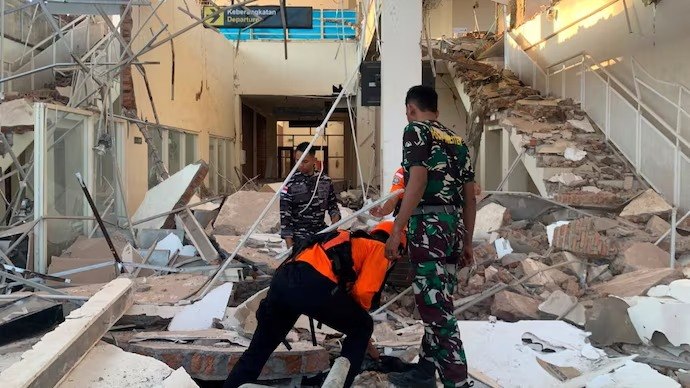
The port town of Maumere, located in Sikka Regency on Flores Island, bore the brunt of the initial impact. Rescue teams operating in and around Maumere swiftly discovered at least 20 fatalities, with six individuals sustaining injuries and two more found trapped beneath collapsed structures. The sheer force of the quake caused buildings to sway violently, with some ultimately crumbling into dust and rubble, as captured in verified video footage from the port area.
Eyewitness accounts paint a vivid picture of the terror that gripped residents. Nona, a 51-year-old resident of Talibura, recounted her experience: "The quake was massive, the shock was so strong, we were resting at home with family. There were 13 of us inside the house, and we all ran to save ourselves." Such narratives underscore the sudden and overwhelming nature of the disaster.
Challenges in Remote Regions
The region closest to the earthquake’s epicenter, Nagekeo, presented significant challenges for rescue and relief operations. Communications signals were severely disrupted, and landslides blocked crucial road access, impeding attempts by ground teams to reach the area. Authorities dispatched another team via ferry in a desperate bid to provide assistance to the isolated communities.
Approximately 2,000 residents in Nagekeo were evacuated from their homes, highlighting the scale of displacement caused by the disaster. Reports from Indonesia’s national disaster mitigation agency (BNPB) confirmed extensive damage to residential houses, warehouses, and government facilities. The widespread disruption also led to traffic congestion and power outages across parts of the regency, further complicating relief efforts.
A Region Prone to Seismic Activity
Indonesia’s geographical location makes it inherently vulnerable to such powerful seismic events. The archipelago nation sits squarely on the Pacific Ring of Fire, a horseshoe-shaped belt stretching around the Pacific Ocean where numerous tectonic plates converge. This geological configuration results in frequent earthquakes and volcanic eruptions, making disaster preparedness a constant imperative for the country.
The memory of past seismic tragedies looms large. The Indonesian geophysics agency, BMKG, noted that the same region was devastated by a magnitude 7.5 earthquake in 1992, an event that caused extensive destruction and loss of life. This historical context underscores the recurring threat faced by communities in this seismically active zone and the ongoing need for robust infrastructure and early warning systems.
Strong shaking was reported across a wide area, encompassing East Nusa Tenggara, West Nusa Tenggara, and parts of South Sulawesi. Residents in several locations described tremors lasting for about a minute, a duration long enough to cause significant structural damage and widespread panic. Hospitals, such as one in Ende district in East Nusa Tenggara, were compelled to move patients outdoors as a precautionary measure following the quake.
Assessing the Full Extent of Damage
As aftershocks continued to ripple through the affected areas, authorities commenced comprehensive assessments of the damage and overall impact. The immediate focus remains on search and rescue operations, particularly in remote and hard-to-reach locations where the full extent of casualties and destruction may still be unknown. International agencies and neighboring countries, including Australia, which confirmed no tsunami threat to its own territories, are monitoring the situation closely.
The scale of the humanitarian challenge is immense, requiring coordinated efforts to provide shelter, food, medical aid, and psychological support to the displaced and traumatized populations. Rebuilding efforts will undoubtedly be protracted, demanding significant resources and sustained commitment from both national and international bodies.
Editorial Context
The recent 7.7-magnitude earthquake in eastern Indonesia serves as a stark reminder of the nation’s perpetual vulnerability to natural disasters. While Indonesia has made strides in developing early warning systems and disaster response protocols, the sheer power and unpredictability of such events continue to test its resilience. This latest tragedy highlights the critical need for continuous investment in earthquake-resistant infrastructure, particularly in densely populated coastal areas and remote island communities.
Beyond immediate relief, the long-term implications for regional development are significant. The disruption to livelihoods, damage to essential services, and the psychological toll on survivors will necessitate sustained recovery programs. Furthermore, the incident underscores the importance of international cooperation in disaster management, sharing expertise, and providing resources to nations frequently impacted by seismic activity. As climate change potentially exacerbates certain natural phenomena, understanding and mitigating these risks becomes an even more pressing global imperative, with Indonesia often at the forefront of these challenges.
TL;DR
- A 7.7-magnitude earthquake struck eastern Indonesia, killing at least 38 people.
- The quake triggered a tsunami warning, later lifted, with minor waves recorded.
- Maumere, Flores Island, and Nagekeo were among the hardest-hit areas, facing significant damage and communication outages.
- Rescue efforts are challenged by landslides and disrupted infrastructure in remote regions.
- Indonesia is located on the Pacific Ring of Fire, making it highly prone to seismic activity.
- The region experienced a similar 7.5-magnitude earthquake in 1992, causing extensive destruction.