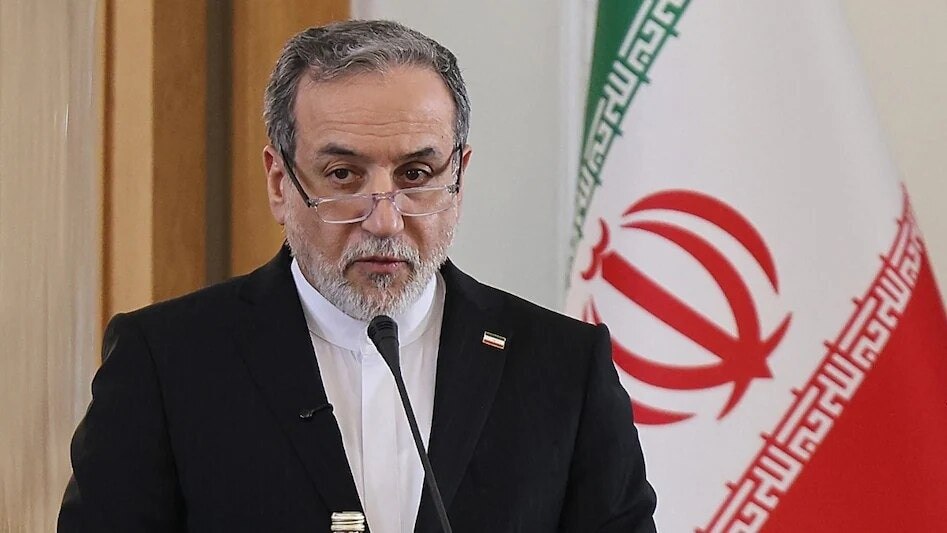
Iranian Foreign Minister Syed Abbas Araghchi on Tuesday rejected reports that Tehran is plotting chemical attacks in Washington and building missile bases beneath dams, calling the claims “RUBBISH” and accusing pro-Israel media of running a propaganda campaign to justify more aggression against Iran.
In a post on X, Araghchi said that over the previous 72 hours, pro-Israel media had reported that Iran was supposedly plotting to use chemical weapons in DC while building missile bases under dams. He was not in a diplomatic mood about it.
“RUBBISH. Spare us the Iraq War-style propaganda, especially with Israeli fingerprints all over it. Nobody is buying it.”
The Iraq comparison is deliberate. Araghchi is pointing back to the 2003 invasion, when US claims about weapons programmes were used to build support for war. Tehran now believes the same playbook is being dusted off, and it wants the world to notice before the story hardens into fact.
Where the allegations came from
The core claim surfaced in a report published on November 16, which cited seven US officials familiar with an intelligence assessment. According to that reporting, US intelligence agencies had picked up information suggesting Iran was developing plans for a potential attack in Washington, DC. The alleged planning reportedly involved specific locations and targets.
The same reporting was careful on one crucial point. American officials were divided over whether Tehran actually had the capability or the intention to carry out such an operation. The intelligence was being read as an effort to develop attack options rather than proof of an imminent threat. That distinction matters, and it is easy to lose once the words “dirty bomb” start circulating.
The allegations involved a radioactive “dirty bomb” or chemical weapons aimed at senior Trump administration officials. Those are not small claims, and they landed in an already tense relationship between Tehran and Washington.
Washington’s response
US President Donald Trump said on Tuesday that Washington was taking the alleged threat seriously. He warned that Iran would face unprecedented consequences if it attempted such an attack. According to the intelligence assessment, the allegations have also prompted contingency planning inside the administration.
Tehran has not accepted any of it. Iranian Foreign Ministry spokesperson Esmaeil Baghaei accused Washington of trying to manufacture a justification for further military aggression through what he described as baseless allegations. Araghchi’s post makes the same argument with far less diplomatic padding.
The dams and the missile question
A separate row has grown around Iran’s dams. A New York Times report from November 16 examined whether some of Iran’s extensive water infrastructure could also be supporting underground military facilities. The paper cited experts who pointed to geographical overlaps between dams, water-transfer projects and areas that have been targeted in US-Israeli airstrikes.
The report also admitted something important. Any direct link between that infrastructure and Iran’s underground missile network remained speculative. In other words, the overlap on a map is not the same as proof of a weapons site under a reservoir.
Baghaei responded by accusing Washington and Tel Aviv of building security pretexts for attacks on civilian infrastructure. In remarks reported by Press TV on Tuesday, he argued that civilian facilities being geographically close to military installations does not automatically make them legitimate targets. He pointed to Article 56 of Additional Protocol I to the Geneva Conventions, which gives special protection to dams and similar installations against attacks that could release dangerous forces and cause severe civilian casualties.
A war that has not paused
The rhetoric is landing on top of a conflict that is nearly nine months old. Diplomatic efforts to end it are still running, but so are the military confrontations. Reuters reported that Iran launched drones at a US military radar installation at Bahrain’s Sheikh Isa base on Tuesday. Bahrain said it intercepted the attack, and no casualties or damage were reported.
Diplomacy is moving on several tracks at once. Iranian and Qatari officials have been engaged in discussions. Araghchi held talks with Oman’s foreign minister on maritime security, shipping through the Strait of Hormuz and preventing further escalation. Those talks matter because the Strait of Hormuz is one of the most sensitive shipping routes in the world, and any miscalculation there would reach far beyond the two capitals.
Meanwhile, Washington is maintaining its naval blockade of Iranian ports, and Tehran is refusing to back down from its position. Neither side has moved far enough to suggest the confrontation is close to resolution.
What comes next
The core dispute is now about credibility as much as it is about weapons. Washington says it is treating a potential attack seriously, based on intelligence that its own officials disagree on. Tehran says the whole story is a manufactured pretext, built to justify more strikes on Iran and its civilian infrastructure.
Both sides are using the same backdrop to make their case. Iran is using the memory of the Iraq War to argue that Western allegations are being shaped to fit a policy outcome. Whether those allegations hold up will depend on what the intelligence shows over time, and on whether more evidence emerges beyond anonymous officials and speculative mapping.
For now, Araghchi has made his position clear. Iran plans to fight the allegations loudly, and it sees them as part of a wider effort to build support for further military action.
TL;DR
- Iran’s foreign minister Syed Abbas Araghchi called US-linked reports of a Tehran plot to use chemical weapons in Washington ‘RUBBISH’ on Tuesday.
- Araghchi accused pro-Israel media of running an Iraq War-style propaganda campaign to justify more aggression against Iran.
- The claims came from a November 16 report citing seven US officials, who remained divided on whether Iran had capability or intent to attack.
- Trump said Washington is taking the alleged threat seriously and warned Iran would face unprecedented consequences if it tried.
- Iran also rejected reports linking its dams to underground missile bases, calling them a pretext for attacks on civilian infrastructure.
- Iranian drones targeted a US radar site at Bahrain’s Sheikh Isa base on Tuesday; Bahrain said it intercepted the attack.