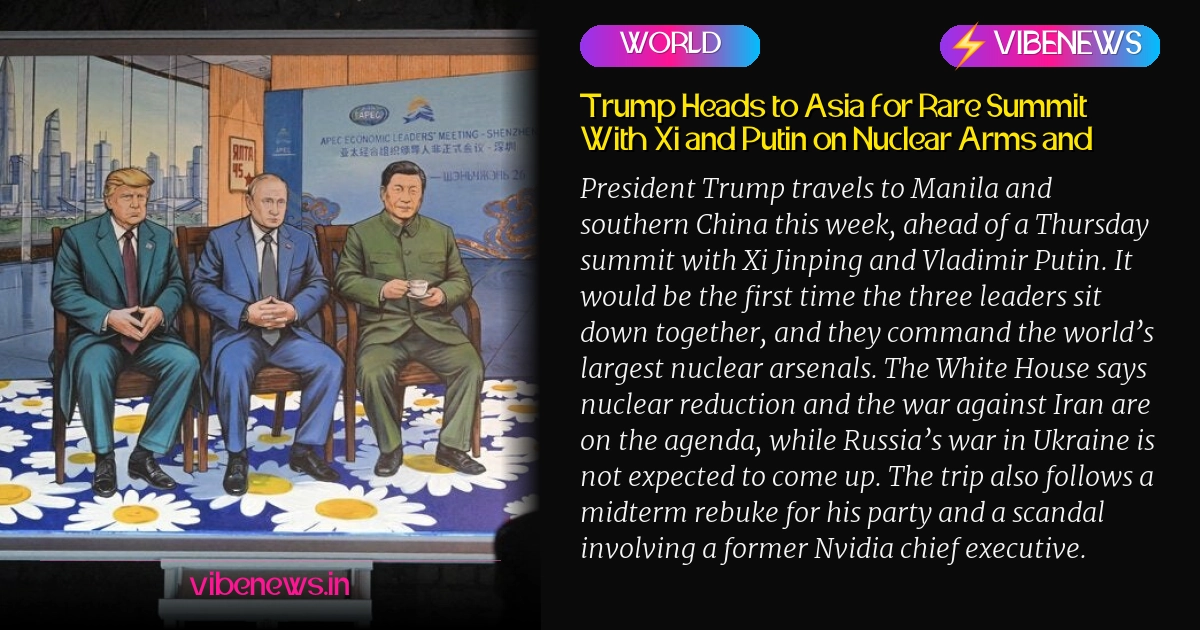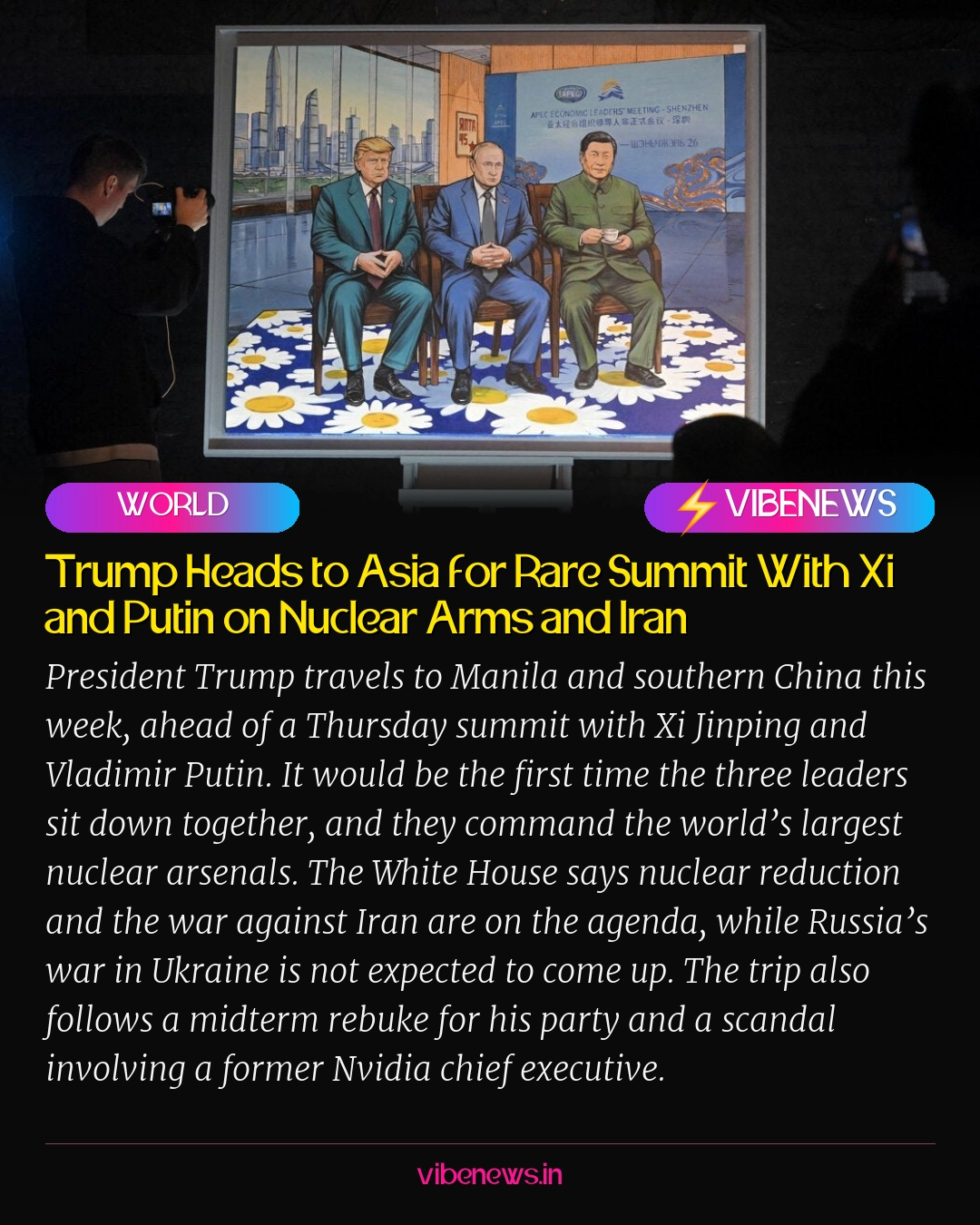
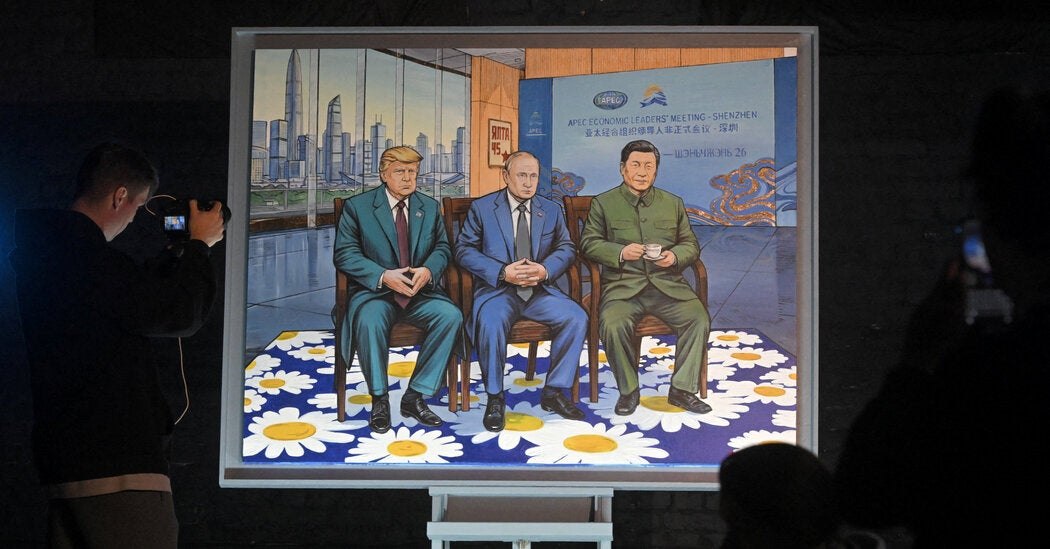
President Trump leaves this week for meetings in Asia that will end in a summit with two leaders he has often praised, President Xi Jinping of China and President Vladimir V. Putin of Russia. If it happens as planned, it will be the first time the three men have sat down together.
That detail alone would be enough to draw attention. The three men command the world’s largest nuclear arsenals, and their meeting would bring together the leaders of the countries that hold most of the world’s nuclear weapons at one table.
Trump will travel first to Manila and then to southern China. The highlight of the trip is expected to be his meeting with Xi and Putin on Thursday in China. Along the way, he will meet regional leaders who are dealing with a crowded list of worries, including the course of the war between the United States and Iran, high energy prices, and growing concern about the risks of artificial intelligence.
What is on the agenda
A White House spokeswoman said Trump plans to discuss the reduction of nuclear weapons around the world and the war against Iran. The source material does not say how far those talks could go or whether any of the three leaders will commit to specific steps.
One topic is conspicuously missing. Trump is not expected to raise Russia’s war with Ukraine. For a summit that includes Putin, that omission is likely to be one of the first things analysts and diplomats examine once the meetings begin.
A pivot after a bruising election
For Trump, the trip marks a shift toward foreign policy and personal relationships at a moment when American voters delivered a swift rebuke to his party in the midterm elections. Foreign travel gives a president a stage that is easier to control than a fight over domestic politics, and this trip puts him in front of leaders who have very different interests from Washington’s.
The timing also matters because his administration is under scrutiny over a scandal involving the former chief executive of Nvidia, the American tech giant. That affair has raised questions about Chinese espionage and about American exports of technology. Those questions land awkwardly on a trip that includes a stop in China and a meeting with Xi, whose government sits at the center of the debate over chip and technology sales.
The comparison that is getting attention
The prospect of their summit has drawn comparisons to the 1945 conference in the Crimean city of Yalta, where the leaders of the United States, the Soviet Union and Britain met to decide the shape of postwar Europe.
That comparison is doing a lot of work. At Yalta, Franklin Roosevelt, Joseph Stalin and Winston Churchill divided influence over postwar Europe in a meeting that still shapes how historians describe the era. Drawing that parallel suggests that observers expect this gathering to be about the balance of power and who gets to set the rules, not just a photo opportunity.
Whether the comparison holds will depend on what comes out of the room. The source material describes the expectations and the comparison, but it does not say what the three leaders will decide. For now, the summit remains a meeting that has been announced, with its biggest questions still unanswered: what Trump can get on nuclear weapons, whether Iran will come up in a way that changes anything, and how much Xi and Putin are willing to give up in exchange for a seat at the same table.
TL;DR
- Trump travels to Asia this week, with a Thursday summit in China planned alongside Xi Jinping and Vladimir Putin.
- It would be the first time the three leaders have sat down together, and they command the world’s largest nuclear arsenals.
- The White House says Trump will discuss reducing nuclear weapons and the war against Iran.
- Russia’s war in Ukraine is not expected to be on the agenda.
- The trip follows a midterm rebuke for Trump’s party and a scandal involving a former Nvidia chief executive.
- The summit has drawn comparisons to the 1945 Yalta conference that shaped postwar Europe.