Tehran officially declared on October 21, 2026, that it will not export a single gram of enriched uranium, issuing an uncompromising ultimatum to the United States amidst high-stakes mediation attempts by Pakistan to halt an active eight-month military conflict.
The declaration establishes an aggressive barrier against Washington’s core non-proliferation terms, effectively pushing international diplomacy to the brink. Mohsen Rezaei, Secretary of Iran’s Supreme National Security Council, publicized the non-negotiable decree on social media platform X and reaffirmed it during high-level diplomatic sessions in Tehran with Pakistan’s Chief of Army Staff, Field Marshal Asim Munir.
"Not a single gram of uranium will be sent out of Iran. Talks will not take place without America taking confidence-building steps. This process must begin with completely fulfilling all of Iran’s conditions."
Nuclear Deadlock at the Center of an Active War
The refusal to relinquish domestic control over fissile material strikes at the foundation of American strategic demands. Earlier this month, United States Vice President JD Vance explicitly asserted that the Iranian government must execute substantial reductions across its uranium enrichment apparatus to satisfy Washington’s security prerequisites and bring an end to the eight-month war between the two nations.
Western intelligence agencies, alongside Israel and allied nations, have consistently accused Tehran of advancing a covert nuclear weapons capability. These warnings intensified as Iran pushed its uranium enrichment levels to 60 percent purity—a threshold dramatically exceeding normal civilian energy requirements and edging dangerously close to the 90 percent purity necessary for weapons-grade fissile material. Although Iranian leadership continues to publicly deny pursuing atomic weapons, Rezaei confirmed that Supreme Leader Ayatollah Mojtaba Khamenei has personally mandated that near-weapons-grade nuclear stockpiles will remain strictly within Iranian borders under all circumstances.
Strait of Hormuz and the Seven Prerequisites for Peace
Beyond the nuclear impasse, Iranian officials have chained any prospective dialogue to absolute concessions regarding vital Persian Gulf shipping channels and severe economic embargoes. Following strategic discussions with Field Marshal Munir, Iranian Parliament Speaker Mohammad Baqer Qalibaf warned that the United States cannot restore diplomatic credibility without comprehensively fulfilling seven conditions established by Tehran last month.
Foremost among these demands is the restoration of maritime movement through the vital Strait of Hormuz. Iranian leadership has insisted on the immediate cessation of the American naval blockade on domestic ports, the complete removal of punitive sanctions strangling Iranian crude oil exports, and an unconditioned halt to military hostilities across all regional combat fronts. By tying navigation rights through the global energy corridor to sanctions relief, Tehran has escalated the economic dimensions of the confrontation, threatening international oil flows should diplomatic channels collapse entirely.
Pakistan’s Fragile Mediation and Regional Collapse
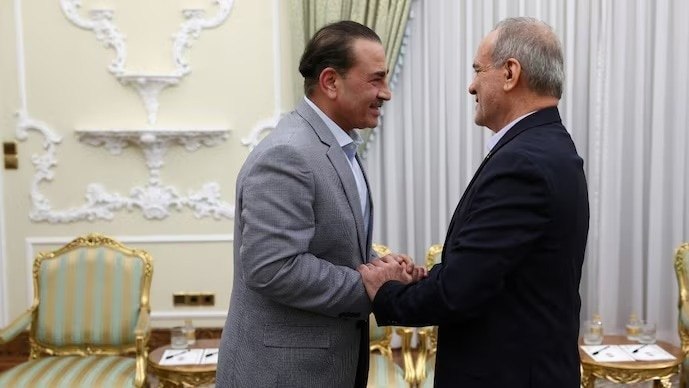
The latest diplomatic push comes as Field Marshal Munir conducts crucial security meetings across the Iranian capital, holding consultations with Iranian President Masoud Pezeshkian as well as parliamentary and military leadership. Pakistan has emerged as the central diplomatic intermediary between Washington and Tehran throughout the protracted conflict, having previously negotiated a short-lived interim peace framework in June.
However, that provisional truce collapsed within weeks when armed clashes reignited between American and Iranian forces, spiraling back into direct warfare. With Iran refusing to dismantle its nuclear gains or relinquish enriched reserves, Munir’s shuttle diplomacy faces monumental headwinds. Unless Washington acquiesces to Tehran’s sweeping maritime and economic terms, the standoff over the Persian Gulf and enriched uranium threatens to entrench the Middle East into an open-ended, escalating geopolitical crisis.
TL;DR
- Iran refuses to transfer even one gram of enriched uranium abroad.
- Tehran demands Washington meet seven conditions before initiating peace negotiations.
- Key terms include ending US port blockades and lifting oil sanctions.
- Iran is enriching uranium up to 60 percent purity near weapons-grade.
- Pakistani Army Chief Field Marshal Asim Munir is mediating in Tehran.
- The diplomatic standoff follows an eight-month war between the US and Iran.