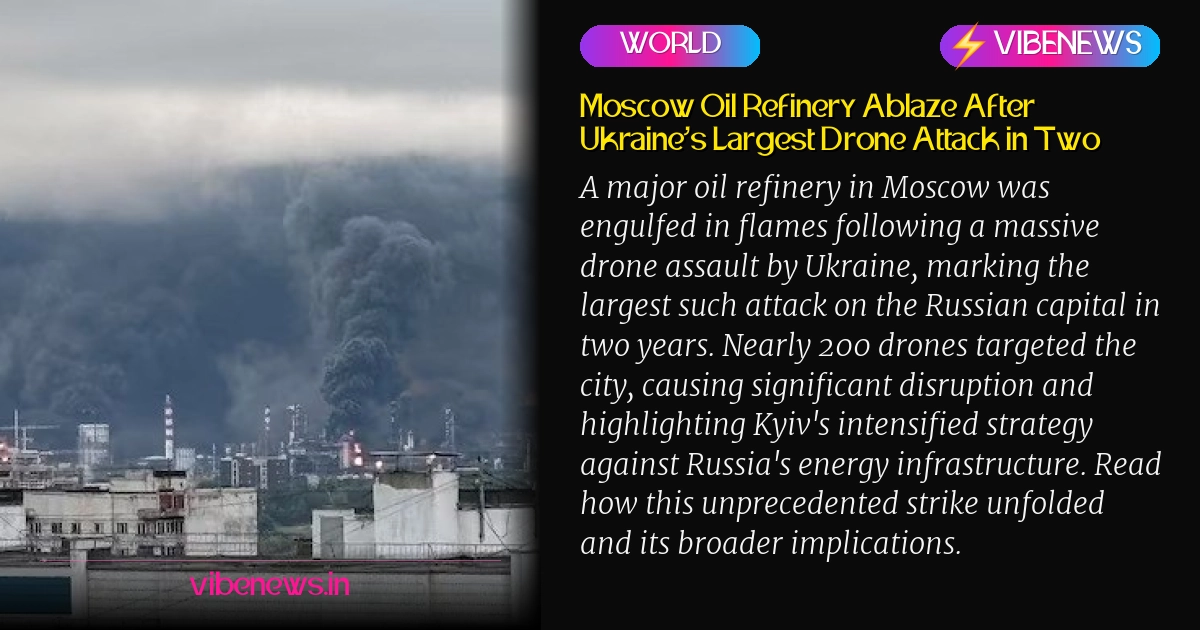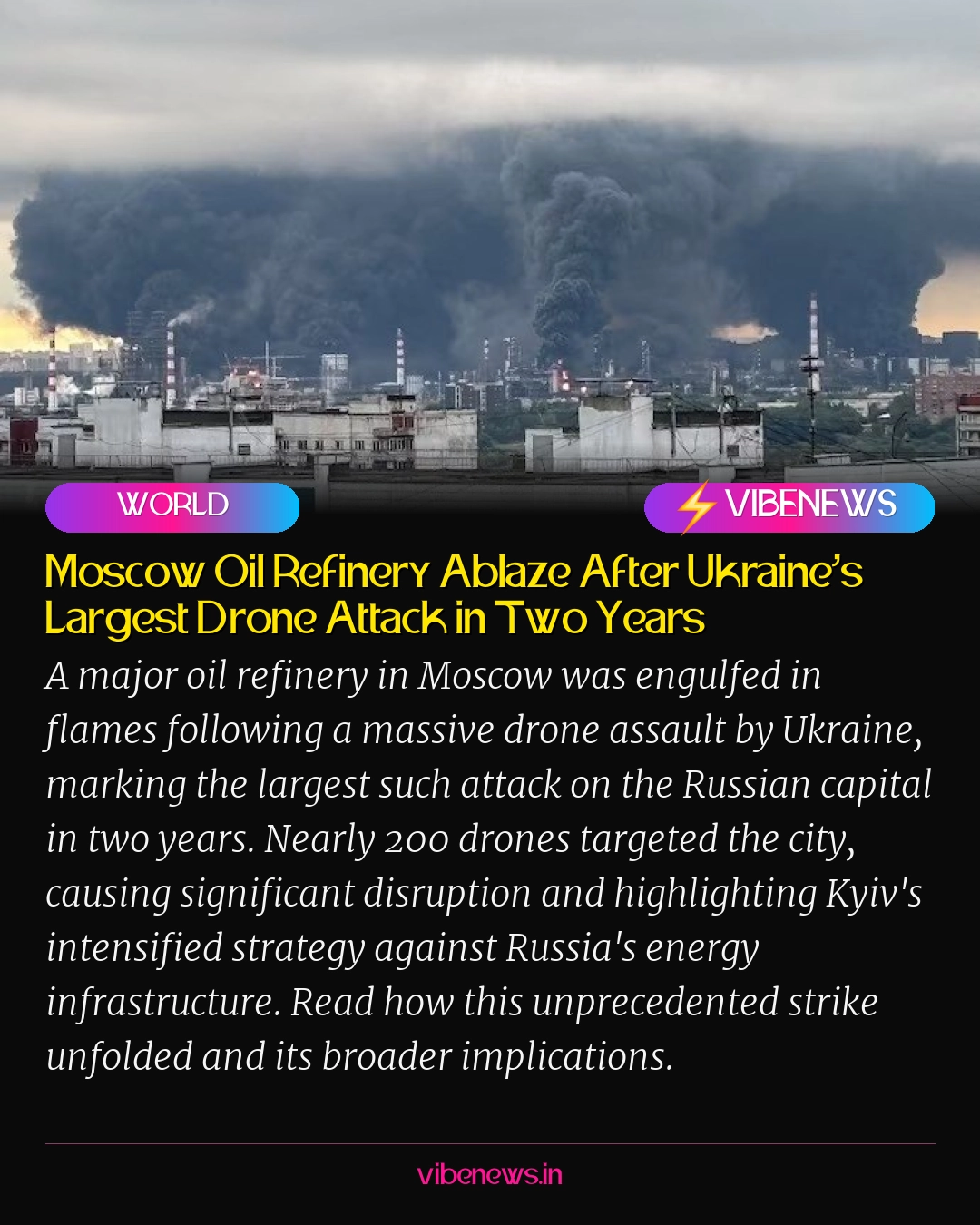
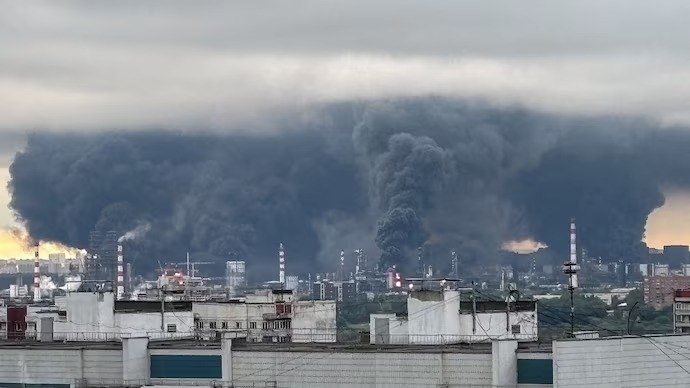
A significant oil refinery in Moscow was engulfed in flames after a massive drone attack launched by Ukraine, an assault described by Russian state media as Kyiv's largest on the capital in two years. The incident saw nearly 200 drones swarm the city, with at least seven directly striking the Gazprom Neft-owned Moscow Oil Refinery, located in the Kapotnya administrative district, just 15 kilometers from the Kremlin.
Plumes of thick black smoke and fireballs rose over the facility, which is crucial for Moscow's fuel supply. The refinery reportedly possesses a refining capacity of 12 million tons of oil annually and supplies approximately 70% of the petrol consumed by Moscow and its surrounding regions, according to the Ukraine-based news outlet Kyiv Post. This attack marked the second time the facility had been targeted by drones in recent days, following a similar strike just days prior.
Moscow's mayor, Sergei Sobyanin, confirmed via Telegram that city air defenses intercepted at least 194 drones overnight. Despite the extensive drone activity, no municipal air raid sirens were activated, leading to widespread confusion and panic among residents who awoke to the sounds of buzzing engines and explosions. Social media footage captured the dramatic scenes of smoke and fire, as emergency services rushed to the affected areas.
The drone offensive extended beyond the refinery, hitting multiple other targets across Moscow and its environs. Reports from The Guardian, citing Moscow Oblast Governor Andrey Vorobyov, indicated strikes on a high-rise residential building, an industrial facility, the Sadovod shopping complex, and several private homes. The Russian Defence Ministry also claimed its air defenses shot down an additional 555 Ukrainian drones over various other regions across the country.
The widespread attacks severely disrupted daily life in the Russian capital. Traffic was brought to a standstill on Moscow’s ring road near the burning refinery, as reported by Russian state media outlet RIA Novosti, citing the Interior Ministry. Furthermore, air traffic at all four of Moscow's major airports – Domodedovo, Vnukovo, Sheremetyevo, and Zhukovsky – was suspended, according to a report by the Associated Press, citing the Russian Transport Ministry.
Ukrainian President Volodymyr Zelenskyy addressed the attacks from Brussels, where he was meeting with NATO leaders, calling them “a fully justified response to Russian strikes on our cities and communities.” He emphasized that international partners had recently acknowledged the precision and effectiveness of Ukraine’s mid-range and long-range strikes. In retaliation, Russia launched seven missiles and 239 drones at Ukraine, striking private homes, energy infrastructure, a hangar, and oil facilities in the Kyiv and Poltava regions.
This latest strike on the Moscow Oil Refinery is not an isolated incident but rather a key component of Ukraine's evolving military strategy. Since 2024, Kyiv has significantly intensified its drone attacks on Russian oil refineries, aiming to disrupt Moscow's war economy. Ukraine has targeted at least 24 of Russia's 33 major refineries, with 158 recorded strikes by mid-2026, demonstrating a sustained campaign against critical energy infrastructure.
The cumulative impact of these attacks has severely impaired Russia's refining sector. Facilities in Kirishi, Ryazan, Samara, and Perm have experienced repeated shutdowns and reduced output, with offline primary refining capacity peaking at 20–40% during intense periods. These disruptions have led to Russian refinery runs dropping to multi-year lows, sometimes falling below 5 million barrels per day, triggering domestic fuel shortages, temporary export bans on petrol and diesel, and higher internal prices.
Economically, the campaign has inflicted substantial losses on Russia. Ukrainian strikes on energy infrastructure in 2025 alone cost the Russian oil sector over $13 billion in direct damage, lost profits, and indirect effects, as reported by the Russian financial news outlet Kommersant. Reuters also noted that Russia, a major global oil producer and exporter, is now set to import fuel by sea to manage growing petrol shortages exacerbated by these extensive drone attacks. The continued targeting of these vital facilities underscores Ukraine's commitment to degrading Russia's economic capacity to sustain its ongoing military operations.
TL;DR
- The Moscow Oil Refinery was hit by a massive drone attack, marking Ukraine's largest strike on the Russian capital in two years.
- Nearly 200 Ukrainian drones targeted Moscow, with at least seven striking the crucial oil refinery, causing significant fires and black smoke.
- The refinery, owned by Gazprom Neft, supplies approximately 70% of Moscow's petrol and has a refining capacity of 12 million tons of oil annually.
- The widespread drone offensive disrupted traffic on Moscow's ring road and led to the suspension of operations at all four of the city's major airports.
- Ukrainian President Volodymyr Zelenskyy stated that the attacks were a "fully justified response" to Russian strikes on Ukrainian cities.
- This incident is part of Ukraine's broader strategic campaign to target Russian energy infrastructure, aiming to weaken Moscow's war economy.
- Previous Ukrainian drone strikes have caused significant economic losses, reduced refinery output, and led to domestic fuel shortages in Russia.