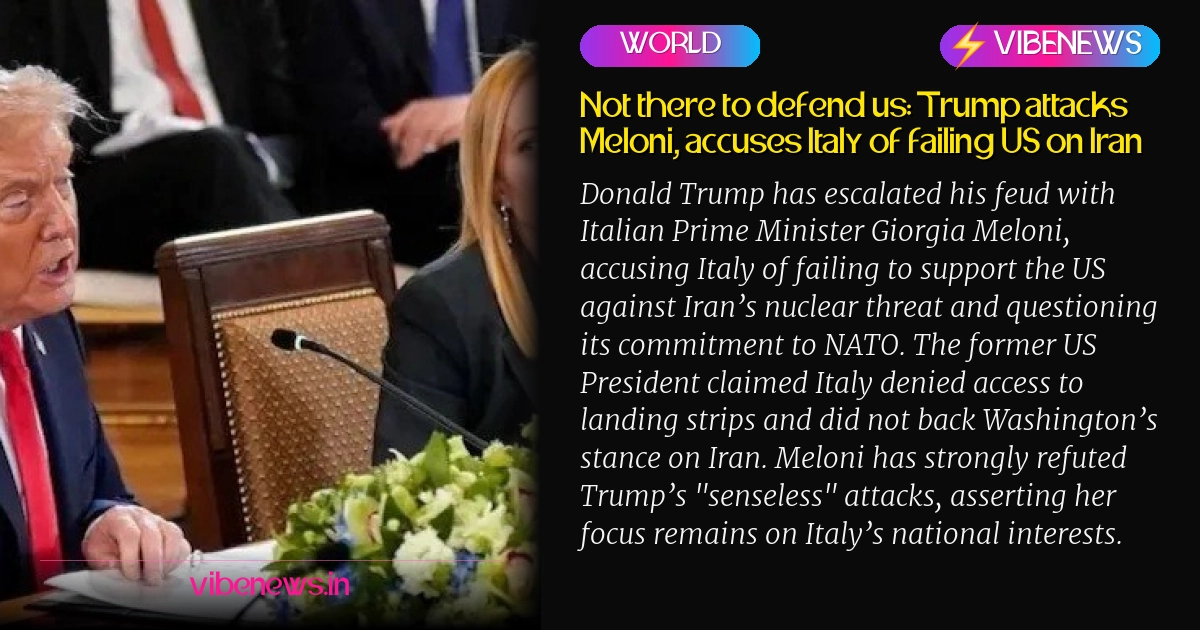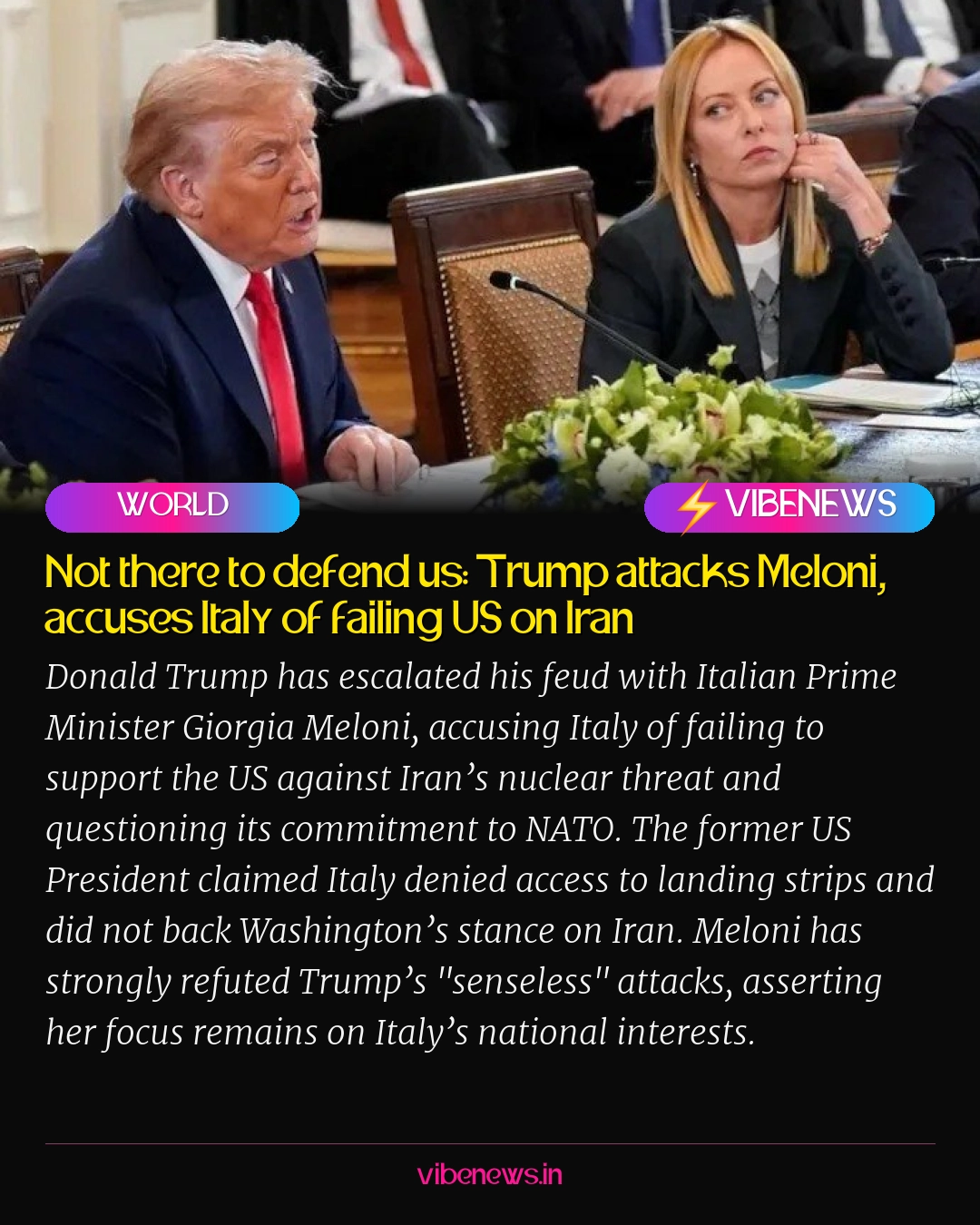
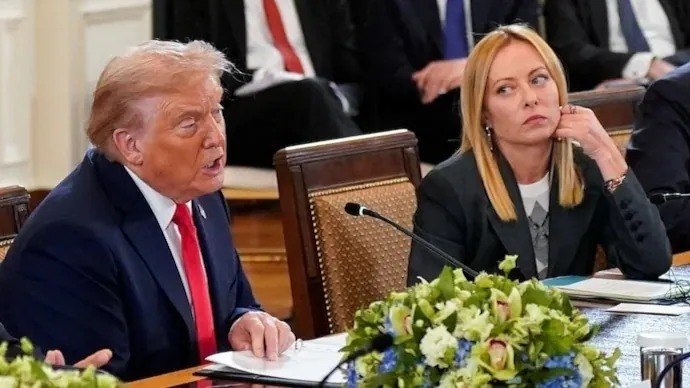
Former US President Donald Trump has intensified his public feud with Italian Prime Minister Giorgia Meloni, directly accusing Italy of failing to support the United States against Iran’s nuclear ambitions. This latest broadside escalates a personal dispute that began with Trump’s claims about Meloni at the recent G7 summit.
In a recent Truth Social post, Trump broadened his criticism beyond Meloni, targeting Italy’s broader role within NATO. "After spending Trillions of Dollars on NATO, Italy, and its Prime Minister, wouldn’t even think of becoming involved with the Islamic Republic of Iran and their very serious Nuclear Threat," Trump wrote. He added, "For decades, we defend them but, when tested, they are not there to defend us, and the rest of the World. Not good!"
The escalating rhetoric follows a contentious exchange between the two leaders after the G7 gathering in France. There, Trump repeatedly asserted that Meloni had "begged" him for photographs, a claim she vehemently denied as "completely made up." This personal slight appears to have fueled Trump’s more substantive policy criticisms.
Trump’s accusations against Italy are not new, reflecting a long-held frustration with NATO allies he perceives as freeloading on American military might. He specifically alleged that Meloni had refused the US access to Italian landing strips and runways during a hypothetical conflict with Iran. This denial, he claimed, caused "a great logistical inconvenience," despite the "hundreds of Billions of Dollars a year" the US contributes to protect Italy and other NATO members.
This stance aligns with Trump’s consistent criticism of European allies, whom he often accuses of underfunding their own defenses and failing to support Washington’s foreign policy objectives. He has frequently argued that many NATO members rely heavily on American protection without reciprocating when US interests are at stake, particularly concerning efforts to pressure Iran and curb its nuclear program.
Prime Minister Meloni has not shied away from responding to Trump’s attacks. She initially dismissed his G7 claims as "baseless" and expressed astonishment at the US president’s behavior towards allies. Regarding her popularity, she retorted that it was "none of your concern" and urged Trump to focus on his own approval ratings.
Following Trump’s most recent accusations concerning Iran and NATO, Meloni again pushed back forcefully. "President Trump, these constant, unprovoked attacks are senseless," she stated. She emphasized that her popularity "depends on my ability to defend Italy’s national interest, and that is exactly what I have always done," directly refuting any suggestion that her political standing is tied to her relationship with Trump or Washington.
This public spat between two prominent global figures carries significant implications for transatlantic relations and the future of NATO. Trump’s consistent questioning of allied commitment, especially on critical security issues like Iran’s nuclear program, could strain alliances further if he were to return to office. It highlights a fundamental divergence in how some European nations and a potential future US administration view shared responsibilities and threats.
The clash unfolds as the US engages in high-stakes negotiations with Iran in Switzerland, following the recently signed Islamabad Memorandum of Understanding. Trump has consistently demanded that Tehran cease Hezbollah’s activities in Lebanon, reopen the Strait of Hormuz, and abandon its nuclear weapons ambitions. His pressure on allies to align with the American approach underscores the strategic importance of this issue.
The ongoing public dispute between Trump and Meloni signals potential friction points for international diplomacy, particularly concerning NATO’s cohesion and the collective approach to global security challenges. Observers will be watching closely to see if these personal and policy disagreements continue to escalate, potentially reshaping alliances and diplomatic strategies in the coming years.
TL;DR
- Donald Trump accused Italy and Prime Minister Giorgia Meloni of failing to support the US against Iran’s nuclear ambitions.
- Trump specifically alleged Italy denied US access to landing strips during a hypothetical conflict with Iran, causing logistical issues.
- He criticized Italy’s role in NATO, claiming the US defends them but they don’t reciprocate when tested.
- The policy accusations follow a personal feud where Trump claimed Meloni "begged" for a photo at the G7, which she denied.
- Prime Minister Meloni has strongly rejected Trump’s statements as "completely made up" and "senseless attacks."
- Meloni asserted her popularity depends on defending Italy’s national interest, not her relationship with Trump.
- The dispute highlights Trump’s broader, long-standing criticism of NATO allies for perceived under-contribution to collective defense.
- The clash could strain transatlantic relations and impact future diplomatic approaches to global security challenges, including Iran’s nuclear program.