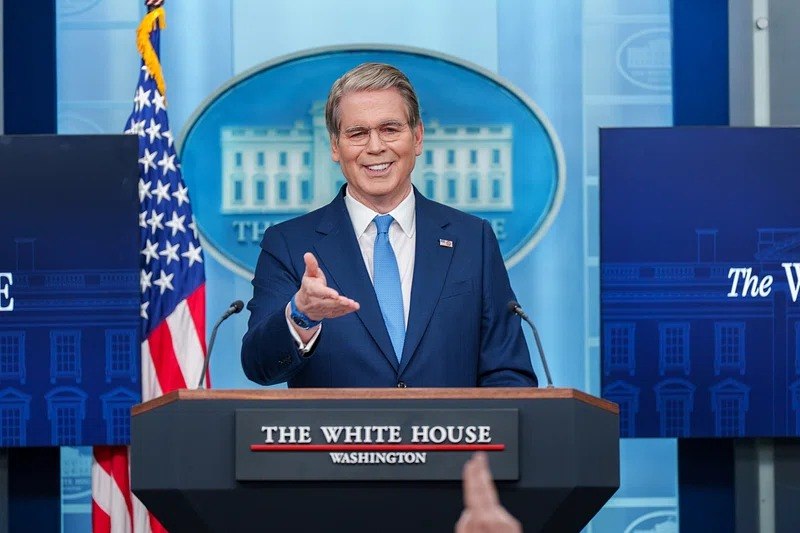
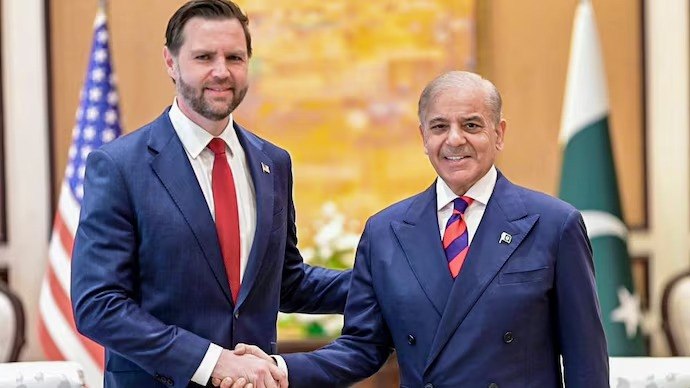
US Vice President JD Vance has publicly stated that the delay in releasing the full text of the US-Iran peace deal was partly due to the absence of press freedom in Pakistan and Qatar. This assertion has added a fresh layer of diplomatic embarrassment for Pakistan, which played a key role in brokering the interim agreement.
Speaking on the podcast 'Interesting Times with Ross Douthat', Vance explained that Washington initially withheld the details of the Memorandum of Understanding (MoU) with Iran because of concerns over transparency standards in the co-brokering nations. "We actually wanted to get it out. I think part of the misalignment here is that in the Pakistani and Qatari systems, they don't quite have the First Amendment and freedom of the press," Vance remarked, drawing a stark contrast with the United States' constitutional protections for free speech and media.
The First Amendment of the US Constitution explicitly prohibits the government from enacting laws that infringe upon free speech, freedom of the press, and religious liberty. Such robust constitutional safeguards are notably absent in Pakistan, a point Vance underscored. He elaborated, "And so, there isn't this expectation (in Pakistan) that the text is going to be out there for the American people to actually interrogate and look at and analyse and understand for themselves. But it will be out."
The full text of the agreement, aimed at ending the conflict between the US and Iran, was eventually released on Wednesday, June 17, 2026, two days after US President Donald Trump first announced the interim deal. The delay had previously drawn criticism from Democrats and fueled speculation that the agreement might contain significant concessions to Iran, particularly given Tehran's influence over the Strait of Hormuz and its impact on global oil markets.
Vance's comments have brought renewed international scrutiny to the state of free speech and press freedom within Pakistan. The nation currently ranks 153 out of 180 countries in the World Press Freedom Index, reflecting a long-standing and challenging environment for journalists. Over the decades, Pakistan has consistently been identified as one of the most difficult places for media professionals to operate.
Further compounding these concerns, the 27th Constitutional Amendment, passed in November 2025, has been widely criticized for further impeding press freedom. This amendment reportedly strips the Supreme Court of its authority to independently review fundamental rights, a move that critics argue weakens judicial oversight over government actions affecting media. This legislative change, coupled with Vance's remarks, paints a grim picture of the media landscape.
The US Vice President's statement is particularly awkward for Pakistan, which had presented its role in facilitating the US-Iran deal as a significant diplomatic triumph. Earlier in the week, Pakistani Prime Minister Shehbaz Sharif had announced that an official signing ceremony for the agreement would take place in Switzerland on June 19. However, this plan was swiftly contradicted when President Trump and Iranian President Masoud Pezeshkian digitally signed the MoU on Thursday, June 18, 2026. The Iranian Foreign Ministry also clarified that no physical signing ceremony would be held in Switzerland, forcing Sharif to quietly remove the Switzerland signing paragraph from his public statements and cancel his planned visit.
This series of events, from the confusion surrounding the signing ceremony to Vance's direct criticism of press freedom, collectively underscores the diplomatic challenges and reputational damage Pakistan faces on the international stage. The incident highlights how transparency and media freedom are increasingly intertwined with global diplomacy and the public's right to scrutinize international agreements.
TL;DR
- US Vice President JD Vance stated that Pakistan's lack of press freedom contributed to the delay in releasing the US-Iran peace deal terms.
- Vance contrasted Pakistan's media environment with the US First Amendment, which guarantees freedom of the press.
- The remarks have caused significant diplomatic embarrassment for Pakistan, a co-broker of the US-Iran agreement.
- Pakistan ranks 153 out of 180 countries in the World Press Freedom Index, indicating a challenging environment for journalists.
- A recent 27th Constitutional Amendment in Pakistan, passed in November 2025, further restricts press freedom by limiting the Supreme Court's review authority.
- The incident adds to Pakistan's diplomatic woes, following confusion over a planned physical signing ceremony for the deal that never materialized.