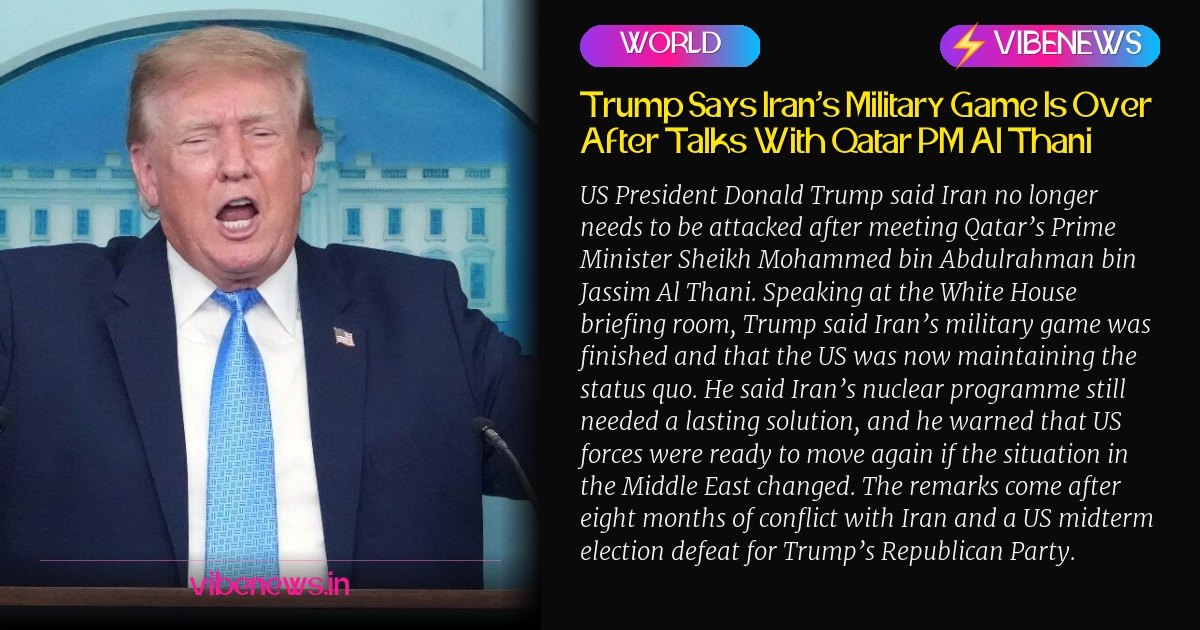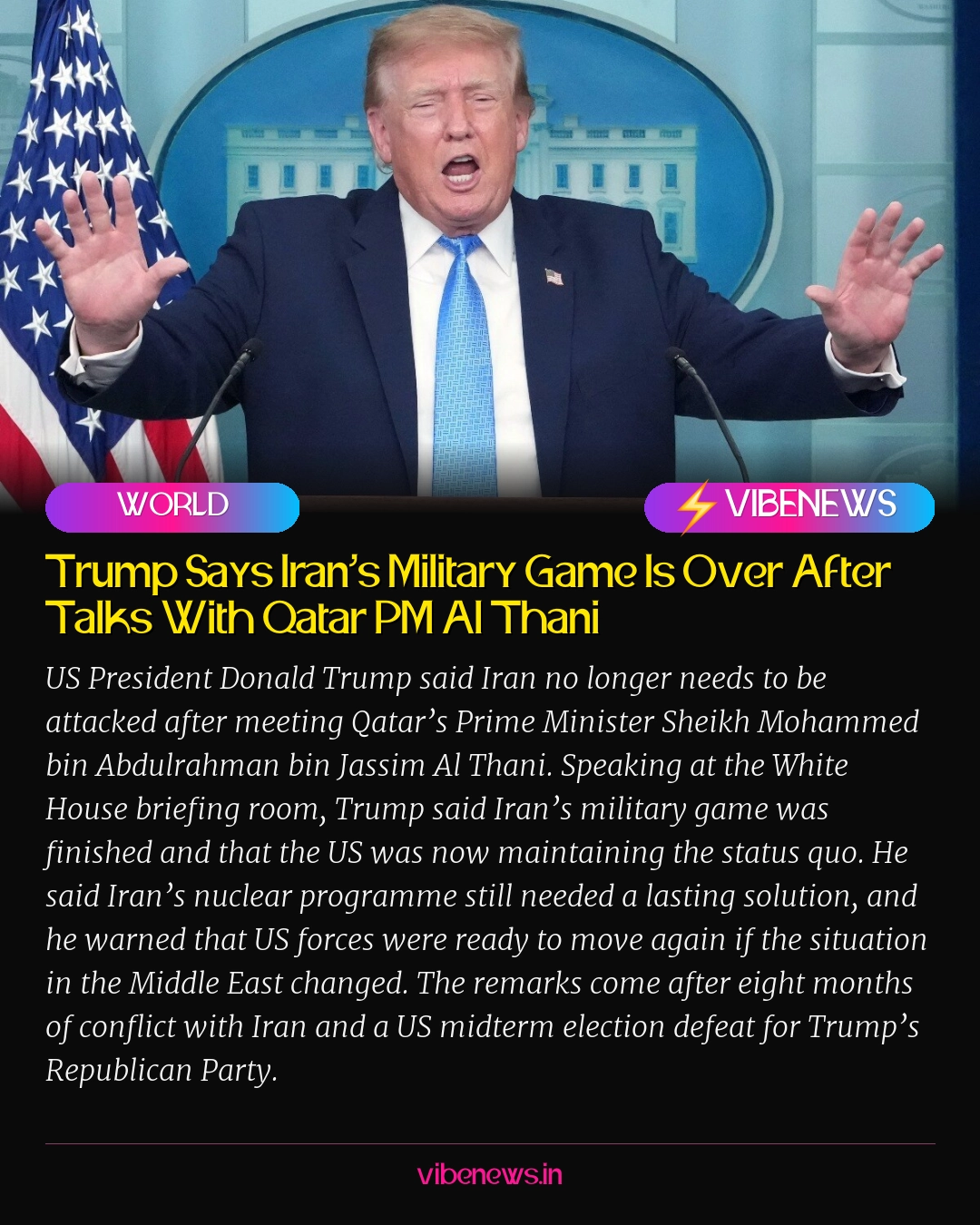
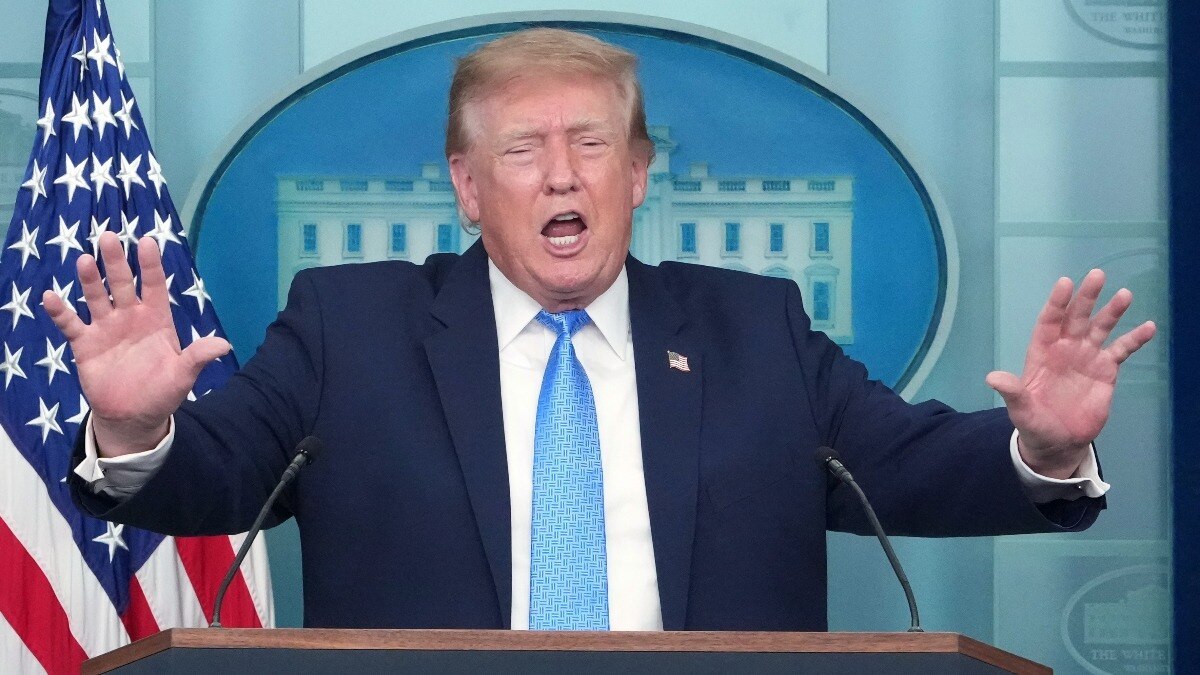
US President Donald Trump said Iran no longer needs to be attacked, and that Tehran’s military capacity has been badly degraded after a meeting with Qatar’s Prime Minister, Sheikh Mohammed bin Abdulrahman bin Jassim Al Thani.
Speaking to reporters in the White House briefing room, Trump put it bluntly. “Militarily, Iran’s game is over. We are just maintaining the status quo.” He added that Iran had been largely “neutralised,” but said Washington was still working toward a permanent answer that would neutralise Iran’s nuclear programme for good.
The comments mark a sharp shift in tone from a conflict that has dragged on for eight months and reshaped energy markets and global trade. Trump’s remarks did not declare a formal end to the war, and the White House has not outlined a signed agreement. What he did describe was a pause in new strikes, paired with a continued pressure campaign.
Trump also gave a rundown of the talks on Truth Social. He wrote that his conversation with Al Thani was “very good” and covered a lot about the Islamic Republic of Iran. The most important point, in his account, was that Qatar, Saudi Arabia, the UAE, Bahrain, Kuwait and other countries want things to stay as they are. In other words, he said, they want the largest naval blockade in history and the new Operation Iron Gate to continue.
According to Trump, all of those countries agree that Iran cannot be allowed to possess a nuclear weapon, and that there is no room for compromise on that point. He framed the Gulf consensus as a hard line that would not soften.
He also issued a warning. If developments in the Middle East shift, the United States is “locked and loaded” and ready to move forward. Trump described that scenario as unlikely at this stage, but the language left little doubt about what Washington would do if talks collapsed.
Midterms put pressure on the war
The timing of the statement matters. Trump’s Republican Party lost its majority in both houses of Congress in the recent midterm elections, with Democrats winning. Reports link that result to the war with Iran. The conflict pushed fuel prices sharply higher, which rippled through nearly every part of the global economy and fed heavy discontent among American voters. That frustration showed up at the polls.
Read against that backdrop, Trump’s softer language looks less like a battlefield update and more like a political recalibration. A conflict that has been driving up what Americans pay at the pump is now a liability for the White House, and Trump’s statement reads as a signal that he wants to lower the temperature.
Warnings still on the table
The softer message did not come with a full retreat. In a telephone interview with CNN on Sunday, Trump said he expected a return to strikes to be unlikely, as long as talks with Iran keep moving forward and Tehran signs a strong agreement. He was careful, though, to make clear that he had not ruled out force.
In that same interview, Trump said the US military had identified a number of targets, including 38 bridges. Those would be the focus if military action resumed. The detail underlines how far the planning has gone, even as the public rhetoric has cooled.
Military activity has not stopped entirely. According to the source reporting, the US military carried out limited strikes at least twice in the past week against Iran’s air defence system. On Saturday, US forces fired on a commercial ship. Washington says it was trying to enforce its naval blockade of Iranian ports and break through a pattern of shipping that the blockade is meant to stop.
That mix of rhetoric and action is the heart of the story. Trump is telling the world that Iran’s military threat has been largely neutralised and that the status quo is holding. At the same time, the US is still firing on targets, still enforcing a blockade, and still keeping strike plans ready.
What happens next
The key unknown is whether Iran signs on to a deal that Washington can accept. Trump has tied the pause in strikes directly to progress in talks and to a strong agreement. Without that, the 38 identified bridges and the warnings about a military restart remain live options.
For now, the central claim is clear: Trump says Iran’s military game is over, and the US is holding its position while it works on a permanent solution for the nuclear programme. Whether that holds will depend on what comes out of the talks, and on whether the blockade and limited strikes continue in the days ahead.
TL;DR
- Trump says Iran’s military game is over and the US is now maintaining the status quo.
- Trump made the remarks after meeting Qatar’s Prime Minister Sheikh Mohammed bin Abdulrahman bin Jassim Al Thani.
- Trump said Iran had been largely neutralised but a permanent nuclear solution is still being pursued.
- Trump warned the US is locked and loaded if Middle East developments change.
- US forces identified 38 bridges as potential targets if military action resumes, per a CNN interview.
- Limited US strikes on Iran’s air defences and a ship firing continue amid the naval blockade.