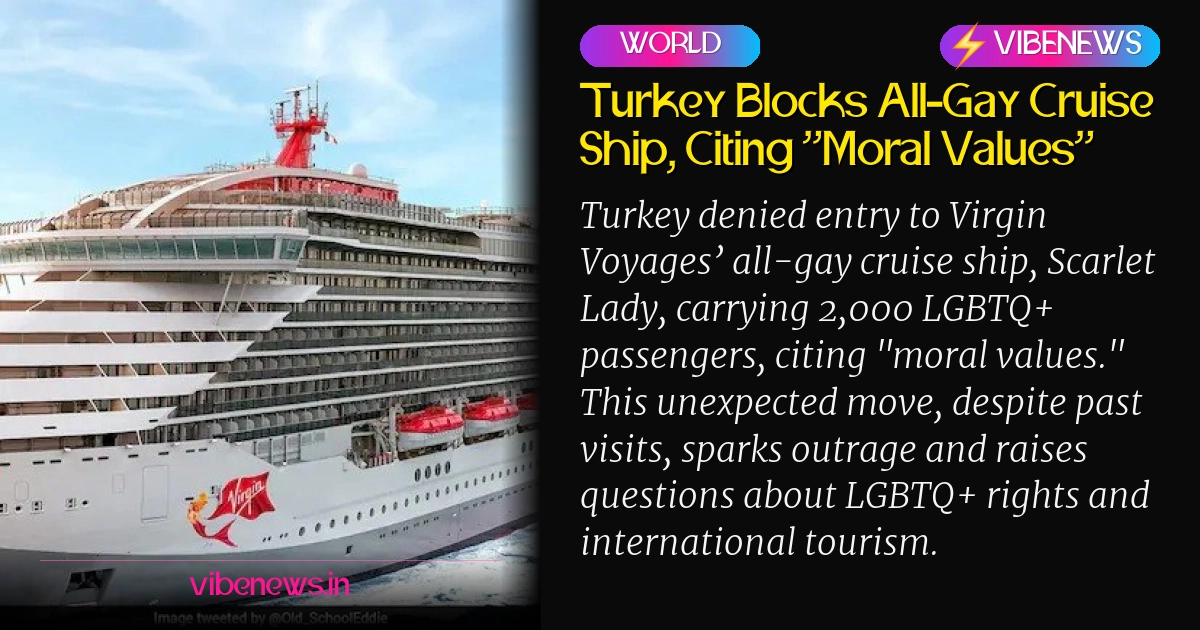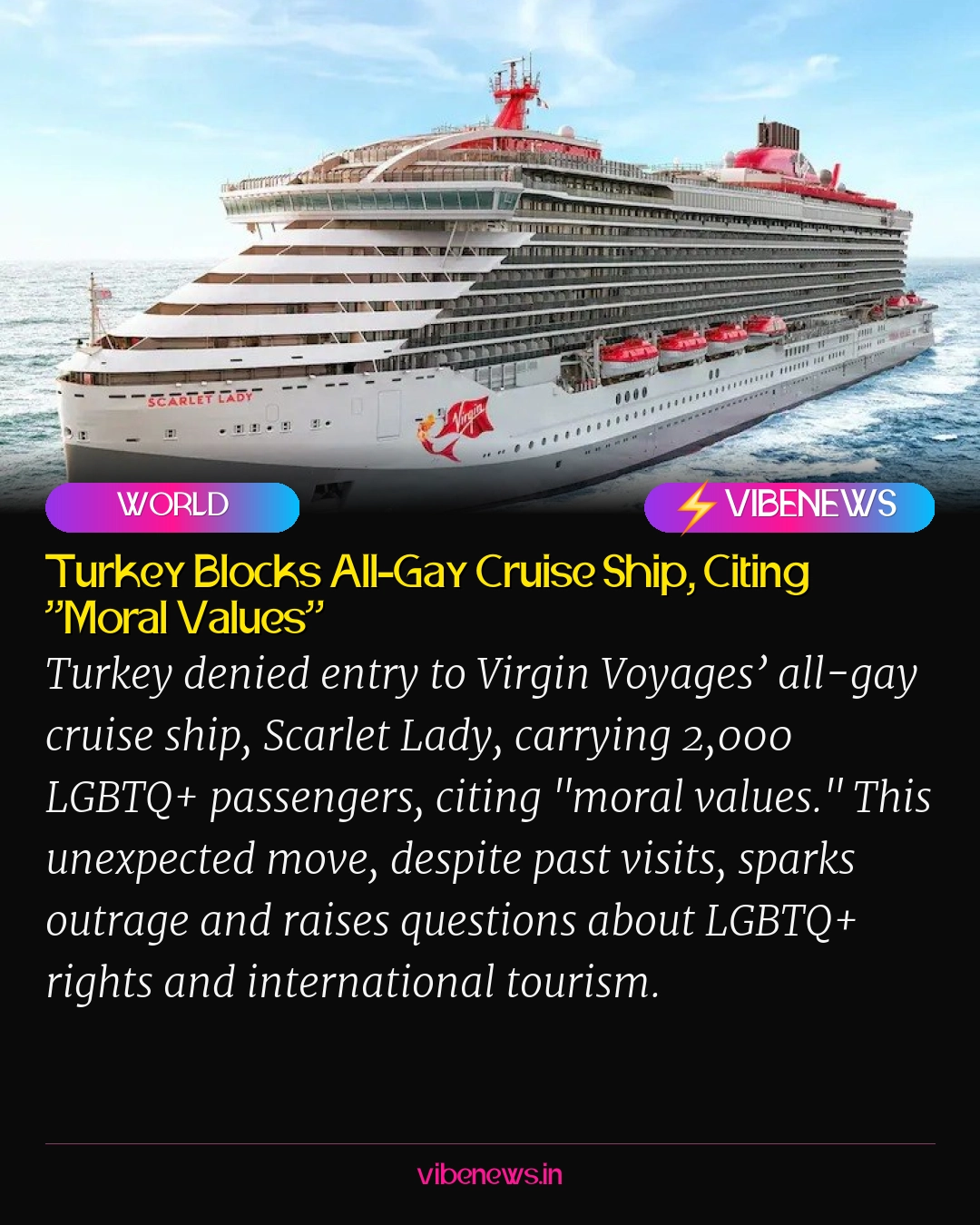
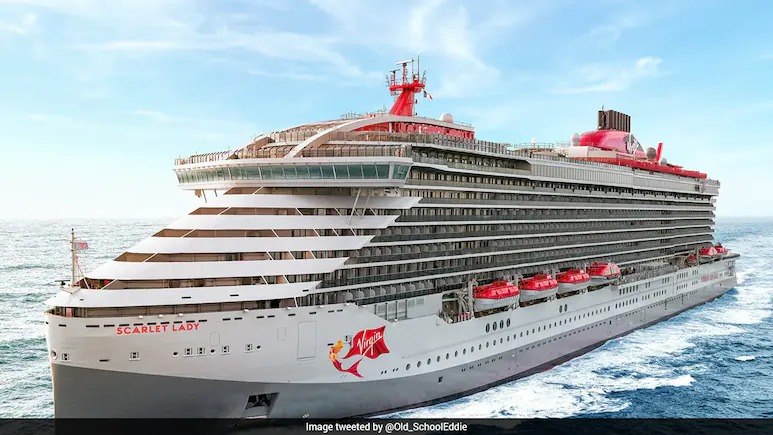
The Virgin Voyages ship Scarlet Lady, carrying approximately 2,000 LGBTQ+ passengers, was denied entry to Turkey for scheduled dockings in Kuşadası and Istanbul, with Turkish authorities citing "moral values" and behaviors incompatible with the country’s social structure. This unprecedented decision has forced the "all-gay voyage," organized by Atlantis Events, to reroute to Cairo, Egypt, and Crete, Greece, sparking significant international concern and outrage among travelers and human rights advocates.
This incident marks a stark departure from previous years, as Atlantis Events, a US-based company specializing in LGBTQ+ travel experiences, confirmed it had successfully docked in Turkish ports 13 times over the past 25 years without issue. The sudden reversal in policy raises critical questions about Turkey’s evolving stance on LGBTQ+ rights and its implications for international tourism and diplomatic relations. For an Indian audience, this highlights the unpredictable nature of international travel policies influenced by cultural and political shifts, urging travelers to be aware of destination-specific social climates.
Turkey’s Unexpected Ban on LGBTQ+ Cruise
Turkish authorities explicitly stated that the Scarlet Lady was chartered by "groups known for behaviours that do not align with the structure of our society and our moral values." This declaration effectively barred the vessel from visiting the port city of Kuşadası on July 7 and a subsequent stop in Istanbul as planned.
The decision came as a shock to both the cruise organizers and passengers. Rich Campbell, President and CEO of Atlantis Events, expressed his dismay to US media outlets, noting it was the first time in his company’s 36-year history they were "actively told we may not berth here because of who we are."
Outcry from Passengers and Performers
Among the 2,000 passengers onboard was acclaimed Broadway star Patti LuPone, who was scheduled to perform during the voyage. LuPone took to Instagram to voice her "furious" reaction, emphasizing that the ship was "denied entry to Turkey simply because of who is on board."
Her statement resonated with many, highlighting the personal impact of such a ban on individuals who had planned their travel based on previous precedents. The sentiment among the LGBTQ+ community and its allies is one of disappointment and concern over what they perceive as discriminatory practices.
Broader Context of LGBTQ+ Rights in Turkey
While homosexuality is not illegal in Turkey, the country has seen a significant crackdown on LGBTQ+ public gatherings in recent years. Pride marches in Istanbul, once vibrant events, have been banned since 2015, with authorities frequently citing security concerns.
President Recep Tayyip Erdogan and members of his ruling party have also faced criticism from human rights organizations for using increasingly harsh rhetoric against LGBTQ+ communities. This latest incident with the Scarlet Lady is viewed by many as a further escalation of these policies, impacting international perceptions of Turkey as a welcoming tourist destination.
Implications for International Travel and Tourism
The ban on the Scarlet Lady sets a concerning precedent for the global tourism industry, particularly for companies catering to specific demographic groups. It underscores the potential for political and social ideologies to directly influence travel itineraries and passenger experiences.
For destinations like Turkey, which rely heavily on international tourism, such decisions could have long-term economic repercussions and damage their reputation for inclusivity. Travel advisories and consumer choices may shift as a result, impacting future bookings from diverse traveler segments.
The Rerouted Journey: New Destinations
Following the abrupt cancellation of the Turkish stops, Atlantis Events swiftly rerouted the Scarlet Lady. The cruise will now make port calls in Cairo, Egypt, and the picturesque Greek island of Crete, offering alternative experiences for its passengers.
Despite the change in itinerary, the incident has left a lasting impression, prompting discussions globally about the intersection of national sovereignty, cultural values, and universal human rights in the context of international travel.
TL;DR
- Turkey denied entry to <strong>Virgin Voyages’ Scarlet Lady</strong>, an all-gay cruise ship with <strong>2,000 LGBTQ+ passengers</strong>, citing "moral values" and incompatibility with its social structure.
- The cruise, organized by <strong>Atlantis Events</strong>, was forced to reroute from <strong>Kuşadası</strong> and <strong>Istanbul</strong> to <strong>Cairo, Egypt</strong>, and <strong>Crete, Greece</strong>.
- This decision marks a significant shift, as <strong>Atlantis Events</strong> had previously docked in Turkish ports <strong>13 times over 25 years</strong> without incident.
- Prominent Broadway star <strong>Patti LuPone</strong>, performing onboard, expressed her "furious" reaction to the ban on social media.
- The incident highlights growing concerns over LGBTQ+ rights in Turkey, where homosexuality is legal but Pride marches have been banned since 2015, and government rhetoric has been criticized.
- The ban raises questions about the future of international tourism for specific demographic groups and the impact of national policies on global travel inclusivity.