The United States launched a second consecutive day of military strikes against Iran on Saturday, targeting key military and radar sites near the strategic Strait of Hormuz. This escalation follows two separate attacks on commercial shipping in the vital waterway, which Washington asserts violated a recently established ceasefire agreement between the two nations.
The latest operation, directed by the Commander in Chief, was framed by the US Central Command (CENTCOM) as a direct response to Iran’s alleged failure to uphold the ceasefire. President Donald Trump issued a stark warning on Truth Social, stating, "If that happens, the Islamic Republic of Iran will no longer exist!"
CENTCOM detailed that the strikes came after Iran allegedly launched a one-way attack drone that hit the Panama-flagged oil tanker M/T Kiku near the Strait of Hormuz at 4:30 a.m. ET. This incident occurred just a day after US forces had already responded to an attack on the cargo ship M/V Ever Lovely, which was targeted while transiting the same critical maritime chokepoint on Thursday.
The renewed hostilities represent the sharpest deterioration in US-Iran relations since Washington and Tehran agreed to a memorandum of understanding (MoU) just two weeks prior. This agreement was intended to foster lasting peace in the conflict-torn West Asia region, making the recent violations particularly concerning.
US aircraft specifically targeted Iranian missile and drone storage locations, alongside coastal radar sites, according to CENTCOM. Iranian media, cited by Reuters, reported explosions heard on Sirik Island and projectiles hitting a village on Qeshm Island, both close to the Strait of Hormuz.
President Trump’s warning underscored the gravity of the situation, asserting that Iran’s actions might compel Washington to launch further military operations. "United States aircraft just struck Iranian missile and drone storage locations, and coastal radar sites, for violating the Cease Fire Agreement, AGAIN! It is very possible that they will never learn!" Trump wrote. Vice President JD Vance echoed this sentiment on X, stating, "Iran signed a ceasefire agreement. We have honored it. If they have disagreements about how the MOU is being applied, they can pick up the phone. But violence will be met with violence."
The US strikes did not go unanswered. The Islamic Republic Guard Corps (IRGC) reportedly responded by targeting several US military sites in the region, following an earlier declaration that Tehran would provide a "decisive response" to the attacks. Specific details of the targeted US positions were not immediately released.
Iranian Deputy Foreign Minister Kazem Gharibabadi also weighed in, warning Gulf states against aligning with Washington and asserting that "Safe passage through the Strait of Hormuz cannot be guaranteed under ambiguous arrangements, parallel routes or decision-making that does not take Iran’s role as a coastal state into account." Ebrahim Azizi, head of Iran’s parliamentary National Security Commission, accused Washington of bad-faith conduct, calling the US President "failed" and warning of "retreat and regret" for the United States.
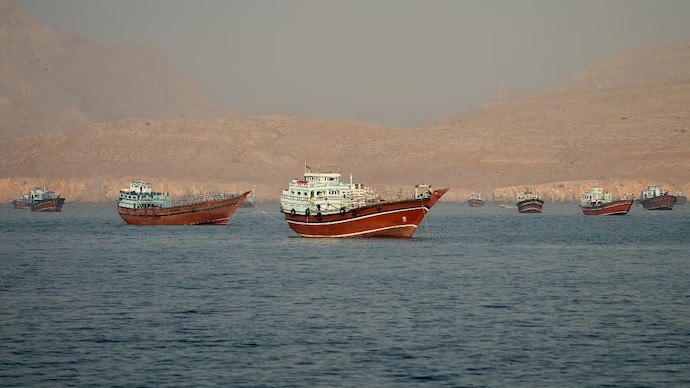
The renewed conflict has reignited concerns over the security of the Strait of Hormuz, a critical maritime chokepoint through which a significant portion of global oil shipments passes. Shipping activity in the region had already faced months of disruption before partial reopening efforts began under the temporary ceasefire.
The Strait of Hormuz, a narrow waterway connecting the Persian Gulf with international markets, is one of the world’s most important maritime chokepoints. A significant portion of global oil shipments passes through it daily, making its security paramount for global energy stability. The attack on the M/T Kiku, which sustained damage to its bridge, prompted Britain’s UKMTO maritime security agency to confirm all crew members were safe. The Joint Maritime Information Center, an international coalition safeguarding commercial shipping, subsequently raised its threat assessment, signaling heightened risks for vessels navigating the area.
These latest exchanges highlight the extreme fragility of the recent memorandum of understanding and the persistent volatility in the West Asia region. The rapid return to military confrontation, despite diplomatic efforts, suggests a deeply entrenched mistrust and a high potential for further escalation, with global implications for energy markets and regional stability.
TL;DR
- The United States launched a second consecutive day of military strikes against Iran, targeting military sites near the Strait of Hormuz.
- The strikes were a direct response to attacks on two commercial ships, M/V Ever Lovely and M/T Kiku, in the Strait.
- US officials, including President Donald Trump and Vice President JD Vance, stated that Iran’s actions violated a recently signed ceasefire agreement (MoU).
- President Trump issued a severe warning, suggesting Iran "will no longer exist" if ceasefire violations continue.
- Iran’s Islamic Republic Guard Corps (IRGC) reportedly responded by targeting several US military sites in the region.
- The security of the Strait of Hormuz, a vital global oil chokepoint, has become a major concern once again.
- Maritime security agencies have raised their threat assessments for shipping in the region following the incidents.