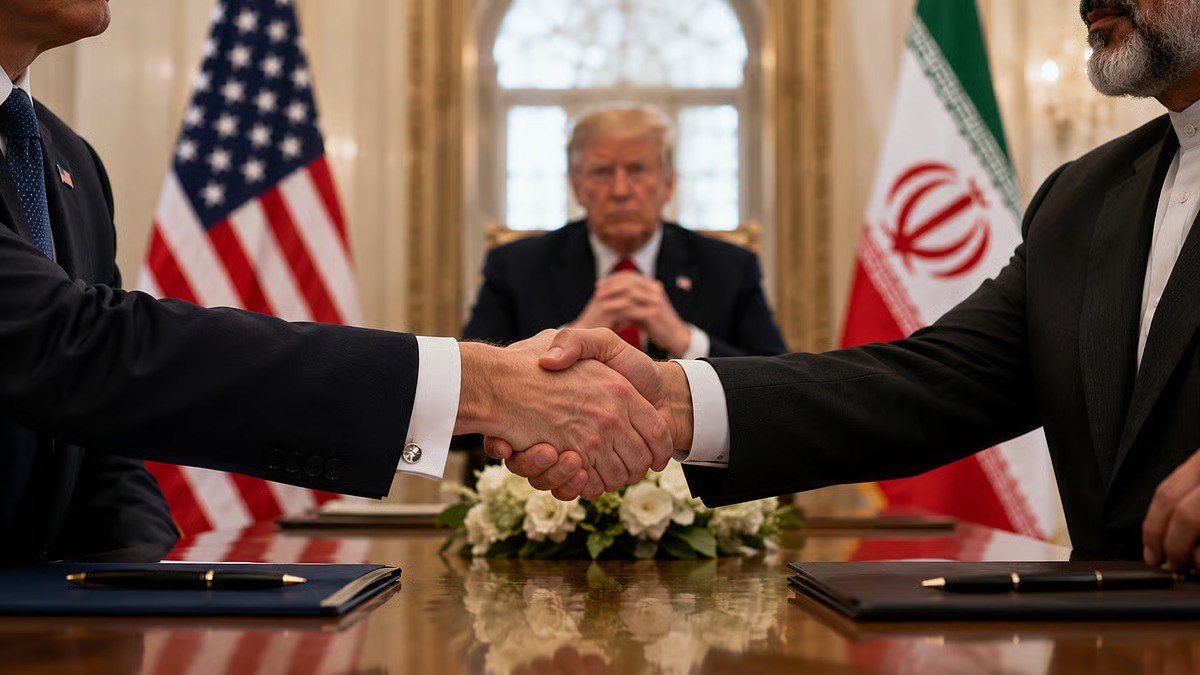
The United States and Iran have formally agreed to a 60-day roadmap designed to culminate in a comprehensive peace agreement, marking a significant diplomatic step despite ongoing complexities in their relationship. This breakthrough emerged from high-level discussions held in Burgenstock, Switzerland, facilitated by the mediating efforts of Qatar and Pakistan.
Mediators Qatar and Pakistan issued a joint statement describing the initial round of talks, conducted under the framework of the "Islamabad Memorandum of Understanding (MoU)," as having occurred in a "positive and constructive atmosphere." They noted that both Washington and Tehran had made "encouraging progress" toward resolving long-standing disputes. This agreement establishes a clear timeline for technical negotiations, moving beyond initial political commitments to focus on detailed arrangements for implementation, verification, and compliance.
Central to the roadmap is the immediate commencement of technical-level negotiations across several critical domains. These include the intricate issues surrounding nuclear-related matters, the lifting or modification of sanctions, the establishment of robust monitoring mechanisms, and the creation of dispute resolution arrangements. Furthermore, the discussions will address maritime safety, particularly ensuring the secure passage of commercial vessels through the Strait of Hormuz, a vital global shipping route and a historical flashpoint in US-Iran relations.
Another crucial aspect of the framework involves establishing a de-confliction cell. This cell, involving Iran, the US, and Lebanon, and facilitated by Qatar and Pakistan, aims to monitor the cessation of military operations in Lebanon and prevent any renewed clashes. This initiative underscores the broader regional stability objectives embedded within the diplomatic efforts.
To manage the negotiation process effectively, a direct communication channel has been created between the parties. This channel is intended to prevent misunderstandings, reduce the risk of escalation, and manage any incidents that might arise during the 60-day period. Additionally, a high-level committee has been established to provide political oversight and strategic direction to the mediation process, receiving regular updates from chief negotiators who will lead separate working groups.
The US delegation to the Switzerland talks was led by Vice President JD Vance, accompanied by special envoys Jared Kushner and Steve Witkoff. Iran’s representation included Foreign Minister Abbas Araghchi and chief negotiator Mohammad Bagher Ghalibaf. High-ranking officials from the mediating nations also participated, with Pakistani Prime Minister Shehbaz Sharif, Army chief Asim Munir, and Qatar Prime Minister Sheikh Mohammed bin Abdulrahman Al Thani playing key roles.
The agreement on a roadmap comes amidst a backdrop of mixed signals from Washington, reflecting the inherent challenges in US-Iran diplomacy. While President Donald Trump maintained a tough stance even as the discussions were underway, Vice President Vance expressed optimism from the negotiating table. Vance highlighted progress made towards maintaining the ceasefire in Lebanon and advancing efforts to reset ties with Tehran, indicating a nuanced approach where diplomatic engagement proceeds despite public warnings.
This diplomatic push represents a concerted effort to de-escalate tensions and forge a more stable relationship between two historically adversarial nations. The focus on detailed technical arrangements and the establishment of direct communication channels suggest a serious commitment to finding practical solutions. As technical discussions continue through the week at the Burgenstock resort, the international community will closely watch whether this 60-day roadmap can indeed pave the way for a lasting peace agreement, addressing the complex security and economic concerns that have long defined US-Iran interactions.
TL;DR
- The United States and Iran have agreed to a 60-day roadmap for a final peace agreement, following talks in Switzerland.
- Qatar and Pakistan mediated the discussions, which took place under the "Islamabad Memorandum of Understanding (MoU)" framework.
- The roadmap initiates technical negotiations on critical issues including nuclear verification, sanctions, monitoring mechanisms, and dispute resolution.
- Maritime safety in the Strait of Hormuz and de-confliction efforts in Lebanon are also key components of the agreement.
- A direct communication channel and a high-level oversight committee have been established to manage the negotiation process.
- US Vice President JD Vance led the American delegation, while Iranian Foreign Minister Abbas Araghchi represented Tehran.
- The agreement was reached despite President Donald Trump maintaining a tough stance, contrasting with Vance’s expressed optimism.