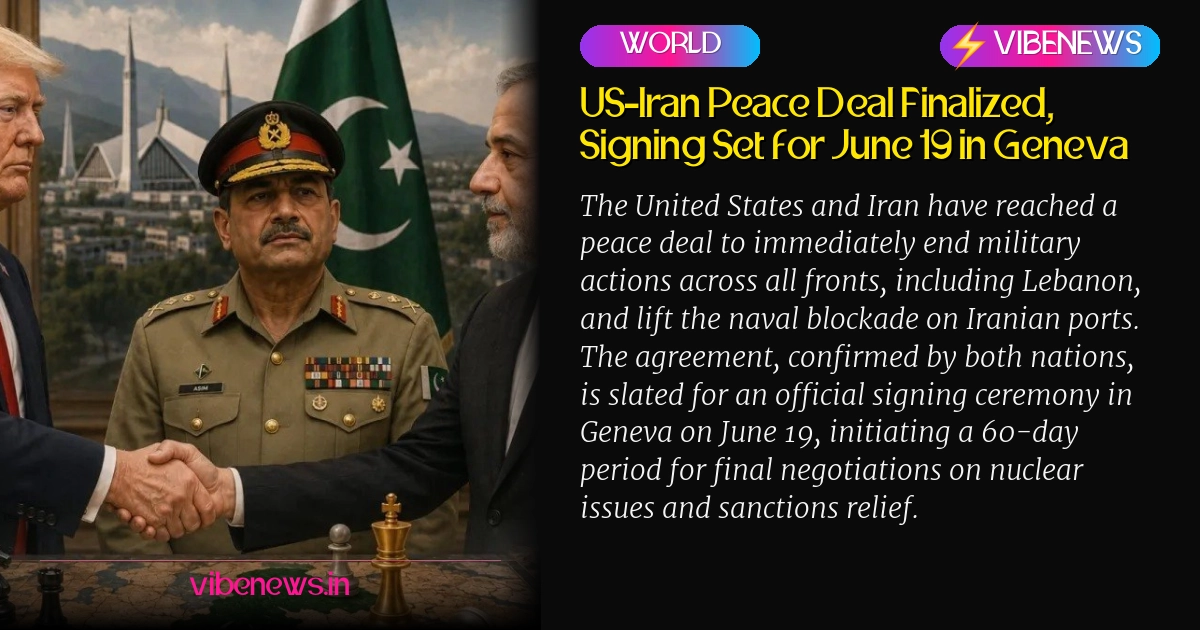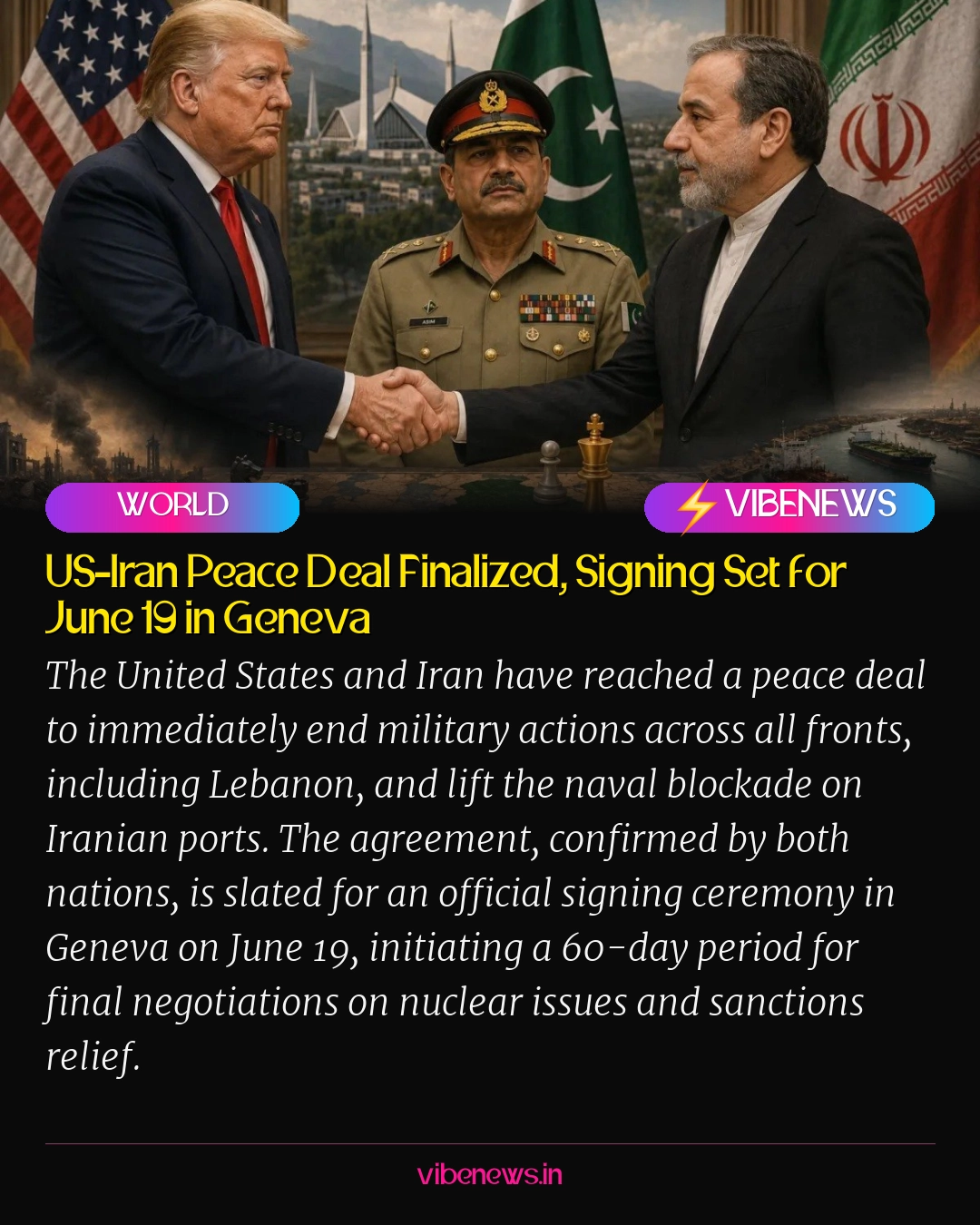
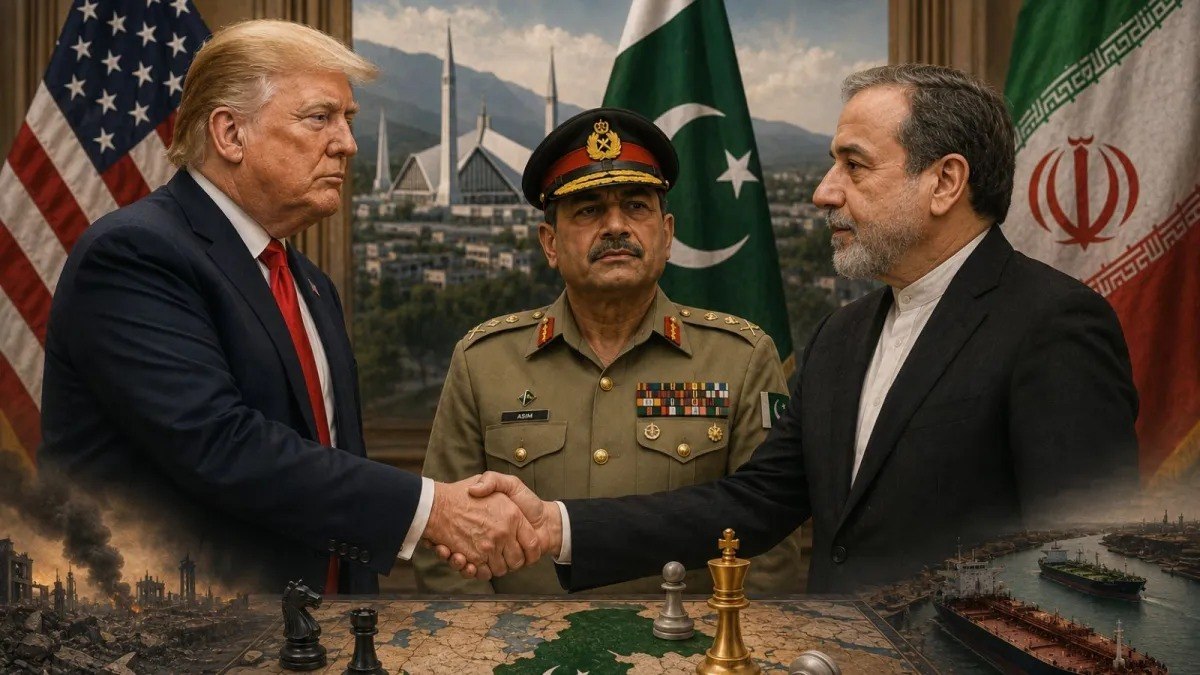
The United States and Iran have successfully concluded a peace deal aimed at an immediate and permanent cessation of military actions across all fronts, including in Lebanon, marking a significant diplomatic breakthrough after months of conflict. This pivotal agreement, which also includes the lifting of the US naval blockade on Iranian ports, is scheduled for an official signing ceremony on June 19 in Geneva, Switzerland.
Mediated initially by Pakistan and subsequently confirmed by both Washington and Tehran, the deal sets the stage for a 60-day negotiation period. These upcoming talks will focus on resolving long-standing nuclear questions, discussing sanctions relief, and addressing the release of frozen Iranian funds. The agreement is expected to restore shipping through the strategically vital Strait of Hormuz, a move anticipated to alleviate pressure on global energy markets.
Iran's Deputy Foreign Minister Kazem Gharibabadi, as reported by Tasnim news agency, confirmed the deal brings an "immediate end" to the countries' war. He stated that the 60-day negotiation period for a final agreement would commence only after verifying that the US has fulfilled its initial commitments, including ending hostilities, lifting the blockade, and releasing frozen assets. Gharibabadi emphasized that Tehran has incorporated all its "important positions" into the draft memorandum of understanding, which will be published post-signing. He also underscored Iran's cautious approach, stating, "This memorandum of understanding does not mean trusting the enemy. We will monitor the implementation of US commitments."
From the American side, President Donald Trump announced the completion of the deal via social media, coinciding with his 80th birthday. He authorized the "toll-free opening of the Strait of Hormuz" and the "immediate removal of the United States Naval blockade," urging "Ships of the World, start your engines. Let the oil flow." This declaration signals a clear intent to normalize maritime trade routes that had been severely disrupted by the conflict.
While the full content of the agreement remained somewhat opaque initially, Iran's Mehr news agency reported a detailed 14-point memorandum of understanding (MoU). Key provisions include a permanent and immediate end to the war, a US commitment to non-interference in Iran's internal affairs, and the complete lifting of the US naval blockade within 30 days. The MoU also stipulates the reopening of the Strait of Hormuz within 30 days under Iranian arrangements and a US commitment to withdraw its forces from around Iran.
Economically, the deal promises the suspension of sanctions on oil and petrochemical product sales, granting Iran full access to its financial resources. It also outlines reconstruction plans to be presented by the US and its allies, potentially totaling at least $300 billion. Crucially, the agreement includes a 60-day negotiation period to finalize the nuclear issue, leading to the complete removal of US primary and secondary sanctions, UN Security Council resolutions, and IAEA Board of Governors resolutions. Iran, in turn, reaffirms its commitment to the Treaty on the Non-Proliferation of Nuclear Weapons (NPT) not to produce nuclear weapons.
During the negotiation period, the US has committed to not adding forces to the region or imposing new sanctions. A significant financial component involves the release of $24 billion in Iran's blocked funds during the 60-day final negotiation period, with half of that amount to be made available before negotiations even begin. The agreement also calls for the establishment of a monitoring mechanism to ensure implementation and for the final agreement to be ratified by a UN Security Council resolution. Notably, discussions on Iran's missile program and its support for groups affiliated with the axis of resistance have been removed from the agenda of these talks.
The announcement has been met with international relief and optimism. UN Secretary-General Antonio Guterres hailed it as a "critical step" toward resolving the broader Middle East conflict. Major European powers, including the United Kingdom, France, Germany, and Italy, expressed their readiness to lift sanctions imposed on Iran and pledged to work with the US, Iran, and regional partners to achieve a long-term diplomatic settlement. The global financial markets reacted positively, with oil prices plunging over four percent in Tokyo and Japan's Nikkei stock index jumping three percent, reflecting the anticipated easing of energy supply concerns.
The recent conflict, which began in late February with US-Israeli strikes on Iran and subsequent Iranian retaliation, including the effective blocking of the Strait of Hormuz, had a profound worldwide economic impact. Inflated gas prices fueled inflation globally, and supply chains for essential goods like fertilizer faced severe congestion. US Vice President JD Vance, who plans to attend the signing in Geneva, highlighted the economic benefits, stating, "What we're going to be able to do is drive down the cost of energy, not just now but for the long term, and create a real engine of prosperity in the Middle East." The next 60 days will be crucial as both sides navigate the complex path toward a comprehensive and lasting resolution, with the world watching closely for the full implementation of these commitments.
TL;DR
- The United States and Iran have finalized a peace deal to immediately end military actions across all fronts, including in Lebanon.
- The agreement includes the lifting of the US naval blockade on Iranian ports and the reopening of the vital Strait of Hormuz.
- An official signing ceremony for the memorandum of understanding is scheduled for June 19 in Geneva, Switzerland.
- A 60-day negotiation period will follow the signing to finalize agreements on Iran's nuclear program, sanctions relief, and the release of frozen Iranian assets.
- Iran's Deputy Foreign Minister Kazem Gharibabadi emphasized that final negotiations depend on the US fulfilling initial commitments, including ending hostilities and releasing frozen funds.
- US President Donald Trump confirmed the deal, authorizing the opening of the Strait of Hormuz and the removal of the naval blockade.
- The deal has been met with international relief, with the UN and European nations welcoming the diplomatic breakthrough and global markets reacting positively.
- Key aspects of the deal, as reported by Iranian media, include a US commitment to non-interference, withdrawal of US forces, suspension of oil sanctions, and a $300 billion reconstruction plan for Iran.