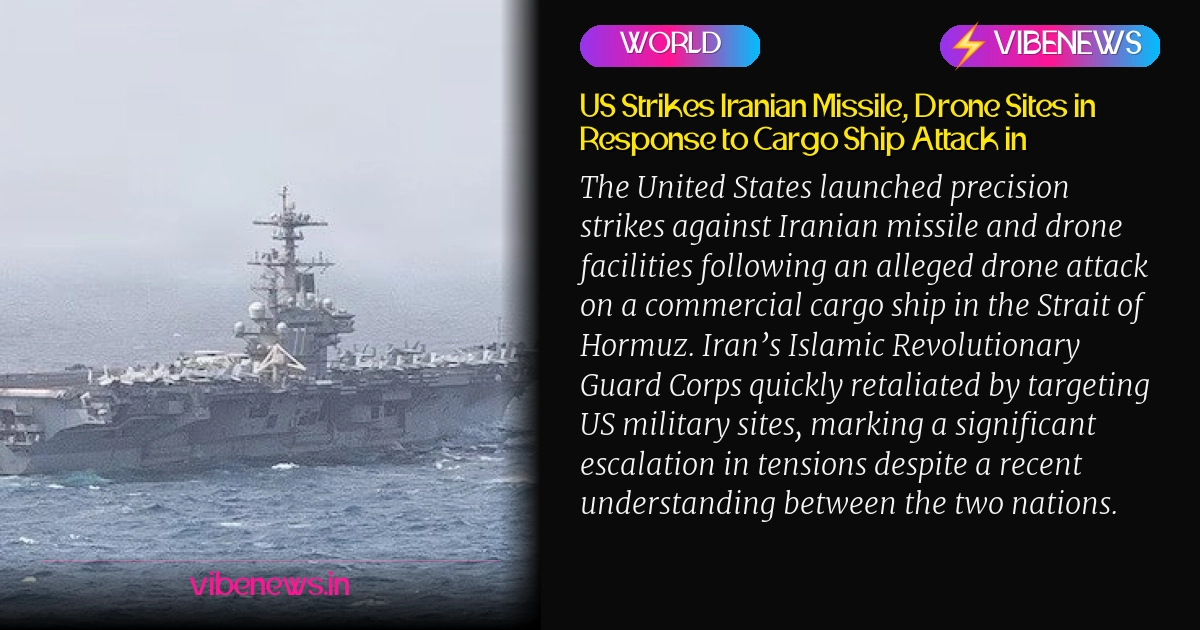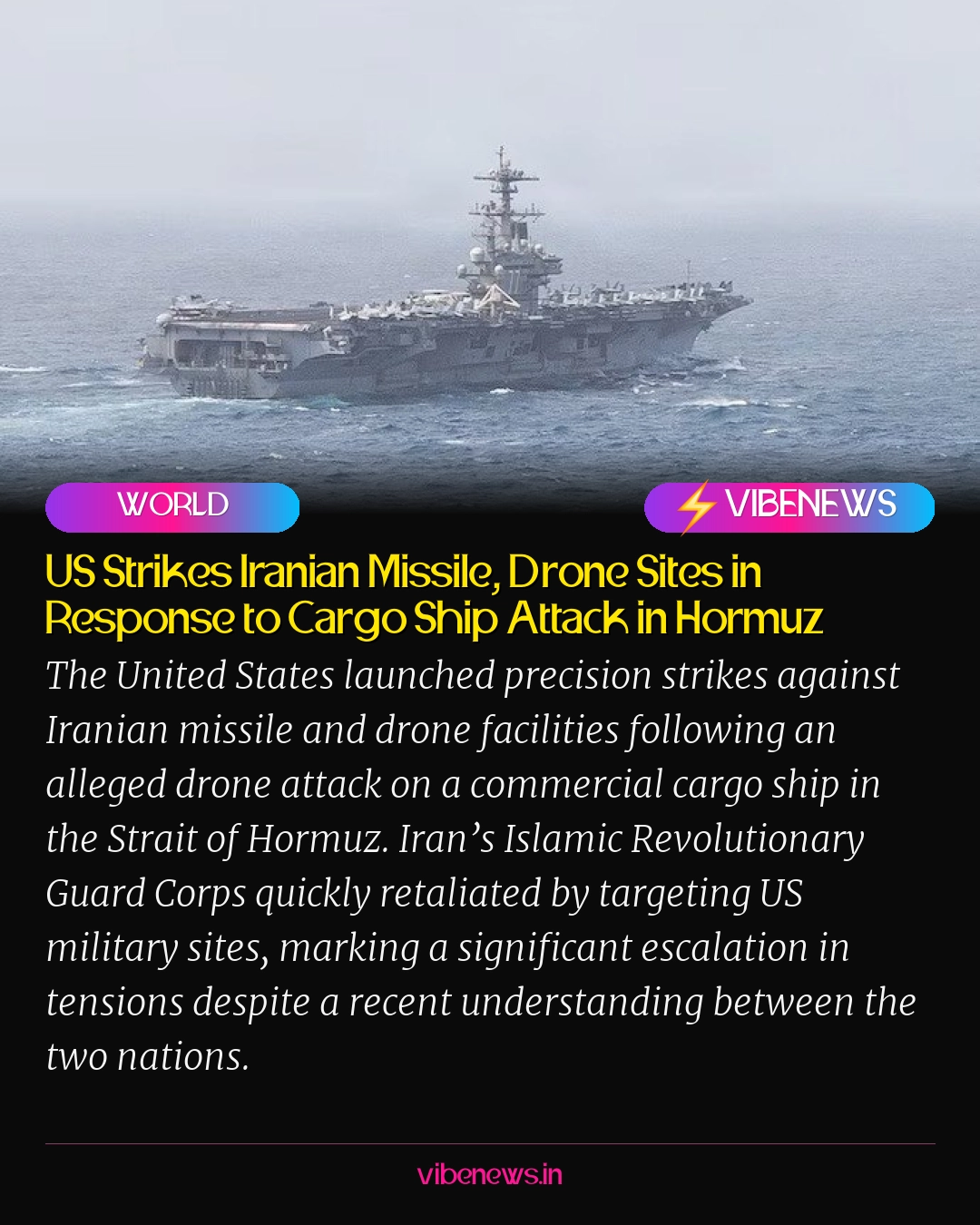
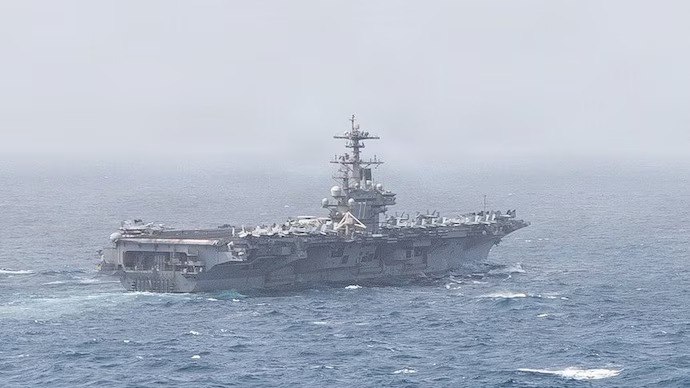
The United States launched precision strikes against Iranian missile and drone storage facilities and coastal radar sites on Friday, directly responding to an alleged drone attack on a commercial cargo ship in the Strait of Hormuz. This military action by the US marks the first direct response since Washington and Tehran reached a fragile memorandum of understanding in Switzerland, signaling a fresh and immediate escalation in the volatile region.
Shortly after the US strikes, Iran’s Islamic Revolutionary Guard Corps (IRGC) swiftly retaliated. The IRGC targeted several US military zones in the region, issuing a stern warning that the American attacks would not go unanswered and that Tehran would provide a decisive response. This rapid exchange underscores the precarious nature of the current ceasefire and the deep-seated tensions between the two powers.
The US Central Command (CENTCOM) confirmed the American operation, stating that its aircraft targeted specific Iranian infrastructure. According to CENTCOM, these strikes were a direct consequence of Iran’s alleged attack on the Singapore-flagged cargo ship M/V Ever Lovely on June 25. The vessel was reportedly struck by a one-way attack drone while sailing along the Omani coast, exiting the strategically vital Strait of Hormuz.
President Donald Trump had hinted at Washington’s impending response just minutes before the military action commenced. When reporters questioned him about potential retaliation against Iran’s alleged actions, Trump cryptically replied, "You’ll find out." His statement foreshadowed the swift and decisive military measures that followed, indicating a pre-planned and coordinated operation.
CENTCOM characterized the operation as "a powerful response" to what it termed Iran’s "unwarranted aggression" against commercial shipping. The command asserted that the attack on the M/V Ever Lovely clearly violated the existing ceasefire agreement. Furthermore, CENTCOM accused Tehran of actively undermining freedom of navigation through the Strait of Hormuz, one of the world’s busiest and most critical maritime trade routes.
The Strait of Hormuz holds immense global significance, as it funnels roughly a fifth of the world’s oil and liquefied natural gas supplies. Any disruption in this narrow waterway immediately triggers major concerns for international shipping, global energy markets, and overall economic stability. The latest military exchange has once again thrust this strategic chokepoint into the global spotlight, highlighting its vulnerability to geopolitical tensions.
Hours before the military operation, President Trump had publicly blamed Tehran for launching multiple one-way attacks on commercial vessels transiting the Strait. He specifically mentioned a drone strike that damaged the upper deck of a cargo vessel, though the ship managed to continue its voyage. Trump condemned the incident as a "foolish violation" of the ceasefire agreement, warning Iran of impending consequences without initially detailing Washington’s planned actions.
Iran, for its part, has consistently maintained that the strategic waterway should remain under regional oversight following the recent memorandum of understanding with the United States. After the M/V Ever Lovely incident, Tehran issued warnings to Gulf states against aligning with Washington, as maritime security tensions deepened. Iran also strongly condemned a joint statement from the US and six Gulf states that rejected its assertion of levying tolls on vessels transiting the Strait of Hormuz, describing it as "interventionist, irresponsible, and provocative."
Iranian Deputy Foreign Minister Kazem Gharibabadi articulated Tehran’s position on social media, stating that "Safe passage through the Strait of Hormuz cannot be guaranteed under ambiguous arrangements, parallel routes or decision-making that does not take Iran’s role as a coastal state into account." This stance underscores Iran’s determination to assert its influence over the critical maritime passage, further complicating efforts to de-escalate regional tensions.
Adding to the uncertainty, reports indicated that Oman had informed its allies about the potential for ships passing through the Strait of Hormuz to eventually face transit fees. Iranian state television also reported that the Islamic Revolutionary Guard Corps had issued warnings to three foreign tankers attempting what it described as an "unauthorised passage" through the strait, though specific details about these vessels were not provided. These developments suggest a concerted effort by regional players to redefine the terms of passage through the vital waterway.
The US military has affirmed its continued presence and vigilance in the region, aiming to ensure all aspects of the agreement with Iran are adhered to and fully enforced. American forces will continue coordinating safe passage for commercial vessels transiting the Strait of Hormuz. However, the recent direct military exchange and the ongoing dispute over maritime control suggest that the path to stable relations remains fraught with challenges, with the potential for further escalations looming over this critical global artery.
TL;DR
- The United States launched precision strikes against Iranian missile and drone sites in response to an alleged drone attack on a commercial cargo ship, the M/V Ever Lovely, in the Strait of Hormuz.
- This marks the first direct US military response since a fragile memorandum of understanding was reached between Washington and Tehran.
- Iran’s Islamic Revolutionary Guard Corps (IRGC) retaliated swiftly, targeting US military zones in the region and threatening a "decisive answer."
- President Donald Trump had hinted at the US response shortly before the strikes, stating, "You’ll find out."
- CENTCOM described Iran’s alleged attack as "unwarranted aggression" and a violation of the ceasefire, accusing Tehran of undermining freedom of navigation.
- The Strait of Hormuz is a critical global chokepoint, handling about a fifth of the world’s oil and liquefied natural gas, making any disruption a major international concern.
- Iran insists the Strait should remain under regional oversight and has warned Gulf states against aligning with Washington, rejecting joint statements on maritime security.
- The US military remains vigilant, coordinating safe passage for commercial vessels, but the direct exchange signals a significant challenge to regional stability.