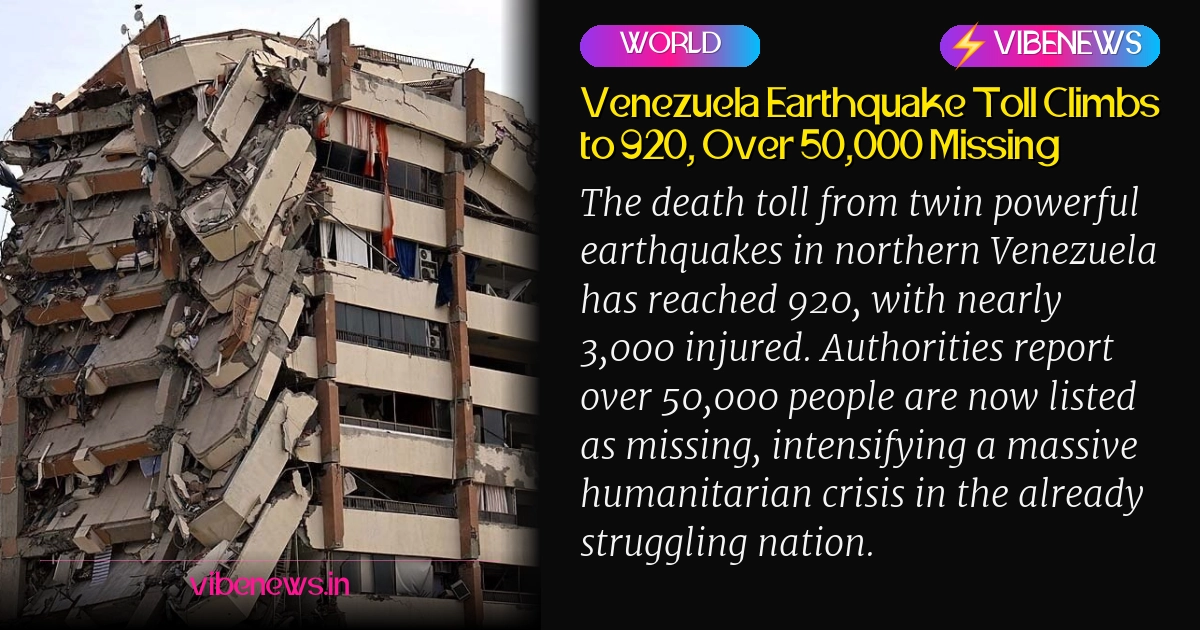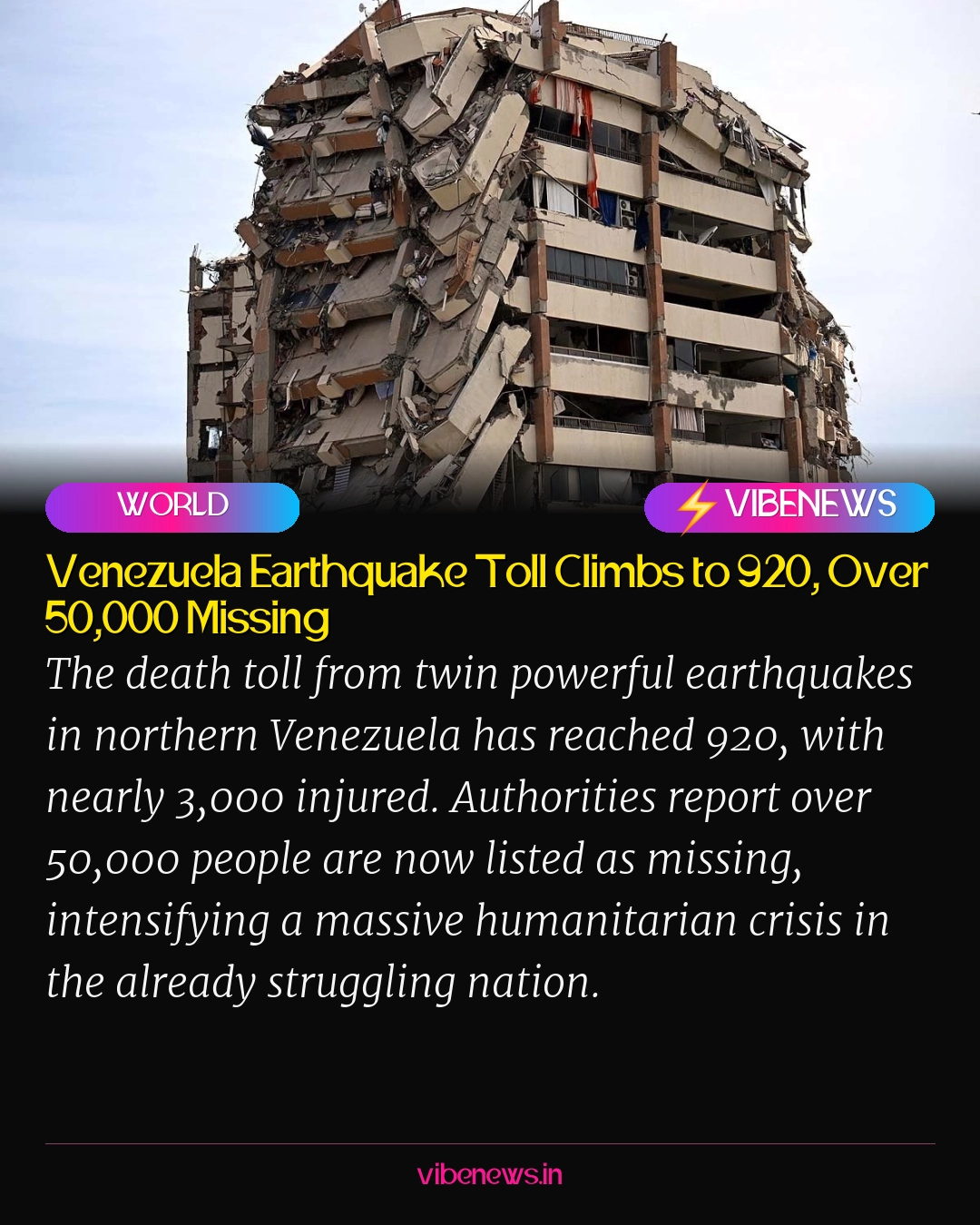
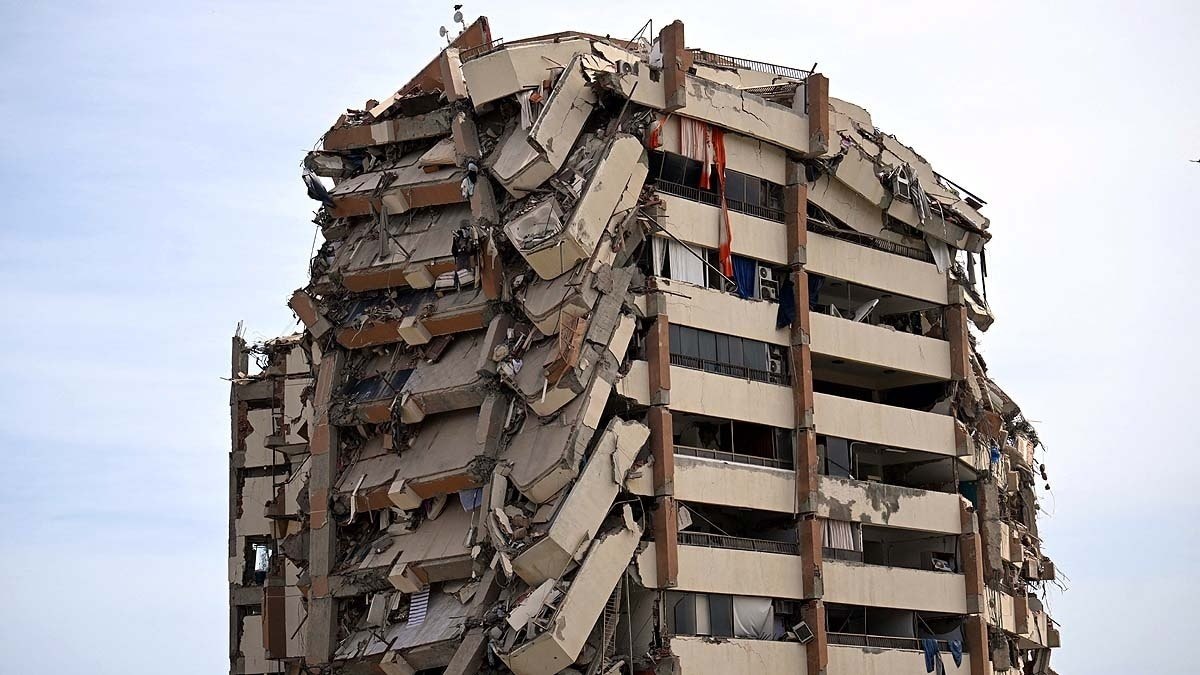
The death toll from two powerful earthquakes that struck northern Venezuela has tragically climbed to 920, with nearly 3,000 people reported injured, according to interim President Delcy Rodriguez. The humanitarian crisis deepens as a government website established for missing persons reports over 50,000 individuals are still unaccounted for, nearly two days after the devastating tremors.
The 7.2 and 7.5 magnitude earthquakes, among the strongest to hit Latin America in modern history, struck approximately 160 kilometres west of Caracas on Wednesday evening during a public holiday. The US Geological Survey has issued a grim projection, estimating that the final death toll could eventually exceed 10,000, underscoring the immense scale of the catastrophe unfolding in the South American nation.
La Guaira, a coastal province situated near the capital, Caracas, has borne the brunt of the destruction. At least 100 buildings, including multi-storey apartment towers, have collapsed, trapping countless residents beneath the rubble. Rescue efforts in some areas have been hampered by a severe lack of heavy machinery, forcing ordinary citizens to dig through debris with their bare hands and basic tools in a desperate search for survivors.
Yamileth Jimenez, a distraught resident, recounted the harrowing situation, stating, "He’s under the slabs and there’s no machinery to get him out," referring to her 19-year-old son trapped within their seven-storey apartment building. This sentiment echoes across affected communities, where families are grappling with the immediate aftermath and the slow pace of organised rescue operations in certain regions.
Interim President Rodriguez has announced the militarisation of La Guaira and pledged a large-scale relief operation to address the widespread devastation. However, initial reports indicated that emergency services were visibly present in some areas while largely absent in others, leading to frustration among affected populations. Ordinary Venezuelans have stepped up, with motorcycle convoys from Caracas and Valencia transporting essential supplies like food and medicine to the hardest-hit zones.
International assistance has begun to arrive, offering a glimmer of hope amidst the despair. Foreign rescue teams from countries including the Dominican Republic, Mexico, El Salvador, Spain, Colombia, Switzerland, and Germany have deployed personnel, some equipped with search dogs and specialised equipment. The United States has also pledged significant support, announcing $150 million in earthquake assistance and temporarily easing sanctions to facilitate the flow of humanitarian aid. US Secretary of State Marco Rubio confirmed Washington would deploy rescue teams and that the Pentagon would assist operations at Caracas’ damaged airport.
This natural disaster strikes a country already reeling from years of profound economic crisis, political instability, and a severe deterioration of its infrastructure. The existing vulnerabilities have amplified the impact of the earthquakes, turning a natural calamity into a complex humanitarian emergency. The United Nations’ migration agency estimates that nearly seven million people could be affected by the disaster and has initiated efforts to supply emergency shelters and relief materials.
Personal stories of loss and displacement highlight the human cost. Suhayl Sarquiz, 50, shared her plight, saying, "My building is uninhabitable and now I have nothing. It’s just me and my son, and I have no family in the country." Such accounts underscore the immediate need for shelter, food, and medical care for thousands who have lost everything. Near the epicentre in Moron, Carabobo state, homes lie in ruins, and residents remain without basic utilities, salvaging what they can from the wreckage.
The Caracas Stock Exchange has been converted into an aid collection centre, reflecting the national effort to mobilise resources. This current catastrophe far surpasses Venezuela’s deadliest modern earthquake in 1967, which claimed 240 lives. As rescue efforts continue and the full extent of the damage becomes clearer, the focus remains on finding the missing, providing urgent relief, and beginning the long and arduous process of recovery for a nation already facing immense challenges.
TL;DR
- The death toll from twin earthquakes in northern Venezuela has risen to 920, with 2,980 people injured.
- Over 50,000 individuals are currently listed as missing, according to a government website.
- The 7.2 and 7.5 magnitude earthquakes struck west of Caracas, with the US Geological Survey estimating the final death toll could exceed 10,000.
- La Guaira province is the worst-affected area, with at least 100 buildings collapsing and residents struggling with a lack of heavy rescue equipment.
- Interim President Delcy Rodriguez has militarised La Guaira and pledged large-scale relief, though initial rescue efforts have been uneven.
- International aid is arriving from multiple countries, including the Dominican Republic, Mexico, Spain, and the United States, which has pledged $150 million and temporarily eased sanctions.
- The disaster exacerbates Venezuela’s existing economic crisis, political instability, and deteriorating infrastructure, with the UN estimating nearly seven million people could be affected.
- This event is significantly more devastating than Venezuela’s previous deadliest modern earthquake in 1967, which killed 240 people.