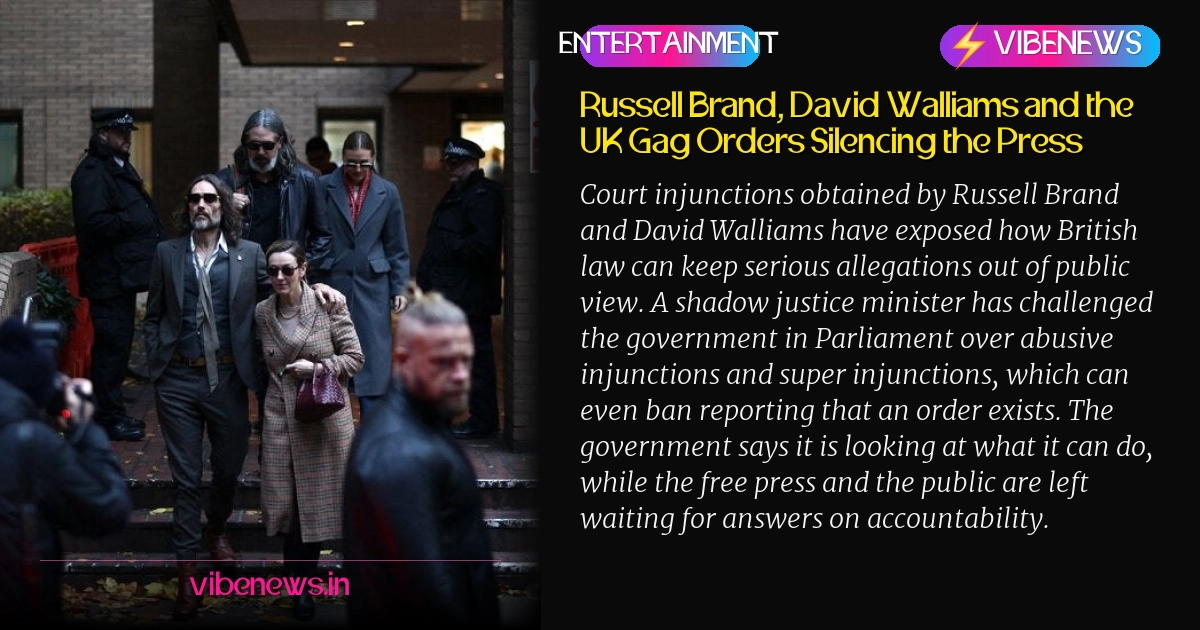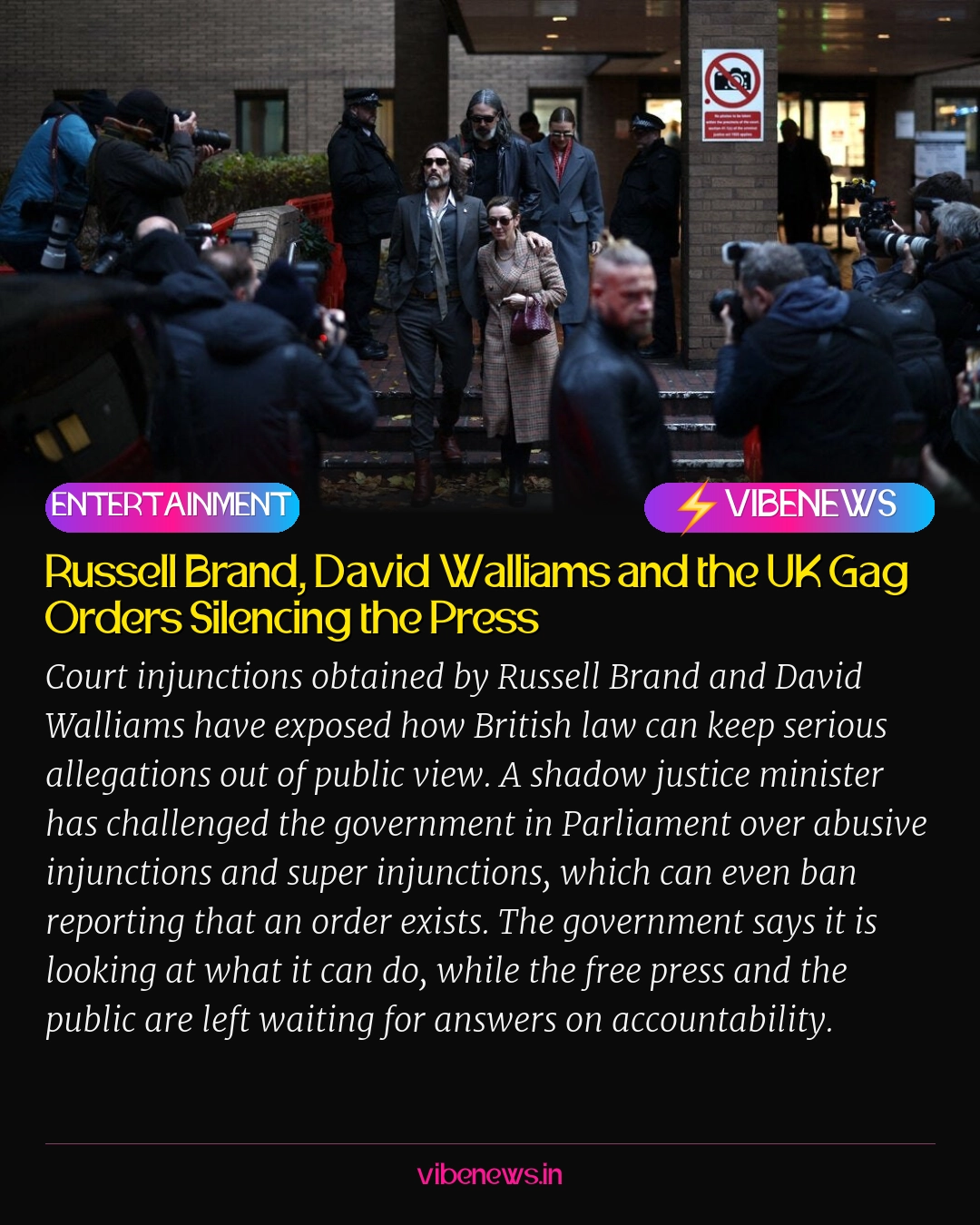

Britain’s courts have given wealthy and powerful people a way to keep damaging allegations out of the public eye, and lawmakers are now demanding that the government close the gap. Two recent cases have put the spotlight on how injunctions, which are essentially gag orders, can shield famous figures from scrutiny.
The first case involves the comedian Russell Brand, who was tried on rape and sexual assault charges. Before his conviction, Brand obtained an injunction that stopped another accuser from telling almost anyone about her claims that he assaulted her. That list reportedly included the police, her family and most doctors. Brand has denied her allegations. The order was first revealed by Dan Neidle, a tax lawyer and free-expression activist, and it appears to remain in force.
The second case centers on David Walliams, the television personality and author of children’s books. Two British news organizations were temporarily blocked from reporting allegations of sexual misconduct against him. A judge later declined to make that injunction permanent. Those outlets then published investigations into the allegations, which Walliams denies. The order was lifted only after the judge refused to extend it, and the reporting that followed is what brought the case into the open.
Both men now face public scrutiny. But the revelations about how they used court orders to protect their reputations have triggered fierce public and political anger. The anger is aimed at more than two individuals. It is directed at a system that lets a judge bar reporting on a case, and in some instances, bar reporting on the existence of the order itself.
That is what makes super injunctions so controversial. They prohibit the publication of any information, including information about the injunction. A reader cannot know that a story has been suppressed, and a journalist cannot say so. Critics argue that this turns the courts into a shield for the people with the money to go to them first.
Nick Timothy, the shadow justice minister, took the issue to Parliament on Tuesday. He pressed the government directly on what it intends to do.
“What will the government do to prevent these abuses of process, and stop the abusive injunctions and super injunctions which stop scrutiny, accountability and the work of the free press?”
Alex Davies-Jones, the government minister responsible for victims of crime and violence against women and girls, responded that the government is “looking at what we can do.” That is a commitment to look, not a commitment to change the law. Victims’ groups and press freedom advocates will be watching to see whether the phrase turns into action or quietly fades from the agenda.
The central problem is simple to state. Injunctions are meant to protect people from harm and to guard fair trials. In these two cases, though, they have had the effect of keeping allegations away from the people who might have raised concerns, reported on them, or simply wanted to know. Walliams and Brand are entitled to contest the claims against them, and both have denied wrongdoing in the cases described. The question for Parliament is whether the current rules strike the right balance between privacy and the public’s right to know, and whether a wealthy person can use the courts to make that balance tilt in their favor.
For now, the injunction linked to Brand reportedly remains in force, and the government has offered no timetable for reform. The debate has moved from the courtroom to Westminster, and the people who brought these cases to light are the ones pushing hardest for answers.
TL;DR
- Britain’s courts have allowed wealthy figures to gag reporting on serious allegations, and an opposition MP is demanding action.
- Russell Brand obtained an injunction stopping another accuser from telling almost anyone about her claims, including police.
- The injunction was first revealed by tax lawyer and free-expression activist Dan Neidle and apparently remains in force.
- Two British news organizations were temporarily blocked from reporting allegations against David Walliams before a judge declined to make the order permanent.
- Super injunctions can ban publishing even information about the injunction itself.
- Shadow justice minister Nick Timothy asked the government in Parliament what it will do to stop abusive injunctions.