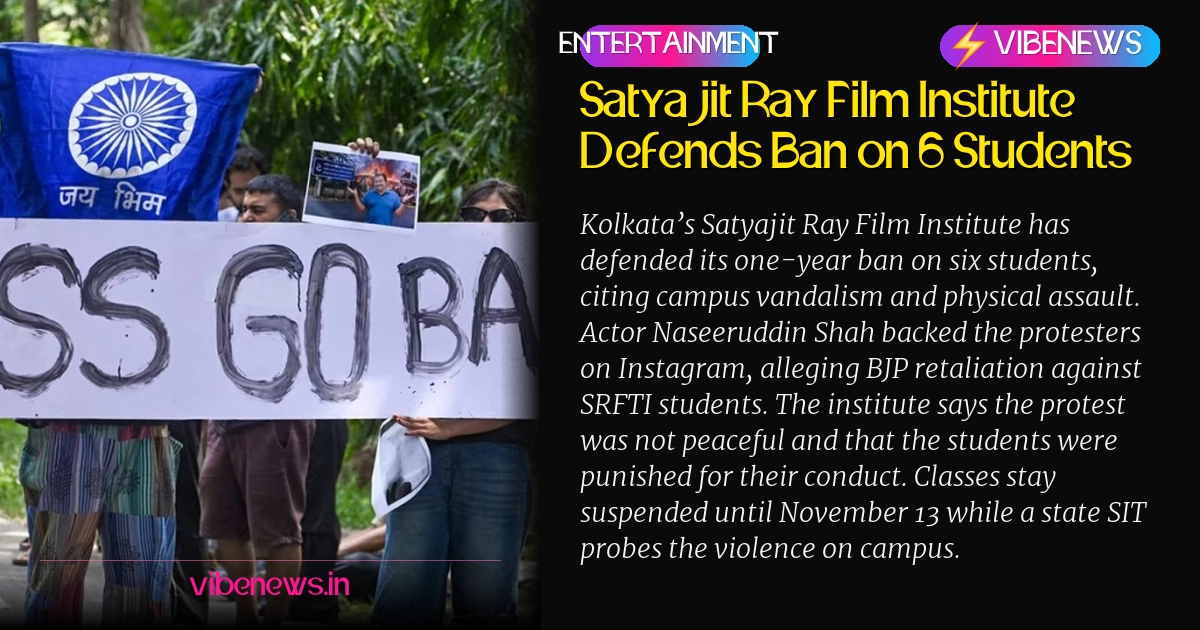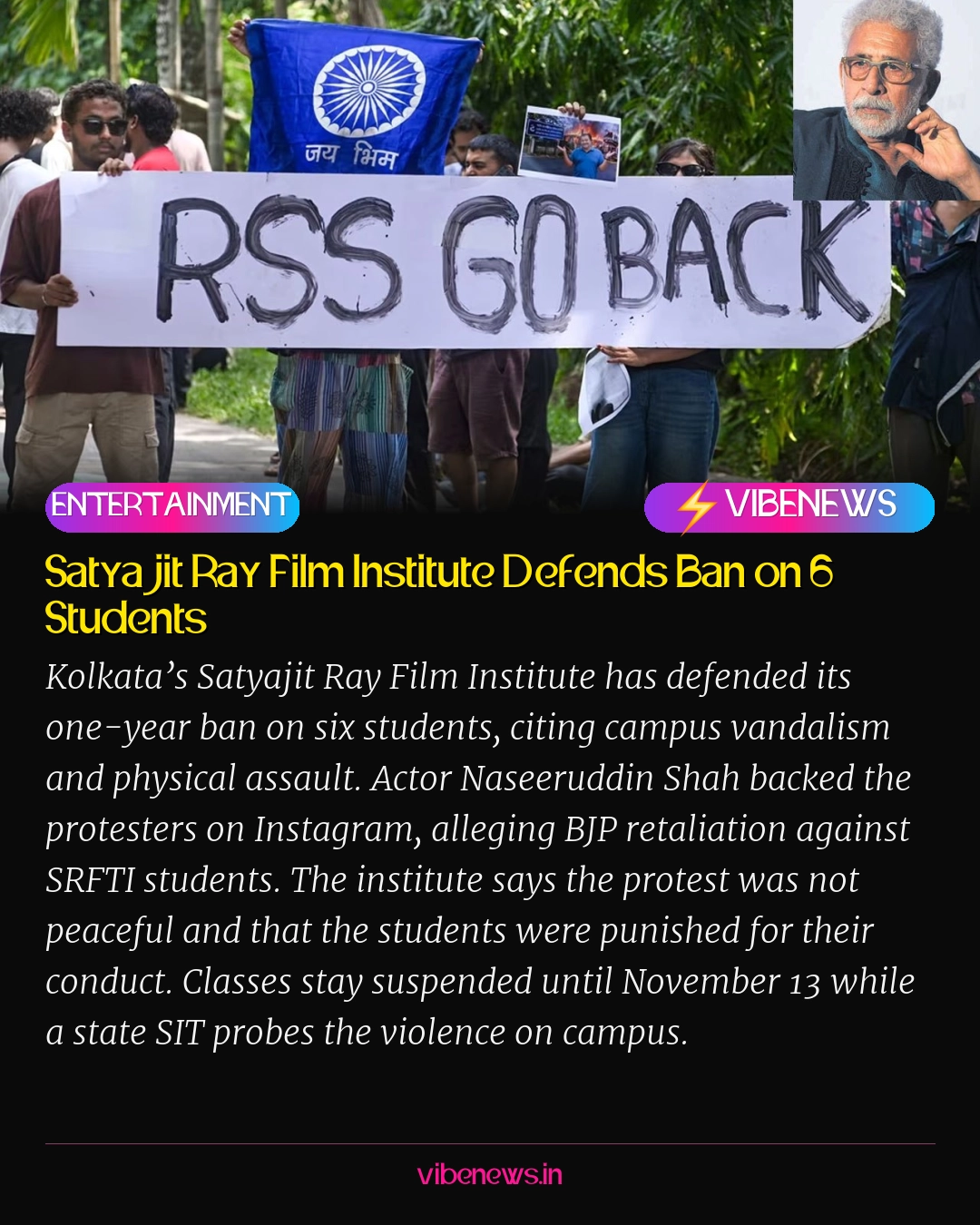
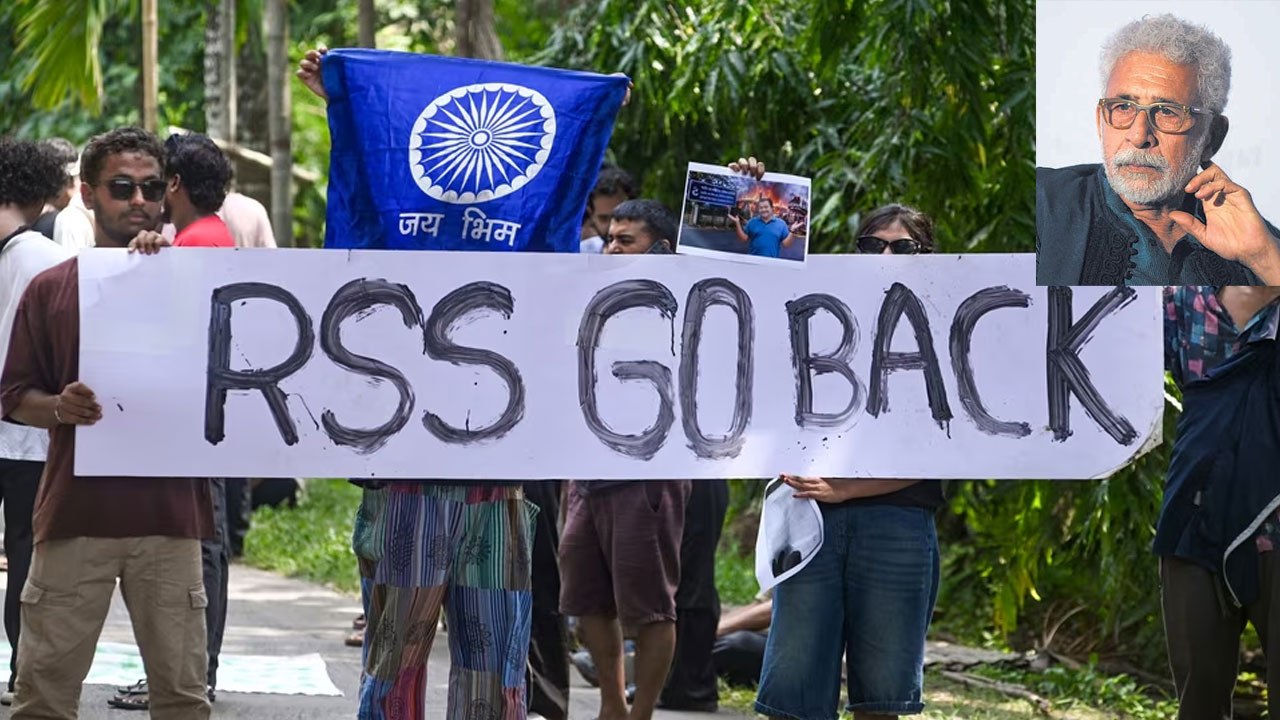
The Satyajit Ray Film Institute in Kolkata, known as SRFTI, on October 26, 2026 defended its decision to bar six students for one year, saying the punishment followed vandalism and physical assault on campus. The statement came after veteran actor Naseeruddin Shah publicly sided with the students.
Shah took to Instagram to back the protest. He alleged that SRFTI students had become victims of BJP revenge. He also claimed the BJP had won the Bengal elections through deceptive means. Those are his allegations, and the institute has not accepted them.
The institute responded again, and its tone was firm. According to the statement, the student protest was not peaceful. The institute said the students’ conduct involved vandalism and physical assault, and that the one-year ban was imposed because of those actions.
How the standoff began on campus
The crisis traces back to September 27, when the Akhil Bharatiya Grahak Panchayat, an organisation described in the reporting as RSS-linked, held an event at the institute. The consumer awareness programme ended in clashes, and several students were injured.
Academic classes were cancelled from the day after the clash. The institute’s decision left students without the regular teaching schedule while tensions kept building.
On October 4, the Bangiya Hindu Jagaran Manch staged a protest in front of the institute to condemn what had happened on September 27. Allegations emerged that stones, bricks and bottles were thrown into the campus during that demonstration.
The state government responded by setting up a Special Investigation Team, or SIT, to probe the incident. The investigation is still the official mechanism for determining what happened on those days.
The protest, the hunger strike and the shutdown
Students began a sit-in on October 12 outside the office of the Vice Chancellor, Santosh Ajmera. The protest soon escalated into a hunger strike, and the situation grew more tense by the day.
On October 16, the institute took control of washrooms, electricity and workplaces on campus. The same day, it issued orders suspending classes until November 13. Film, electronic and digital media faculty operations were all cancelled through that date.
The institute also directed students to vacate the premises within 24 hours. That order placed the six students and their peers in an extremely difficult position, cut off from the campus and its facilities.
Where the institute and the students diverge
The two sides see the same weeks in very different ways. The institute frames the campus events as a matter of discipline, pointing to vandalism and physical assault as the reasons for the sanctions against the six students.
The students and their supporters, including Shah, frame the story as political. Shah’s claim that the students became victims of BJP revenge has drawn the most attention, because it moves the dispute out of the campus and into the wider political arena.
Neither side’s account has been settled by the reporting available. The SIT’s findings on the September 27 clashes and the October 4 protest will be central to determining which version holds up.
Why the story has drawn so much attention
Naseeruddin Shah is one of the most recognised names in Indian cinema, and his public intervention has turned a campus dispute into a national talking point. Film buffs and general audiences are following the story closely, partly because it involves a film institute and its students directly.
The institute’s reputation as a training ground for filmmakers makes the suspensions significant for the wider film community. Students in the middle of a dispute like this face uncertainty about their studies, and the November 13 date marks when the suspension of classes is set to end.
The key facts are clear: six students face a one-year ban, classes are suspended until November 13, and a state SIT is investigating the violence. What remains open is how the investigation will be resolved and whether the ban will be reviewed.
The institute said the students’ protest was not peaceful and that their conduct involved vandalism and physical assault, which is why action was taken against them.
Shah’s Instagram post has ensured the dispute will not stay confined to campus. Every new statement from either side now carries political weight, and the coming weeks will test whether the institute’s position holds under public scrutiny.
TL;DR
- Satyajit Ray Film Institute defended its one-year ban on six students, citing vandalism and physical assault on campus.
- Naseeruddin Shah publicly backed the protesting students on Instagram, alleging BJP revenge against SRFTI students.
- The September 27 clash at the institute left several students injured, after an RSS-linked consumer event.
- A state government SIT has been set up to probe the violence linked to the October 4 protest.
- Classes are suspended until November 13, and students were ordered to vacate within 24 hours.