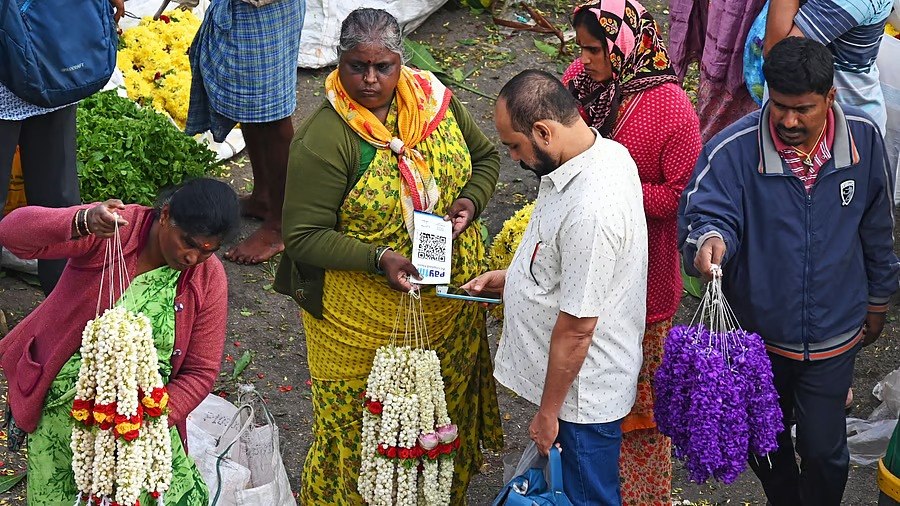
India’s Unified Payments Interface (UPI), launched in 2016, has rapidly evolved into the world’s largest real-time payment system, processing over 2,300 crore transactions monthly. Its widespread adoption is largely attributed to its convenience and the zero-Merchant Discount Rate (MDR) regime, which has kept transactions free for both consumers and merchants.
However, this foundational principle is now under review. A recent amendment to the Payment and Settlement Systems Act, 2007, has replaced the zero-MDR framework with a notification-based system. This legislative change, which received presidential assent on August 17, empowers the government to introduce charges on specific digital payments through future notifications, sparking widespread speculation about the future of free UPI transactions.
The Legislative Shift and Its Implications
The amendment, introduced as part of the Taxation and Other Laws (Amendment) Act, 2026, marks a significant departure from the previous policy. Since January 2020, UPI and RuPay debit card transactions have operated under a zero-MDR system, meaning no fees were levied on banks or other payment ecosystem participants. This policy was instrumental in driving UPI’s explosive growth and adoption across diverse segments of Indian society.
While the government has not yet announced any immediate plans to impose MDR on UPI, the legislative provision has fueled concerns among industry stakeholders and merchants. Many fear that the introduction of a charge is inevitable, especially as the operational costs associated with processing the rapidly expanding volume of UPI transactions continue to climb.
Merchant Concerns and Consumer Behavior
The prospect of MDR has elicited strong reactions from the merchant community. Retailers like Samkit Jain, who operates a mobile store in Hubballi, express apprehension that even a small additional cost could deter customers and push them back towards cash payments. This sentiment is echoed by Nikhil Jain, a computer shop owner in Hubballi, who notes that nearly 70% of his transactions are now via UPI.
Merchants worry that if they are not permitted to pass on the MDR to customers, they will be forced to absorb the additional cost, further eroding their already thin profit margins. This could lead to a scenario where businesses either discourage UPI usage or revert to cash, undermining years of effort to promote digital payments.
Government’s Stance and Proposed Framework
The Union Finance Ministry has clarified that the amendment is an "enabling provision" designed to ensure UPI’s long-term sustainability, technological advancement, and resilience. Crucially, the ministry has assured that consumers will not face any transaction charges for person-to-person (P2P) payments, which will continue to be free.
Any future MDR charges, the ministry stated, would apply only to a limited set of merchant transactions, specifically those above a certain threshold, and at a nominal rate significantly lower than existing debit or credit card MDRs. It is widely speculated that this threshold could be set at Rs 2,000, aligning with previous incentive schemes for low-value UPI transactions.
Economic Calculus: Costs of Cash vs. Digital
The debate around MDR often overlooks the substantial costs associated with a cash-dependent economy. The Reserve Bank of India incurred an expenditure of Rs 4,875.2 crore on security printing of banknotes in 2025-26, with even higher costs in previous years. These figures do not account for the significant expenses businesses bear in handling, securing, and transporting cash.
In contrast, the average annual cost to the exchequer for maintaining the zero-MDR system for UPI has been estimated at around Rs 2,000 crore. Ajay Srivastava, founder of the Global Trade Research Initiative (GTRI), argues that pushing people back towards cash would make little economic sense, given that handling cash is far more expensive than the annual UPI infrastructure costs. He suggests UPI should be treated as an essential public good, with its costs covered by the government or through fees charged to large payment platforms.
UPI’s Role in Formalisation and MSME Growth
Beyond transaction volumes, UPI has played a transformative role in formalizing India’s vast Micro, Small, and Medium Enterprise (MSME) ecosystem. By replacing informal cash transactions with traceable digital payments, UPI has brought even the smallest entrepreneurs into a more visible and disciplined business environment.
Lakshmi Venkataraman Venkatesan, Founding and Managing Trustee of Bharatiya Yuva Shakti Trust, highlights UPI’s deeper impact on improving record-keeping, providing greater visibility of business activity, and strengthening financial discipline for nano and first-generation entrepreneurs. A study conducted in consultation with NPCI revealed that 94% of small merchants had adopted UPI by FY 2024-25, with 72% satisfied due to faster transactions, better record-keeping, and operational convenience.
Localized examples further underscore this impact. Nawaz, who runs a chain of salons in Hyderabad, praises digital payments for bringing greater transparency and ease in tracking daily collections. In Thiruvananthapuram, Binu P S, an automobile business owner, values UPI for eliminating the risk of accepting counterfeit currency, a common challenge with cash transactions.
Sustaining the Digital Infrastructure
The rapid growth of UPI necessitates continuous investment in its underlying infrastructure, including fraud detection, cybersecurity, network resilience, and round-the-clock monitoring. A Parliamentary Standing Committee has estimated the industry’s annual operating costs at approximately Rs 20,700 crore, starkly contrasting with the government’s allocation of around Rs 2,000 crore.
This significant funding gap raises concerns about potential constraints on investments in critical areas like cybersecurity and fraud prevention. Srinivas L, Joint Managing Director of 63SATS Cybertech, points out that the nature of digital fraud is evolving, targeting users rather than the system itself. He advocates for a ring-fenced share of any MDR revenue to be dedicated specifically to fraud prevention and consumer protection.
Rohit Taneja, co-founder and CEO of Decentro, frames the MDR debate not as "free versus paid," but as "sustainable versus unsustainable" infrastructure. He emphasizes that any move must be sharply targeted, keeping individuals and small merchants outside its ambit to ensure that India’s next chapter in digital payments is defined by sustainable growth and continued adoption.
Editorial Context
The government’s move to enable MDR on UPI transactions represents a critical juncture for India’s digital economy. While the intent is to ensure the long-term sustainability and technological advancement of the world’s largest real-time payment system, the implementation carries significant risks. A poorly designed MDR framework could inadvertently erode the very convenience and trust that made UPI ubiquitous, particularly among small merchants and for low-value transactions, potentially reversing years of progress in financial inclusion and formalization.
Conversely, continuing with an underfunded zero-charge model could leave the ecosystem vulnerable to security breaches and hinder necessary infrastructure upgrades as transaction volumes and fraud risks escalate. The true challenge for policymakers lies in striking a delicate balance: securing a sustainable funding model for UPI’s robust infrastructure without compromising its universal accessibility and public trust. The decisions made now will profoundly shape the trajectory of India’s digital payment landscape for decades to come, impacting millions of citizens and businesses.
TL;DR
- A parliamentary amendment has replaced UPI’s zero-MDR regime with a notification-based system, allowing the government to introduce charges on specific digital payments.
- The Union Finance Ministry assures that person-to-person UPI transactions will remain free, with potential MDR applying only to merchant transactions above a certain threshold, likely Rs 2,000.
- Merchants fear that introducing MDR could deter customers, pushing them back to cash and impacting their thin profit margins, potentially undermining digital adoption.
- The annual cost of maintaining UPI’s zero-MDR system (around Rs 2,000 crore) is significantly lower than the exchequer’s expenditure on printing and handling cash.
- Experts advocate treating UPI as a public good and suggest ring-fencing a portion of any MDR revenue for fraud prevention and consumer protection.
- The core challenge is to find a sustainable funding model for UPI’s growing infrastructure and security needs without eroding its universal access and public trust.