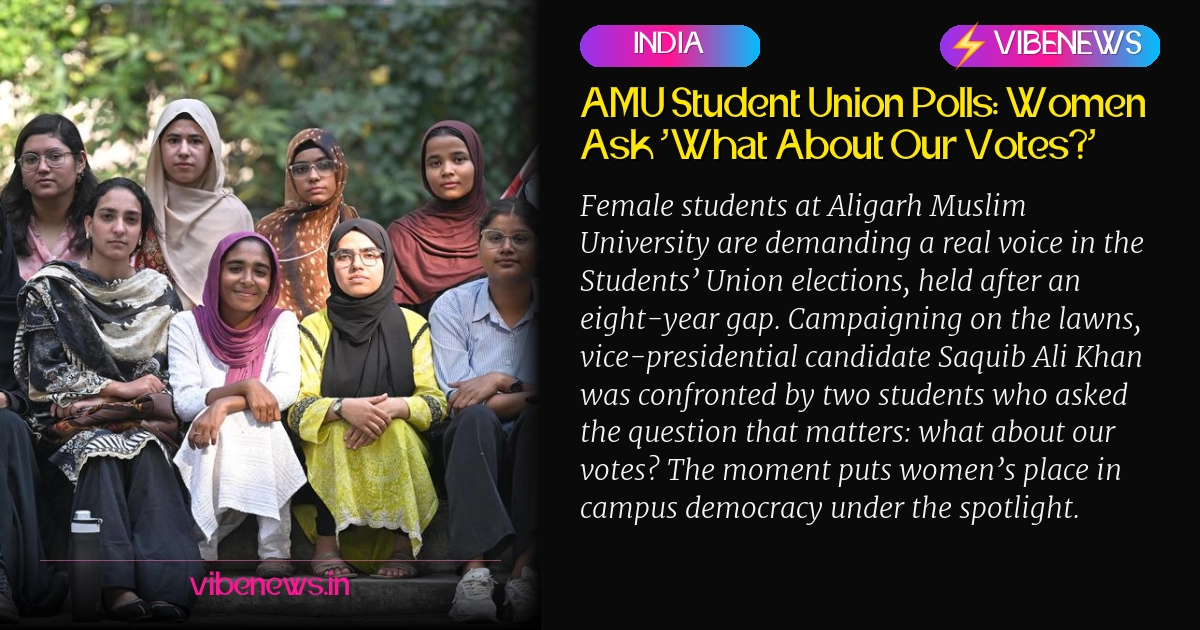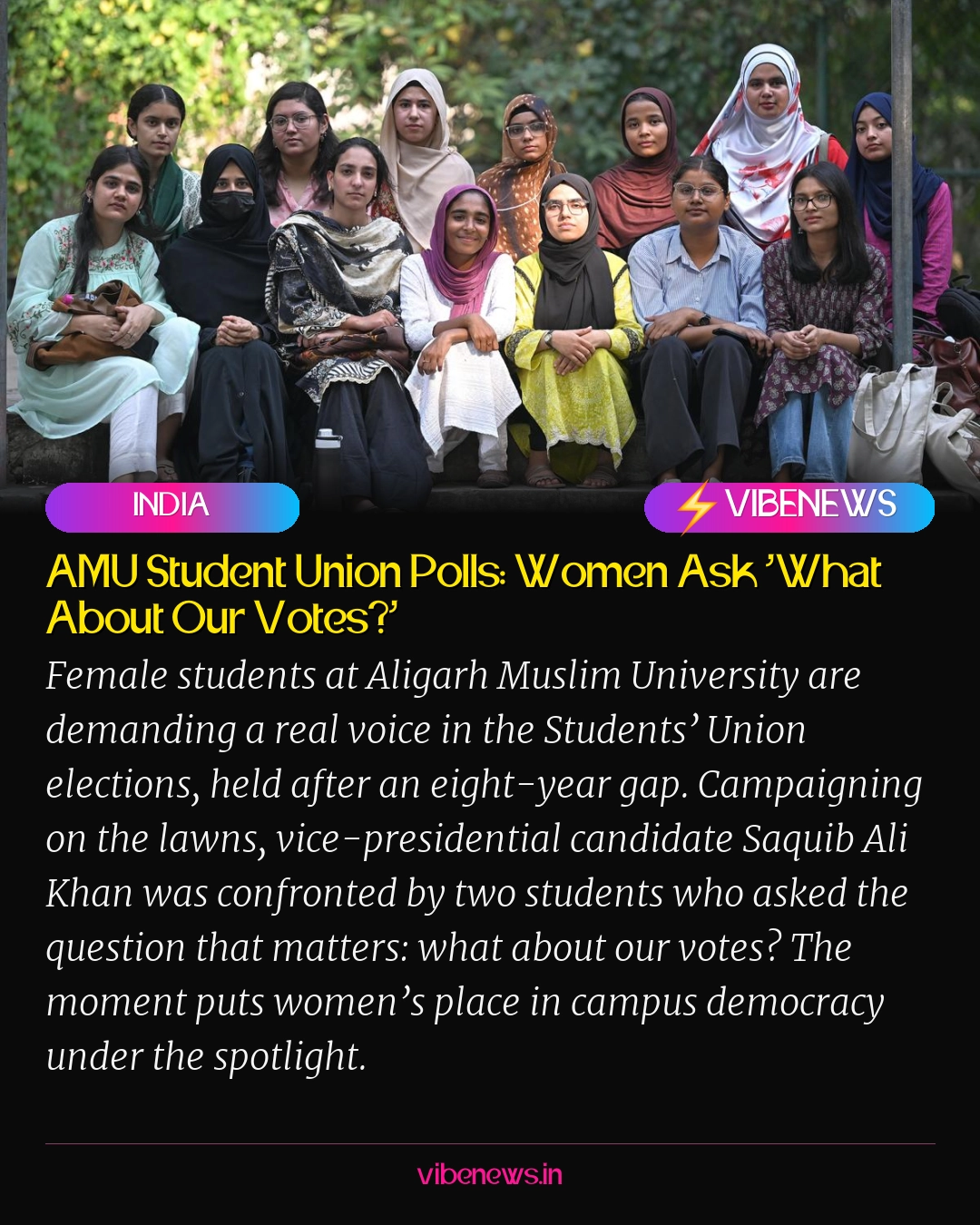
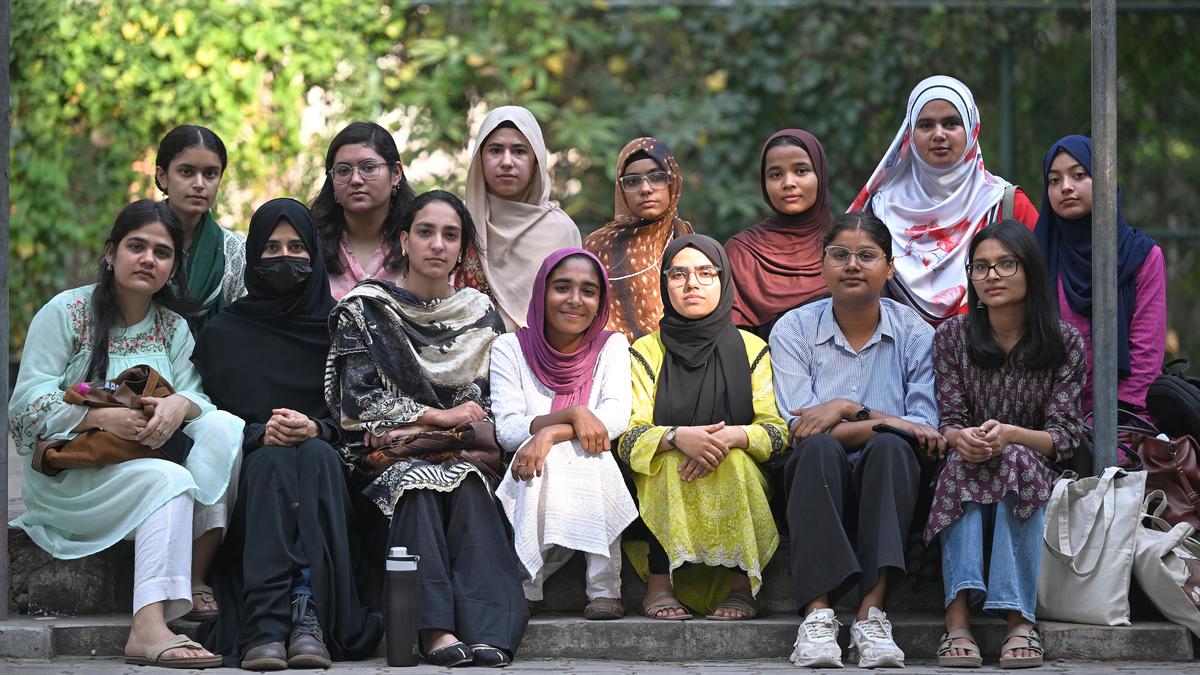
In Aligarh, Uttar Pradesh, female students at Aligarh Muslim University are challenging candidates over whether women’s votes count, as the Aligarh Muslim University Students’ Union (AMUSU) elections return after an eight-year gap.
The campus was already buzzing. Under the autumn sun, the university’s green lawns filled with students talking about the upcoming polls, while candidates worked the crowd near the weathered brick façade of the Department of History.
Saquib Ali Khan, an M.Tech student contesting the vice-presidential post, was among them. He wore a black sherwani, the knee-length coat with a front button closure that is prescribed as the dress code for male candidates. He asked the girls sitting on the lawn for their votes.
A Pitch Interrupted
Khan was making the case for the election itself. He stressed that the AMUSU polls were being held after a gap of eight years, a point that should have been the centerpiece of his appeal to students.
Instead, he was cut off. Two students, Zunaira Habib Alvi from Aligarh and Rahat Ul Aien from Kashmir, stepped in with a question that cut straight through the campaign speech.
“What about our votes?”
The question was short. It was also pointed. It asked a candidate, in the middle of his own pitch, why the women standing in front of him were being treated as an audience rather than as voters.
Eight Years Without a Ballot
The election’s significance is built into its timing. Student union polls at the university have not been held for eight years, so for many students this is the first chance in nearly a decade to choose their representatives.
That context makes the protest sharper. When a long-delayed vote arrives, the people asking to be counted are not asking for a favor. They are asking for the basic right that a democratic student body is supposed to guarantee.
The report does not detail how many women are registered to vote, how many are contesting, or how the university has responded to the exchange. Those gaps matter, and they are the questions students will want answered before polling day.
Campus Democracy Under the Spotlight
Female students gathered on the campus ahead of polling, both as candidates and as voters. That presence is visible in the reporting, and it is the thread that connects the lawns to a much larger argument about who holds power in university life.
Universities across the world are increasingly being judged on how they treat women in governance, from who sits on decision-making bodies to whether student representatives reflect the full student population. A student union election is a small stage, but it carries that same test.
The moment at AMU puts women’s place in campus democracy under the spotlight. It shows that a campaign can be fully underway, with candidates in formal dress and speeches being made, while the people most affected by the outcome still feel their concerns are being pushed to the margins.
Why the Question Lands
The demand from Alvi and Ul Aien is simple. It does not ask for sympathy. It asks for a seat at the table, and a candidate who wants their support has to answer for what their campaign promises to deliver.
There is also a reason the question resonates beyond one campus. Student politics often shapes the leaders who later move into public life. If women are left asking whether their votes matter at the start of that path, the damage extends well beyond a single election.
For AMU, the coming polls will test whether the institution can turn a demand for inclusion into real participation. For the students who stood up on the lawn and asked their question out loud, the answer will decide whether the eight-year wait was worth it.
TL;DR
- AMU student union elections return after an eight-year gap, and female students are demanding to know whether their votes count.|Vice-presidential candidate Saquib Ali Khan was interrupted during a campus pitch by two students who asked, "What about our votes?"|The two students named in the report are Zunaira Habib Alvi from Aligarh and Rahat Ul Aien from Kashmir.|Male candidates are required to wear a black sherwani, a knee-length coat with a front button closure, under the prescribed dress code.|The report does not say how many women are registered or contesting, or how the university has responded.|The moment highlights a wider debate over women’s representation in university governance and student politics.