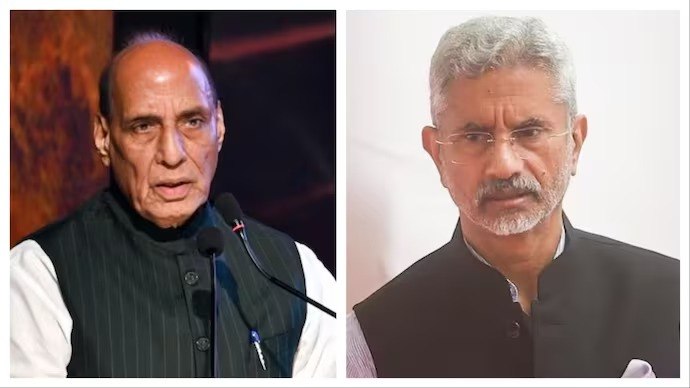
Defence Minister Rajnath Singh and External Affairs Minister S Jaishankar recently convened in the Parliament complex to address escalating concerns regarding India’s border with China in Arunachal Pradesh. The high-level meeting was prompted by a surge of social media claims suggesting a "slow incursion" by Chinese forces into Indian territory, sparking public debate and apprehension.
Government sources, however, swiftly moved to allay these fears, firmly dismissing the allegations of encroachment. Officials underscored the robust deployment and readiness of both the Indian Army and the Indo-Tibetan Border Police (ITBP). These forces are strategically positioned to maintain dominance along the border, meticulously monitor Chinese activities, and effectively counter any potential threats.
Strengthening Border Defences
Arunachal Pradesh, sharing an extensive and often challenging frontier with Tibet along the formidable Great Himalayan range, has been a focal point for India’s strategic infrastructure development. In recent years, New Delhi has significantly bolstered its capabilities in this critical sector. This includes the construction of enhanced road networks, the establishment of forward habitats for troops, and the deployment of advanced surveillance systems.
These infrastructural upgrades have dramatically improved India’s patrolling capabilities, leading to superior domain awareness and a quicker response time along the Line of Actual Control (LAC). The sustained investment reflects a proactive strategy to secure India’s territorial integrity and ensure the safety of its border communities.
Navigating Undemarcated Frontiers
Reports of occasional face-offs between Indian and Chinese patrols are not uncommon, a reality attributed to the undemarcated nature of the border. Government sources clarified that such encounters are routinely resolved through established mechanisms and protocols. These include local commander-level meetings and diplomatic channels designed to de-escalate tensions and prevent misunderstandings from spiraling.
The continuous deployment of both the Army and the ITBP across these sensitive border areas underscores India’s unwavering commitment to vigilance. Their presence is crucial for maintaining peace and tranquillity, even as both nations navigate the complexities of a disputed boundary.
Diplomacy Amidst Tensions
The recent developments unfold against a backdrop of heightened public scrutiny over Chinese infrastructure development near Arunachal Pradesh and reports of aggressive posturing by Chinese troops in specific regions, such as Upper Subansiri. While the Indian Army has maintained a measured silence on these specific reports, New Delhi has consistently reiterated its stance that border-related issues are treated with the utmost seriousness at the highest levels of government.
The Ministry of External Affairs (MEA) recently emphasized that peace and tranquillity along the LAC are fundamental to the broader India-China relationship. MEA spokesperson Randhir Jaiswal articulated that India considers border issues "most serious" and that maintaining stability in these areas is of "utmost importance." He further stressed that the state of the border directly influences the overall trajectory of bilateral ties between the two Asian giants.
This position was reaffirmed during the 36th meeting of the Working Mechanism for Consultation and Coordination on India-China Border Affairs (WMCC) held on August 6. During this crucial dialogue, both sides undertook a comprehensive review of the situation along the LAC. They mutually agreed to continue utilizing both diplomatic and military channels, including the WMCC and local commander-level meetings, to address outstanding issues, mitigate potential misunderstandings, and avoid miscalculations that could destabilize the region.
A New Cartographic Dispute
Adding another layer of complexity to the already intricate relationship, the latest exchanges have coincided with a fresh cartographic dispute. India recently took a significant step by formally identifying 27 locations and geographical features within Arunachal Pradesh on official Survey of India maps. This move, asserting India’s sovereign claim, predictably drew strong objections from Beijing.
In a firm rebuttal to China’s criticism, MEA spokesperson Jaiswal unequivocally stated that "Arunachal is an inalienable and integral part of India and this is a fact which is self-evident." He further underlined that "nothing can change this indisputable reality," signaling India’s resolute stance on its territorial claims.
Historical Context and Future Trajectory
The current situation is viewed through the lens of past confrontations, most notably the violent Galwan Valley clashes of 2020 and the subsequent prolonged military standoff in eastern Ladakh. In the aftermath of these events, both India and China have undertaken several steps over the past year to stabilize relations, including disengagement agreements in sensitive areas like Depsang and Demchok.
The meeting between Minister Jaishankar and Minister Singh serves as a clear signal that New Delhi is meticulously monitoring the Arunachal sector. It reinforces India’s dual strategy: maintaining unwavering vigilance on the ground through enhanced military presence and infrastructure, while simultaneously leveraging established diplomatic and military mechanisms to manage differences and prevent escalation with China.
Editorial Context
The ongoing dialogue and strategic reviews concerning the Arunachal Pradesh border hold profound long-term implications for India’s national security and its geopolitical standing. The persistent claims of Chinese incursions, even if officially dismissed, underscore the continuous pressure points along the Line of Actual Control. India’s response, characterized by robust infrastructure development and a firm diplomatic posture, is critical not only for territorial integrity but also for projecting regional stability.
This sustained focus on border management, coupled with a willingness to engage in structured diplomatic and military consultations, reflects a mature approach to a complex bilateral relationship. The resolution of cartographic disputes and the maintenance of peace along the LAC are foundational to any future normalization of India-China ties. The ability to manage these flashpoints effectively will define India’s strategic autonomy and its role as a responsible power in the Indo-Pacific region for decades to come.
TL;DR
- Defence Minister Rajnath Singh and External Affairs Minister S Jaishankar met to review the Arunachal Pradesh border situation.
- Social media claims suggesting Chinese "slow incursion" were dismissed by government sources, citing strong Indian preparedness.
- India has significantly strengthened its border infrastructure, surveillance systems, and patrolling capabilities in Arunachal Pradesh.
- Existing diplomatic and military mechanisms are actively used to resolve occasional patrol face-offs along the undemarcated Line of Actual Control (LAC).
- The Ministry of External Affairs emphasizes that peace and tranquillity along the LAC are central to the broader India-China relationship, a stance reiterated in WMCC meetings.
- A new cartographic dispute has emerged after India formally identified 27 locations in Arunachal Pradesh on official maps, prompting objections from Beijing.