A Bizarre Deception Leads to Tragedy in Bhopal
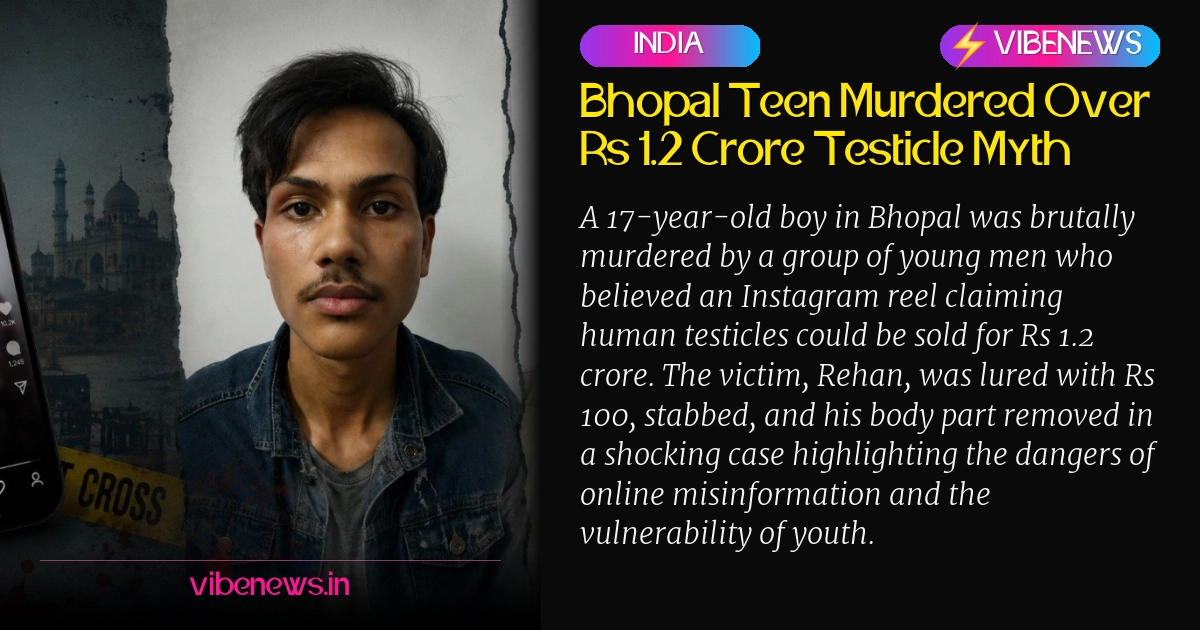
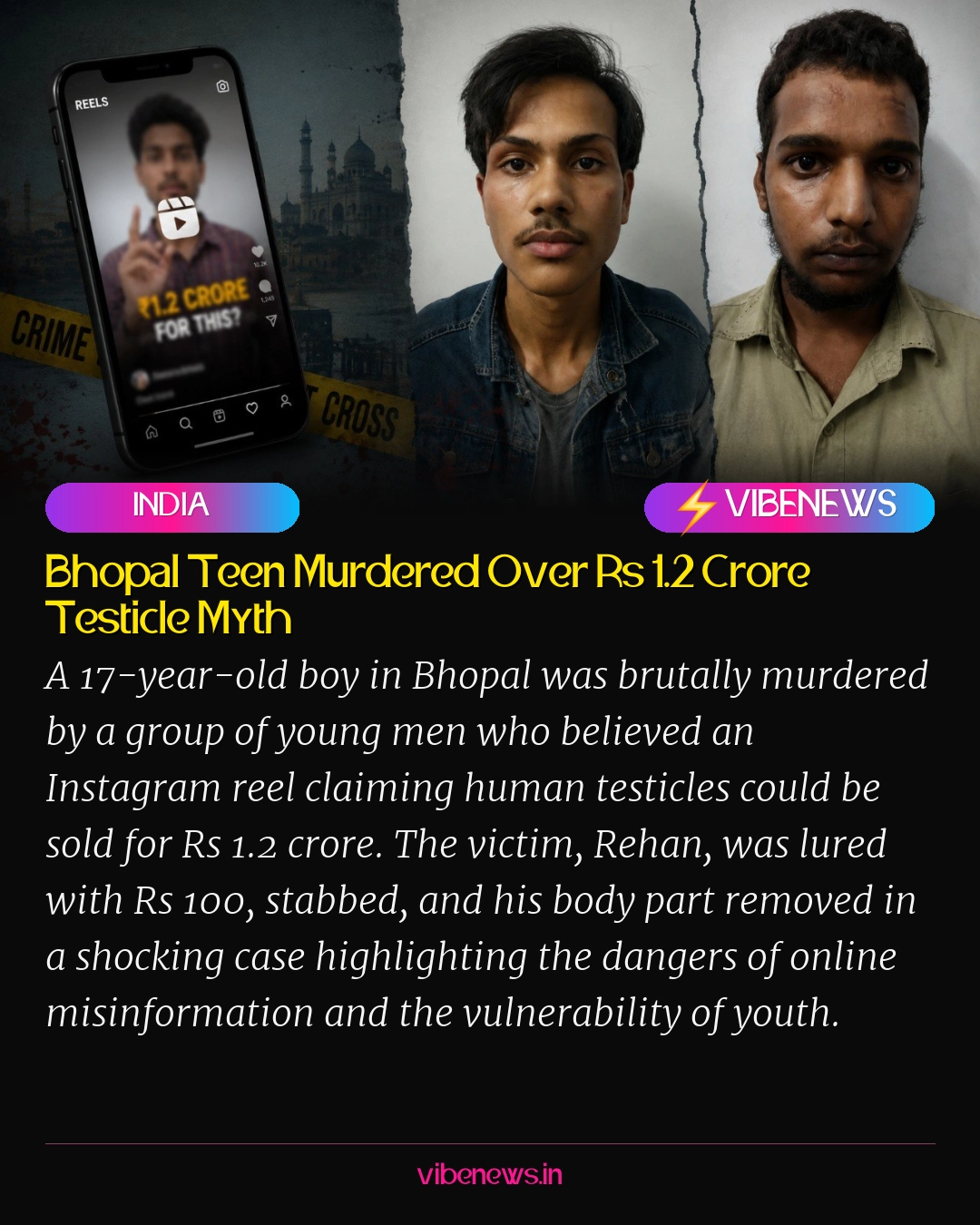
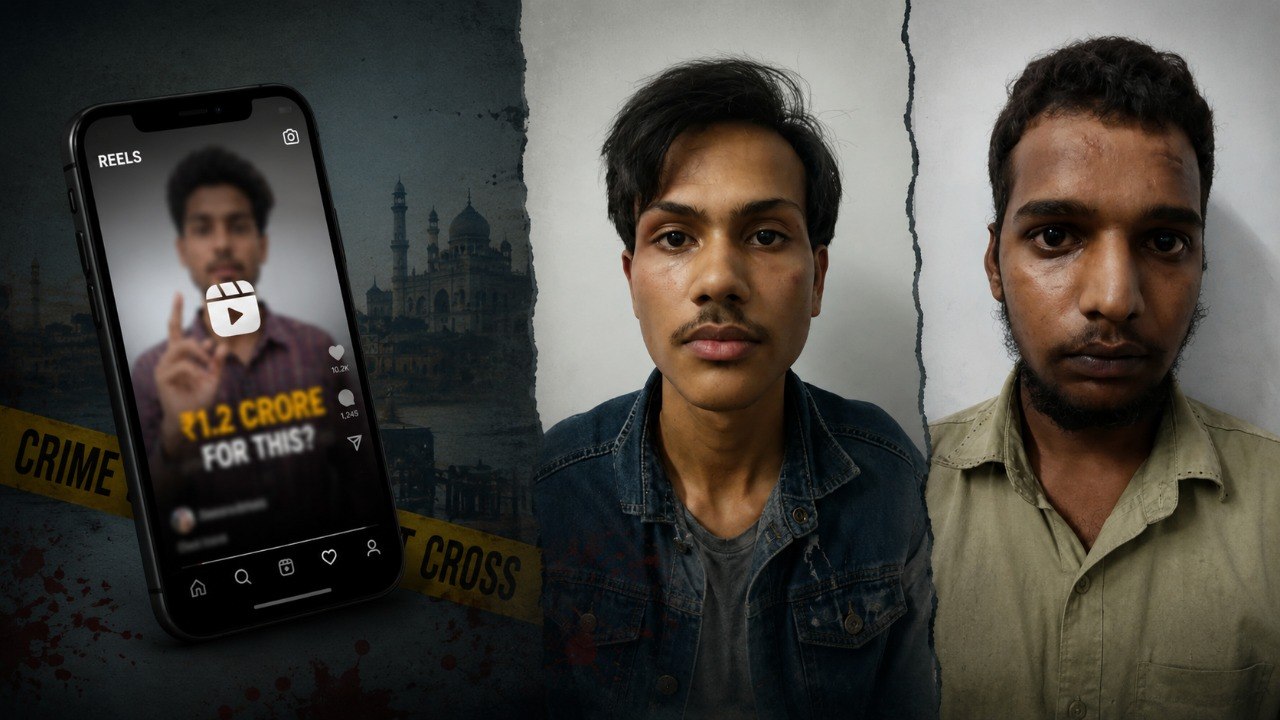
In a chilling incident that underscores the perilous influence of online misinformation, a 17-year-old boy in Bhopal, Rehan, was brutally murdered by a group of individuals who were allegedly swayed by a bizarre Instagram reel. The reel propagated a false claim that human testicles could be sold for an astronomical sum of Rs 1.2 crore, a myth that tragically became the motive for a heinous crime.
Rehan, who supported his family by selling pens and keychains near Iqbal Maidan and Moti Masjid, lived a life far removed from the fantastical riches his alleged killers envisioned. His father had passed away, and his mother worked as a cleaner, making Rehan’s meager earnings crucial for their survival.
The Genesis of a Deadly Myth
Police investigations revealed that the conspiracy originated with Zoheb Khan, a 20-year-old BBA student. Khan allegedly watched an Instagram reel and subsequently convinced his associates, including three minors and 18-year-old Aamir Qureshi, that the private parts of a teenage boy could fetch a fortune. Zoheb reportedly donned a white apron, masquerading as a doctor, which lent a deceptive veneer of credibility to his outlandish claims.
The group, driven by the promise of instant wealth, began to plan their macabre scheme. They targeted Rehan, whom some of them already knew, believing he fit the age criteria of a boy above 15 years, as allegedly specified in their distorted understanding of the myth.
The Deceptive Lure and Tragic Act
On August 6, the alleged conspirators put their plan into motion. Two minors approached Rehan at Iqbal Maidan, fabricating a story about needing his help in a fight near Khatlapura. They offered him Rs 100, a sum that, for Rehan, was a significant incentive, unaware it was a mere pretext to lead him to his death.
As they journeyed through Ginnauri and Kilol Park, other members of the group joined them. Zoheb Khan allegedly maintained phone contact, guiding the group towards the secluded Dhobighat area near Chhota Talab. Once at the isolated spot, Rehan was ambushed, overpowered, and repeatedly stabbed with a knife and a blade.
Following the murder, the accused allegedly contacted Zoheb for further instructions. Acting on guidance connected to the video they had seen, Rehan’s testicles were reportedly removed and placed in a polythene bag. This gruesome act was carried out under the false belief that a buyer for the body part, worth crores, was waiting.
The Futile Search for a Buyer
The grim reality soon set in for the accused. After the murder, they faced a problem they hadn’t anticipated: the absence of the promised Rs 1.2 crore buyer. Police interrogation suggests the group frantically searched for someone to purchase the severed body part, keeping it for days in a desperate attempt to realize their mythical fortune.
However, no buyer emerged, exposing the utter baselessness of the Instagram myth. Investigators consulted medical professionals, who confirmed there was no scientific or medical basis for such a claim, nor any evidence of an organized organ-trafficking market for such a purpose. The promise of crores turned out to be a cruel deception, and Rehan was already dead. Eventually, after their futile attempts, the accused allegedly disposed of the body part in water.
Unraveling the Mystery and Arrests
The murder initially surfaced without a victim’s identity. On August 10, a decomposed body with sharp-edged weapon injuries was discovered at Dhobighat. Police registered a murder case but faced the challenge of identifying the deceased. They circulated photographs, conducted door-to-door inquiries, and eventually buried the unidentified body.
Five days later, on August 15, Rehan’s mother approached the police, searching for her missing son. She identified the body, aided by a distinctive tattoo on his hand, which proved crucial in redirecting the investigation. Police meticulously reconstructed Rehan’s last movements, questioned his acquaintances, and ultimately traced the trail to the five accused.
Zoheb Khan, 20, and Aamir Qureshi, 18, have been arrested, and three minors have been detained in connection with the murder. DCP Zone-3 Ayush Gupta confirmed that four of the accused actively participated in the murder, while Zoheb guided them and orchestrated the conspiracy. The knife allegedly used in the crime has also been recovered. Police are now investigating the precise origin of the Rs 1.2 crore figure and whether the Instagram reel was merely misinformation or a deliberate fabrication.
Editorial Context
This tragic incident in Bhopal serves as a stark and disturbing reminder of the profound dangers posed by unchecked online misinformation, particularly when it preys on the vulnerable and the impressionable. The case highlights the critical need for digital literacy and critical thinking skills among youth, who are constantly exposed to a deluge of content on social media platforms. The ease with which a baseless claim, amplified through a simple Instagram reel, could morph into a motive for murder underscores a societal challenge far beyond a single criminal act.
Moreover, the incident brings into sharp focus the economic desperation that can make individuals susceptible to outlandish promises of wealth. Rehan’s background as a young boy striving to support his family paints a poignant picture of vulnerability that was exploited by a cruel and unfounded myth. This case should prompt a broader conversation about the responsibility of social media platforms in curbing the spread of harmful content and the role of communities and educators in fostering an environment where facts prevail over dangerous fantasies. The long-term implications extend to public safety, the psychological impact of digital deception, and the urgent need for robust mechanisms to counter the proliferation of dangerous hoaxes online.
TL;DR
- A 17-year-old boy, Rehan, was murdered in Bhopal due to a false Instagram myth claiming human testicles could be sold for Rs 1.2 crore.
- The alleged mastermind, Zoheb Khan (20), a BBA student, posed as a doctor and convinced others of the myth’s credibility.
- Rehan was lured with Rs 100 under the pretext of helping in a fight, then taken to an isolated spot, stabbed, and his body part removed.
- After the murder, the accused failed to find any buyer for the body part, confirming the myth’s baselessness, and eventually disposed of it.
- Police identified Rehan’s decomposed body five days after its discovery, with his mother’s help, leading to the arrest of Zoheb Khan, Aamir Qureshi (18), and three minors.
- The case highlights the severe dangers of online misinformation and its tragic real-world consequences, particularly for vulnerable individuals.