A Strategic Shift in Uttar Pradesh
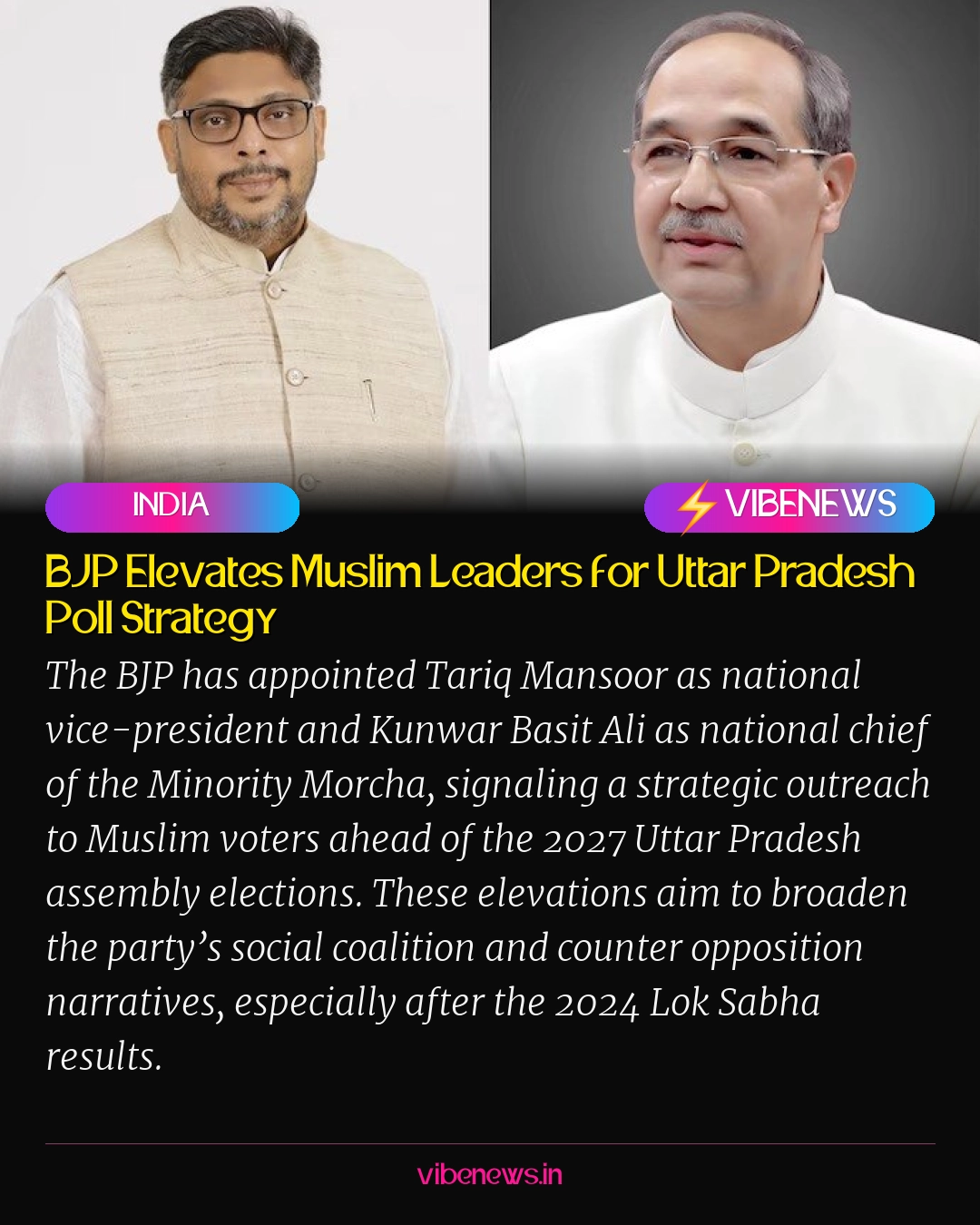
The Bharatiya Janata Party (BJP) has made significant organizational appointments, elevating two prominent Muslim leaders to key national roles. These moves are strategically timed ahead of the crucial Uttar Pradesh assembly elections slated for early 2027, signaling a nuanced approach to expand the party’s electoral base in the politically vital state.
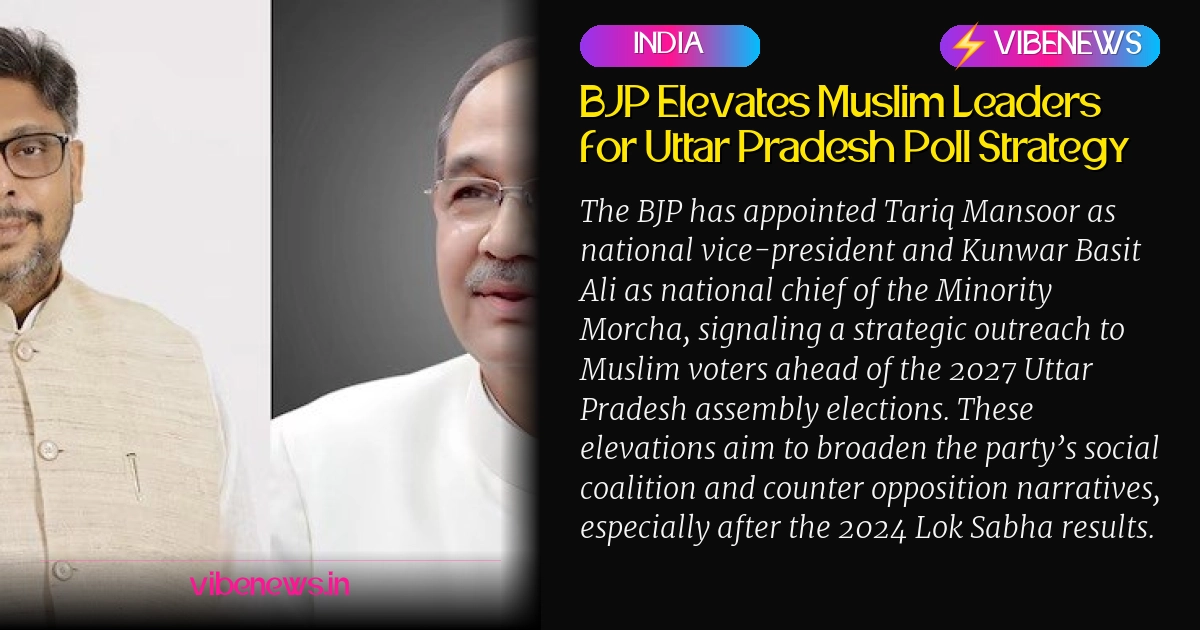
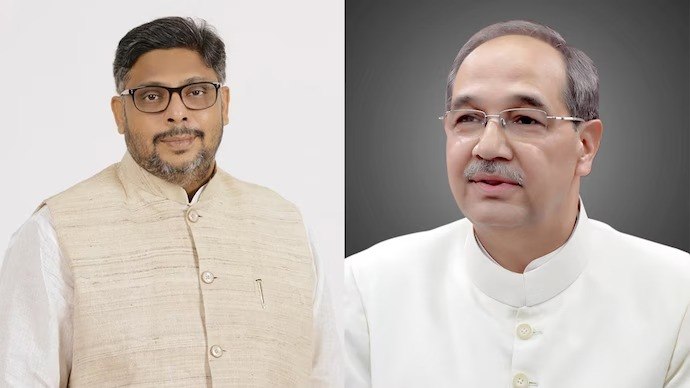
Former Aligarh Muslim University (AMU) vice-chancellor Tariq Mansoor has been appointed as a BJP national vice-president, while Uttar Pradesh BJP Minority Morcha chief Kunwar Basit Ali now leads the national Minority Morcha. These elevations are not merely symbolic; they represent a calculated effort to engage with a demographic that has historically remained largely outside the BJP’s traditional support base.
The Profiles Behind the Policy
Tariq Mansoor brings a distinct academic and social standing to his new role. As a former vice-chancellor of AMU and a current member of the Uttar Pradesh legislative council, his profile offers a different dimension compared to the party’s conventional leadership. Mansoor, who joined the BJP in 2023, belongs to the Qureshi community, aligning him with the party’s broader outreach to Pasmanda Muslims—socially and economically marginalized groups within the Muslim community.
His appointment places a Muslim face at one of the BJP’s highest organizational echelons, providing national visibility to this outreach. Mansoor’s association with AMU lends him recognition beyond partisan politics, while his established connections with senior BJP and RSS figures have integrated him into the party’s wider engagement efforts.
Kunwar Basit Ali, on the other hand, represents a more grassroots and organizational facet of this strategy. Unlike Mansoor, whose influence stems from academia, Ali has cultivated a robust network within the BJP’s minority wing over many years. His political journey within the party began in 2011, progressing through district and regional responsibilities before he became president of the Uttar Pradesh BJP Minority Morcha in 2021.
Ali, a Muslim Rajput from western Uttar Pradesh, provides the party with a rooted presence in a region where the competition for Dalit, OBC, and minority votes is particularly intense. His work has focused on disseminating the BJP’s welfare initiatives and political messages directly to Muslim communities, including campaigns like ‘Modi Mitra’ and ‘Shukriya Modi Bhaijaan,’ the latter specifically targeting Muslim women before the 2024 Lok Sabha elections.
Navigating the Post-2024 Landscape
Uttar Pradesh, with its roughly 20 percent Muslim population, presents a unique electoral challenge for the BJP. The party’s objective is not necessarily to secure the entire Muslim vote, but rather to create fissures within what has often been a consolidated bloc. The aim is to attract smaller segments that may perceive their interests as distinct from the broader community, particularly Pasmanda Muslims and beneficiaries of central welfare schemes.
The urgency of this outreach is underscored by the results of the 2024 Lok Sabha elections. The BJP’s tally in Uttar Pradesh significantly dropped from 62 seats in 2019 to 33, while the Samajwadi Party and Congress alliance secured 43 seats. The SP’s success was largely attributed to its ‘PDA’ (Pichhde, Dalit, Alpsankhyak – Backward, Dalit, Minority) formula, which effectively consolidated these vote banks.
In response, the BJP is actively seeking to broaden its own social coalition for 2027. This includes intensified outreach to non-Yadav OBC groups, various Dalit communities, and specifically, Pasmanda Muslims. The party’s focus on Muslim women, highlighted by its legislation against instant triple talaq and various welfare schemes, is part of this larger calculation to cultivate a constituency that might respond to specific policy interventions, even if not aligning politically.
Regional Imperatives and Grassroots Engagement
The regional dimension is also critical. Western Uttar Pradesh, with its substantial Muslim population, remains a highly competitive political battleground following the 2024 elections. Kunwar Basit Ali’s background in Meerut and his extensive organizational work are expected to be invaluable assets as the party gears up for the state campaign.
His efforts have included promoting an Urdu compilation of Prime Minister Narendra Modi’s ‘Mann Ki Baat’ broadcasts, a direct attempt to connect with voters who might otherwise remain distant from the BJP’s messaging. These targeted initiatives aim to build trust and demonstrate the party’s commitment to inclusive governance, even amidst its core Hindutva ideology.
Editorial Context: Long-Term Implications
The appointments of Tariq Mansoor and Kunwar Basit Ali signify a continued evolution in the BJP’s social engineering strategy. While the party’s core electoral strength remains rooted in its Hindutva and welfare politics, these moves indicate a pragmatic effort to expand its appeal beyond traditional boundaries. This is not a fundamental reorientation of the BJP’s relationship with the Muslim electorate as a whole, but rather a strategic attempt to build political bridges where access has historically been limited.
Over the long term, this strategy could challenge the conventional wisdom that Muslim voters are a monolithic bloc. By targeting specific segments, particularly the Pasmanda community and women beneficiaries, the BJP aims to disrupt established vote bank politics. The success or failure of this nuanced approach in the 2027 Uttar Pradesh elections will offer crucial insights into the future trajectory of identity politics and social coalitions in India’s most populous state, potentially influencing national political discourse for years to come.
TL;DR
- BJP appoints Tariq Mansoor as national vice-president and Kunwar Basit Ali as national chief of the Minority Morcha.
- The appointments are a strategic move to broaden the BJP’s social coalition ahead of the 2027 Uttar Pradesh assembly elections.
- Tariq Mansoor, an academic and former AMU VC, represents outreach to Pasmanda Muslims, while Kunwar Basit Ali brings grassroots organizational experience from western UP.
- The strategy aims to attract specific segments of Muslim voters, particularly Pasmanda Muslims and women beneficiaries of welfare schemes, rather than the entire community.
- This outreach is crucial for the BJP, especially after its reduced performance in Uttar Pradesh during the 2024 Lok Sabha elections.
- The appointments represent an effort to build political bridges and challenge traditional vote bank politics, without fundamentally altering the BJP’s core ideology.