A New Era Under Nitin Nabin
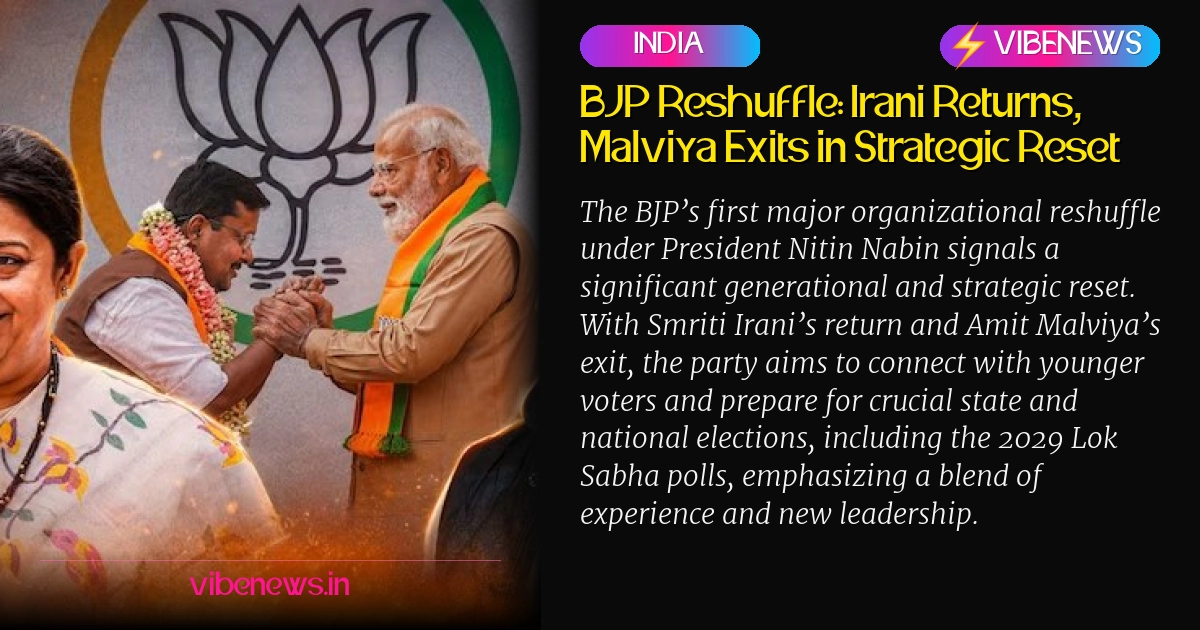
The Bharatiya Janata Party (BJP) has undergone its first significant organizational reshuffle under the leadership of President Nitin Nabin, marking a profound generational and strategic reset. This overhaul, which saw 51 out of 65 office-bearers being new faces, is more than a mere change of names; it signifies a deliberate recalibration of the party’s approach to an evolving electoral landscape.
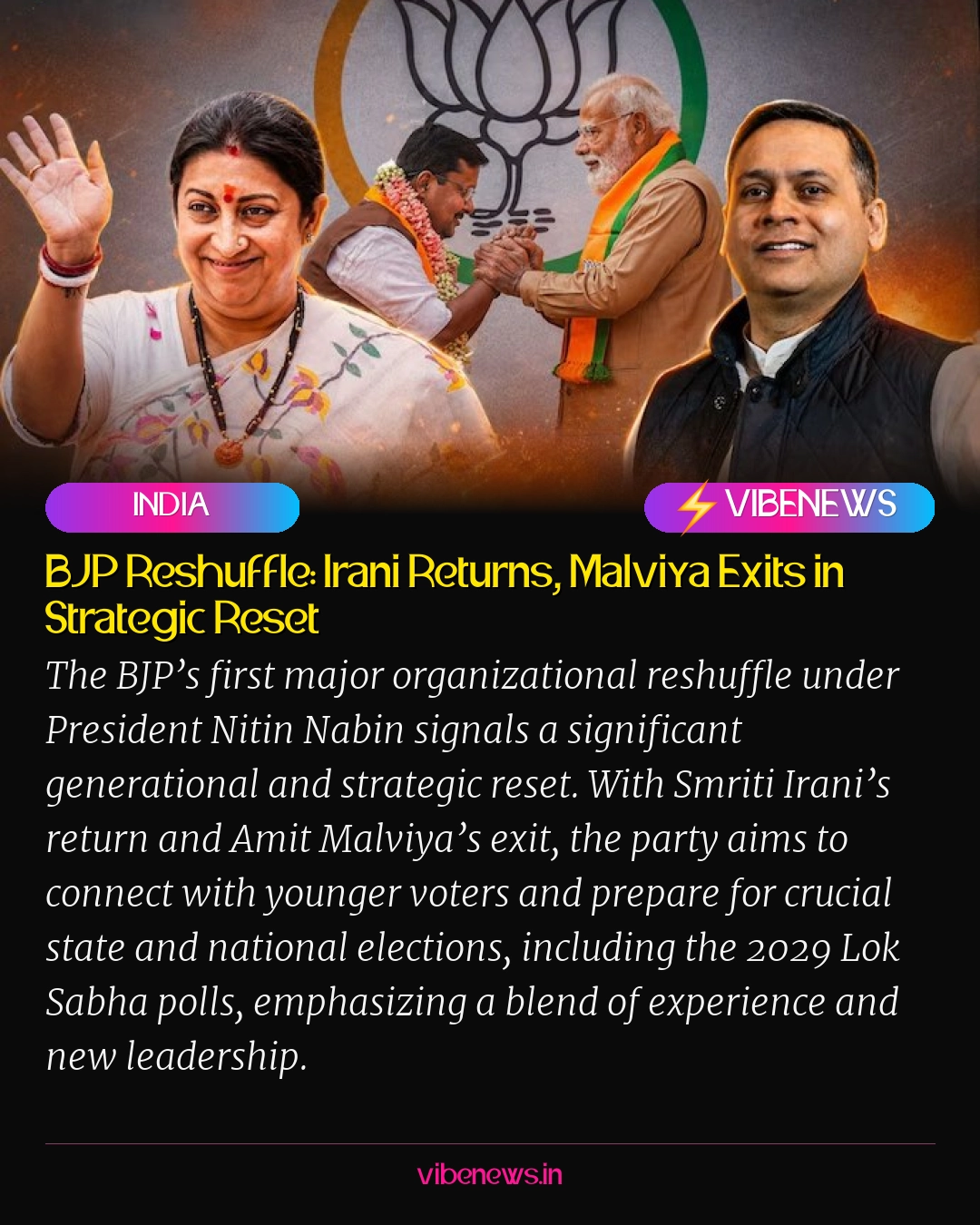
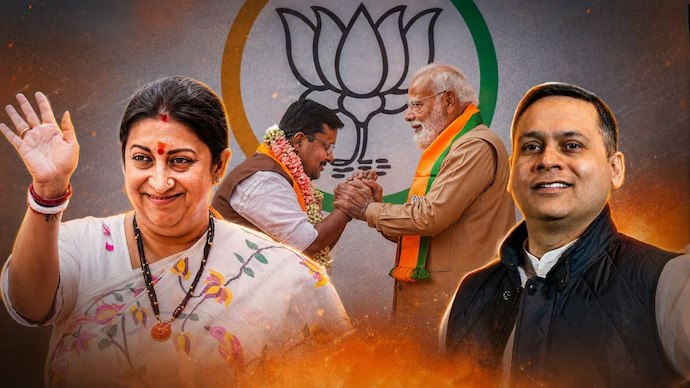
Key appointments, such as the return of Smriti Irani and Ram Madhav, alongside the notable removal of Amit Malviya from the party’s social media cell, underscore a broader strategy. The BJP is positioning itself to engage with a younger demographic, particularly Gen Z voters who will play a crucial role in upcoming electoral cycles, including the 2029 Lok Sabha elections.
The Generational Shift and Leadership Pipeline
The composition of the new national team, led by the 45-year-old Nitin Nabin, reflects a carefully orchestrated generational shift. Of the 65 office-bearers, 21 are under the age of 50, with six under 40 and 15 in the 40–49 age bracket. The overall average age of the team stands at approximately 53 years.
Simultaneously, the party has retained 23 members aged 60 or above, demonstrating a conscious effort to blend seasoned organizational veterans with emerging younger leaders. This strategy aims to build a robust leadership pipeline without disrupting institutional continuity, ensuring the party maintains its electoral and organizational strength ahead of critical state assembly elections in 2027 and the 2029 general elections.
Smriti Irani’s Resurgent Role
One of the most politically charged appointments is that of Smriti Irani as National General Secretary. Her return to the BJP’s central organizational structure is particularly significant for a leader who lost her Amethi Lok Sabha seat in 2024 after being a prominent face of the Narendra Modi government since 2014.
Irani’s political identity remains deeply intertwined with Uttar Pradesh, a state where the BJP faced setbacks in the 2024 Lok Sabha elections and which heads for crucial Assembly elections in 2027. Her 2019 victory against Rahul Gandhi in Amethi, a long-held Gandhi family bastion, earned her the ‘giant killer’ tag and cemented her status as a formidable campaigner within the BJP cadre.
Her appointment is widely seen as an attempt by the party to deploy a proven political symbol in a key electoral battleground and to establish a strong counterweight to the rising profile of Rahul Gandhi. As a multilingual orator with experience in both electoral politics and the Union government, Irani brings a recognizable public profile and social media presence, appealing to younger voters and reinforcing the party’s outreach efforts.
Overhauling the Digital Strategy
While Irani’s return signifies bringing back a proven political face, Amit Malviya’s exit from the party’s digital leadership represents a willingness to reform a system that had become synonymous with one individual. Malviya had headed the BJP’s IT Cell since 2015, playing a central role in the party’s digital campaigns and narrative-setting efforts.
His replacement by Deepak Mhaske, an academic and political organizer with expertise in electoral data, signals a significant shift in the BJP’s digital strategy. The entire social media structure has been reworked, with new co-convenors like Priti Gandhi, Shivanand Dwivedi, Alok Bhatt, and Arun Yadav joining the team.
Although the BJP has not publicly explained Malviya’s removal, the move comes amidst a changing political environment where recent protests, such as the Cockroach Janta Party (CJP) agitation and the anger surrounding the NEET paper leak, exposed perceived communication gaps with younger voters. This prompted broader organizational questions about the party’s digital outreach and responsiveness.
The new appointments suggest that the BJP is not abandoning digital politics but rather aiming to make its operations more data-driven, decentralized, and adaptable to newer platforms and diverse audiences. The party seeks to refine its online engagement to better resonate with contemporary voter sentiments.
Balancing Experience with Renewal
The reshuffle also highlights a broader strategy of balancing electoral experience with organizational renewal. Leaders like Ram Madhav, an experienced strategist with deep ties to the BJP and RSS, have returned to key roles. Vasundhara Raje Scindia remains a national vice-president, while Baijayant Panda and Tariq Mansoor retain important positions, indicating that established figures with electoral value are still crucial.
Promotions for leaders such as Lal Singh Arya and Harish Dwivedi further underscore the party’s message to its cadre: experience is valued, but past performance alone will not guarantee permanence. The BJP is demonstrating a willingness to bring back effective campaigners while simultaneously replacing individuals who have held key organizational positions for extended periods.
This contrast, particularly between Irani’s return and Malviya’s exit, clearly articulates President Nitin Nabin’s vision. The BJP is entering an intensive election-preparation phase, but it intends to approach future electoral battles with a refreshed strategy and a revitalized team, learning from past experiences while adapting to new challenges.
Editorial Context
This organizational reshuffle by the BJP under Nitin Nabin is more than a routine administrative exercise; it represents a critical juncture in the party’s long-term strategic evolution. The emphasis on a generational shift, coupled with targeted appointments and removals, signals the BJP’s proactive response to recent electoral outcomes and anticipated demographic changes in the Indian electorate. Over the long term, this move could redefine the party’s internal power dynamics, foster a new cohort of leaders, and reshape its communication strategies, particularly in the digital realm.
The re-engagement with key states like Uttar Pradesh through figures like Smriti Irani highlights the party’s sustained focus on its core electoral strongholds and its determination to counter opposition narratives effectively. Furthermore, the overhaul of the digital wing reflects an acknowledgment of the evolving nature of political discourse and the imperative to connect with younger, digitally native voters. This strategic recalibration will likely influence the BJP’s policy formulations, campaign narratives, and overall political trajectory for the next decade, impacting the broader landscape of Indian national politics.
TL;DR
- The BJP’s first major organizational reshuffle under President Nitin Nabin involves 51 new faces among 65 office-bearers, signaling a generational and strategic reset.
- Smriti Irani returns as National General Secretary, emphasizing the party’s focus on Uttar Pradesh and positioning her as a counterweight to Rahul Gandhi.
- Amit Malviya has been removed from the BJP’s IT Cell, replaced by Deepak Mhaske, indicating a significant overhaul of the party’s digital strategy.
- The reshuffle aims to balance experienced leaders with younger talent, with 21 office-bearers under 50, while retaining 23 members aged 60 or above.
- The changes are seen as preparation for crucial upcoming elections, including the 2027 Assembly polls and the 2029 Lok Sabha elections, with a focus on engaging Gen Z voters.
- The party seeks to address communication gaps and adapt its outreach to newer platforms and younger audiences, moving towards a more data-driven digital approach.