The Bharatiya Janata Party’s recent organizational appointments, spearheaded by national president Nitin Nabin, are being interpreted as a significant strategic realignment rather than mere routine reshuffles. With crucial assembly elections looming in Uttar Pradesh, Punjab, and Gujarat in 2027, the party is positioning its most experienced election managers at the forefront of these impending political contests.
The overarching message from the BJP leadership is unequivocal: the pathway to securing a strong mandate in the 2029 Lok Sabha elections is inextricably linked to success in these pivotal 2027 state polls. This long-term vision underscores the importance of meticulous groundwork and robust organizational machinery.
Uttar Pradesh: A Critical Battleground
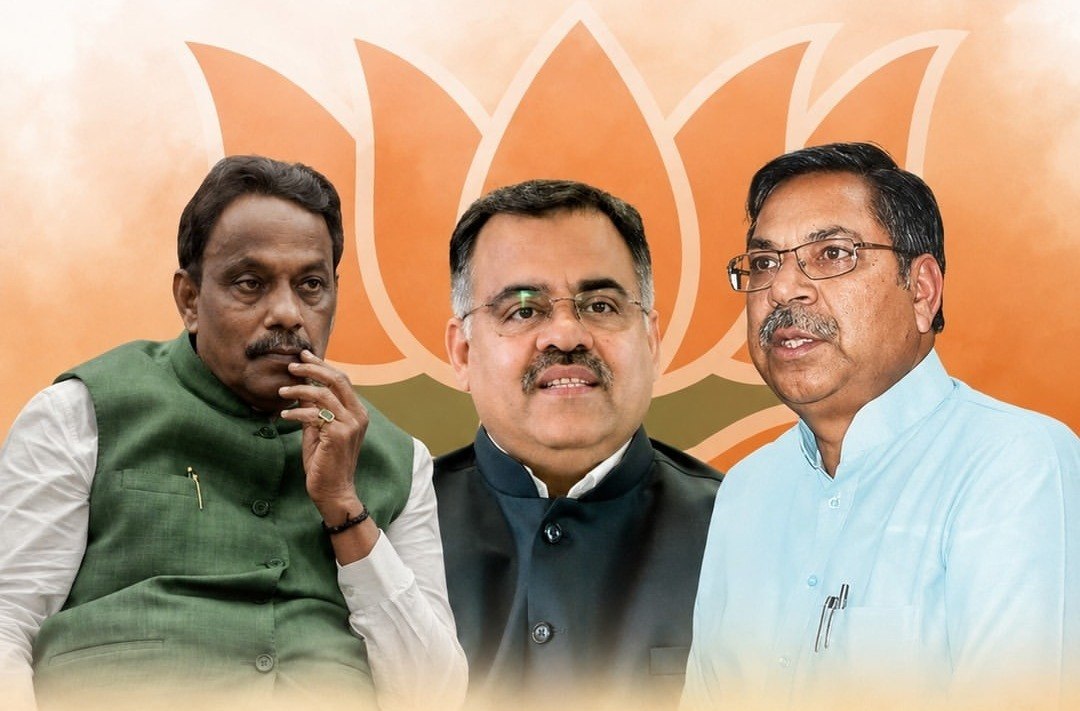
Among the three key appointments, Vinod Tawde’s assignment to Uttar Pradesh carries immense political weight. Despite the BJP’s continued dominance in the state, the 2024 Lok Sabha election results revealed pockets of vulnerability across various regions and social demographics. The party is now intensely focused on reclaiming lost ground and consolidating its position well before the 2027 assembly contest.
Nitin Nabin himself has engaged in extensive consultations with Members of Parliament and alliance partners, delving deep into caste equations, assessing cadre morale, and addressing localized concerns. This proactive approach highlights the BJP’s commitment to understanding and mitigating any potential electoral weaknesses.
Tawde brings a formidable reputation as one of the BJP’s most trusted organizational strategists. A former Maharashtra minister and national general secretary, he has consistently been entrusted with politically sensitive assignments across the country. His recent involvement in Bihar and Kerala, coupled with increasing engagement in Uttar Pradesh’s organizational affairs, underscores his versatility and strategic acumen.
Within party circles, Tawde is recognized less as a mass leader and more as a meticulous, behind-the-scenes architect capable of navigating complex political landscapes. This particular skill set is deemed crucial for Uttar Pradesh, where the BJP’s challenge extends beyond merely defeating the opposition. It encompasses maintaining seamless coordination among alliance partners, ensuring equitable caste representation, managing the intricate process of ticket distribution, and keeping the party’s vast organizational machinery energized and cohesive.
His extensive experience in managing large and politically diverse states is a primary reason the party has entrusted him with what is arguably its most significant electoral battleground. The BJP understands that sustained success in Uttar Pradesh requires a blend of strategic planning and diligent execution at every level.
Punjab’s New Electoral Frontier
In stark contrast to Uttar Pradesh, the BJP faces a fundamentally different challenge in Punjab, a border state where the party does not command overwhelming strength. Here, the objective is not to defend dominance but to systematically build new ground. After years of relying on alliances, particularly with the Shiromani Akali Dal, the BJP is now committed to expanding its footprint independently.
This strategic shift places an extraordinary emphasis on organizational development, making Satish Poonia’s appointment particularly pertinent. The former Rajasthan BJP president and Leader of Opposition has cultivated a reputation as an organizational leader adept at rebuilding structures and galvanizing party workers. Crucially, BJP insiders credit him with playing a pivotal role in Haryana, where the party secured a third consecutive term in power, significantly bolstering the central leadership’s confidence in his capabilities.
Poonia has already been actively involved in efforts to strengthen the BJP’s Punjab unit, contributing significantly to the restructuring of the state organization. His elevation, therefore, signifies continuity in a long-term strategy rather than a fresh, untested experiment. For Punjab, the BJP’s priorities are clear: fortify booth-level networks, broaden its social coalition, attract new leaders, and expand beyond its traditional urban support base. Nitin Nabin’s recent visits to the state have consistently underscored the imperative of organizational strengthening and cadre mobilization ahead of 2027.
Poonia’s proven track record suggests he has been chosen primarily as a builder, tasked with constructing a more robust political infrastructure before the electoral campaign enters its full swing. This methodical approach reflects the party’s commitment to long-term growth in a challenging state.
Gujarat: Sustaining a Stronghold
While Gujarat might appear to be an easier assignment on paper, given the BJP’s nearly three-decade-long governance, the challenge here is uniquely nuanced. The party’s objective extends beyond merely winning elections; it involves actively preventing complacency, meticulously maintaining its intricate social coalition, and vigilantly protecting its vote share against both established and emerging political challengers.
Tarun Chugh, one of the BJP’s most seasoned organizational figures, has long been entrusted with politically sensitive assignments. Unlike many leaders whose influence is confined to a particular state, Chugh has operated across diverse regions and has been an integral part of the party’s national strategy framework for years. His ascent within the organization is largely attributed to his exceptional ability to manage cadres, coordinate effectively with state units, and implement central leadership directives with precision.
His extensive experience in Punjab, Jammu and Kashmir, and various other organizational roles has earned him a reputation as a leader comfortable navigating politically diverse environments. Chugh has also been closely involved in organizational expansion efforts and election management exercises across multiple states, making him an ideal fit for Gujarat’s specific requirements.
The BJP’s election strategy in Gujarat has historically relied on intensive organizational management and micro-level monitoring. The party has a consistent practice of deploying senior leaders from outside the state to oversee electoral preparations and gather independent feedback. Chugh’s deep organizational experience makes him a natural choice for this model, ensuring that a long-standing stronghold remains politically secure and vibrant.
The Broader Strategic Vision
These appointments collectively offer a profound insight into the BJP’s broader strategic thinking as it gears up for 2027. In Uttar Pradesh, Vinod Tawde’s role is expected to center on intricate coordination, social engineering, and maintaining organizational discipline. In Punjab, Satish Poonia’s mandate is clearly focused on expansion and robust cadre-building. In Gujarat, Tarun Chugh’s primary task is consolidation, ensuring that a historically strong bastion remains politically impregnable.
The common thread uniting all three leaders is their reputation for organizational prowess rather than headline-grabbing mass appeal. This reflects a deeply held BJP belief that elections are ultimately won not solely through high-profile campaigns and charismatic personalities, but through meticulous groundwork laid months, and often years, before polling day. As Nitin Nabin shapes his first full organizational team, these appointments provide an early, yet clear, glimpse into the BJP’s ‘Mission 2027’ strategy: a steadfast reliance on experienced hands, an unwavering commitment to strengthening the organizational backbone, and a proactive approach to preparation long before the election bugle is sounded.
Editorial Context
These strategic deployments by the BJP signify a profound shift towards institutionalizing electoral success, moving beyond a sole reliance on charismatic leadership. The party’s emphasis on seasoned organizational figures like Tawde, Poonia, and Chugh underscores a long-term vision that views state assembly elections not as isolated events, but as integral components of a larger national electoral strategy. This approach reflects a mature political party’s understanding that sustained power requires a robust, well-oiled organizational machinery capable of executing complex strategies at the grassroots level.
The focus on Uttar Pradesh, Punjab, and Gujarat highlights the diverse challenges and opportunities the BJP perceives across the Indian political landscape. From consolidating dominance in a crucial Hindi heartland state to building new foundations in a historically challenging region, and preventing complacency in a long-held bastion, these appointments reveal a nuanced, state-specific approach. This methodical preparation, years in advance of the actual polls, suggests a strategic foresight aimed at minimizing electoral risks and maximizing gains, ultimately shaping the national political narrative for the 2029 Lok Sabha elections and beyond. It signals a party deeply invested in its organizational strength as the bedrock of its political future.
TL;DR
- The BJP’s recent organizational appointments are strategic moves for the 2027 state assembly elections, seen as crucial for the 2029 Lok Sabha polls.
- Vinod Tawde has been assigned to Uttar Pradesh to address vulnerabilities from the 2024 Lok Sabha elections and manage complex state politics.
- Satish Poonia is tasked with expanding the BJP’s organizational base and social coalition in Punjab, a state where the party seeks independent growth.
- Tarun Chugh’s role in Gujarat is to consolidate the BJP’s long-standing dominance, preventing complacency and protecting its vote share.
- The chosen leaders are known for their organizational skills and behind-the-scenes strategy, reflecting the BJP’s focus on meticulous groundwork.
- These appointments under Nitin Nabin indicate a long-term electoral planning strategy, prioritizing organizational strength well before election campaigns.