A Rare Public Spat Among NDA Allies
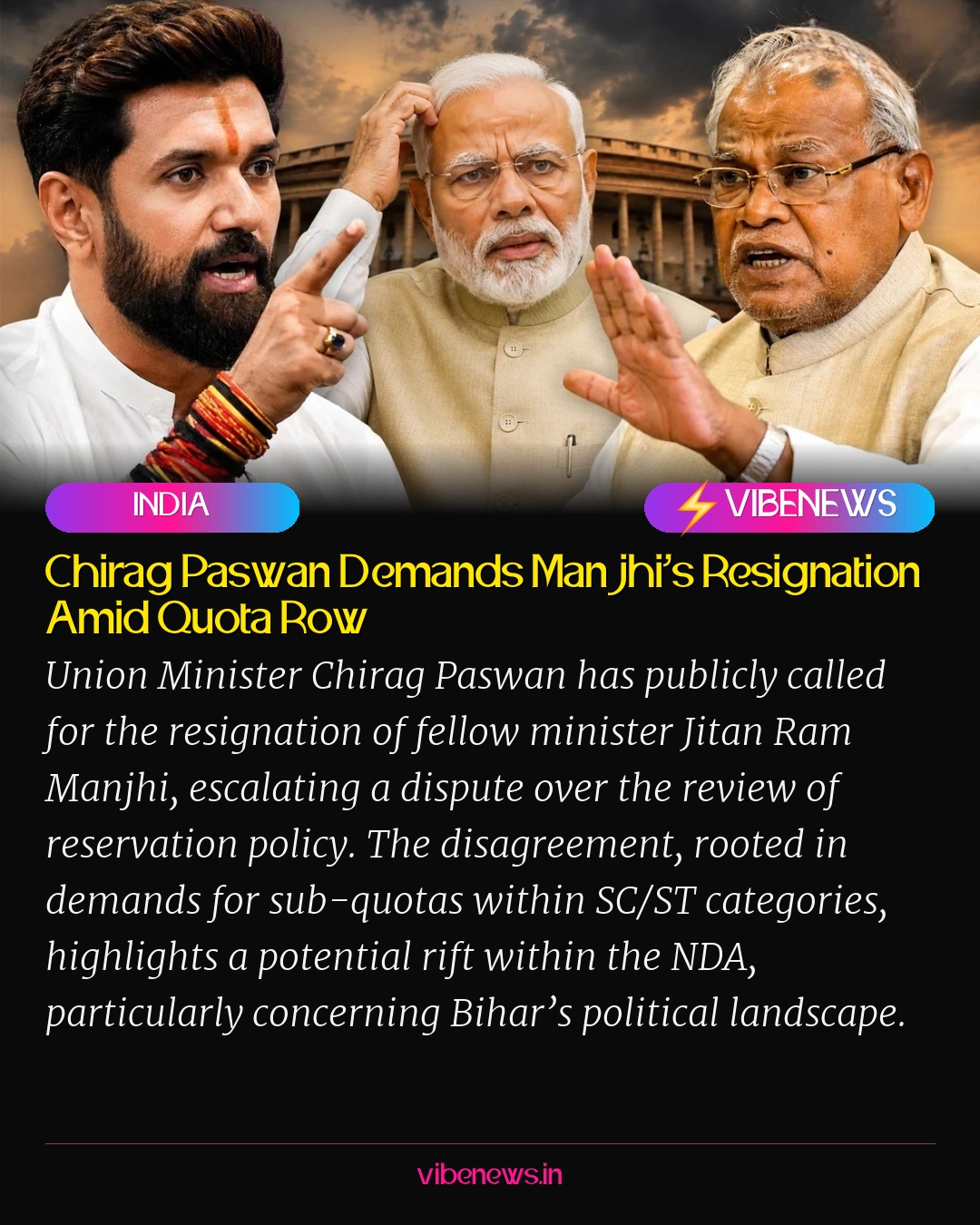
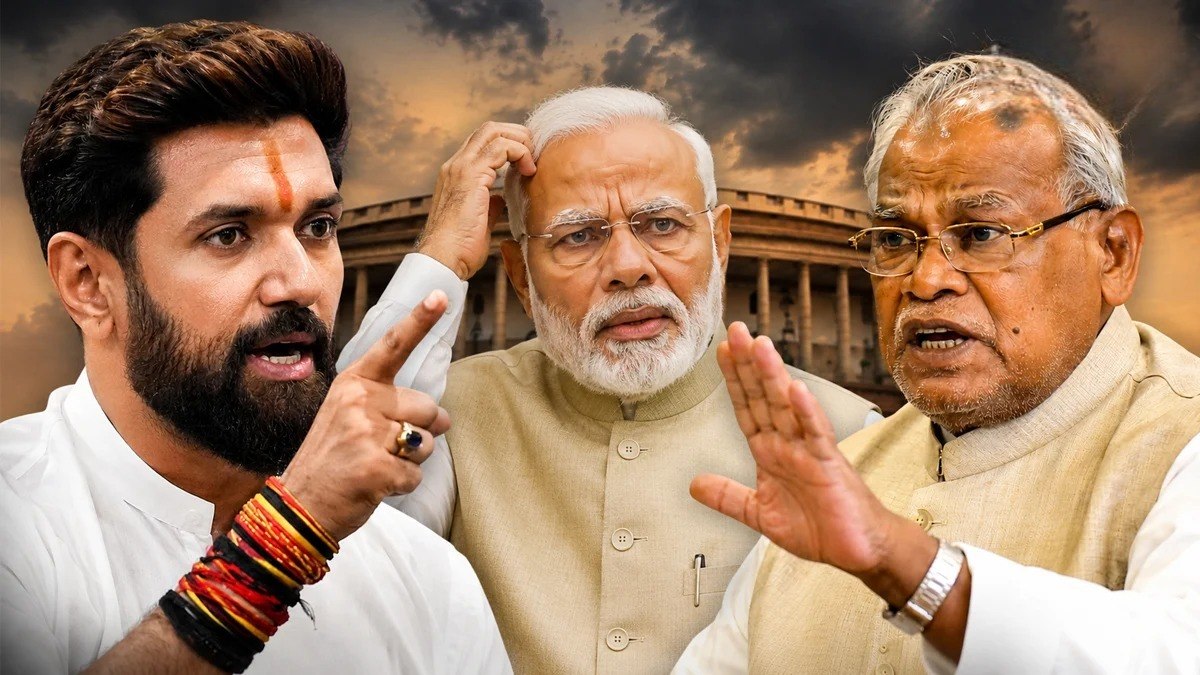
A significant political disagreement has erupted within the National Democratic Alliance (NDA), with Union Minister Chirag Paswan publicly demanding the resignation of his cabinet colleague, Jitan Ram Manjhi. The contentious issue at the heart of this dispute is the review of the existing reservation policy, specifically concerning the implementation of sub-quotas within the Scheduled Castes (SC) and Scheduled Tribes (ST) categories. This unusual public confrontation between two Union Ministers, both allies in Bihar and at the Centre, signals potential fissures within the ruling coalition.
The controversy gained momentum following remarks from Manjhi’s party, Hindustani Awam Morcha (Secular) or HAM(S), which advocated for a re-evaluation of the reservation system. HAM(S) argued that such a review is essential to ensure that the benefits of affirmative action truly reach the most vulnerable and historically marginalized communities within the SC and ST groups, rather than being concentrated among a few.
The Call for Sub-Quotas
The demand for a review of the reservation policy was articulated by Santosh Kumar Suman, Manjhi’s son and a minister in the Bihar government. Suman emphasized that HAM(S) is not seeking to abolish reservations but rather to make them more equitable and effective. He highlighted that certain communities, including the Mushahars, to which Jitan Ram Manjhi belongs, remain significantly underrepresented despite the existing reservation framework.
HAM(S) contends that the benefits intended for Dalit communities have disproportionately accrued to a select few, such as Paswans and Ravidas, leaving many other extremely backward Dalit groups still struggling for representation. Suman specifically pointed out the absence of any IAS officers from the Mushahar community, underscoring the perceived imbalance in the current system.
Paswan’s Firm Opposition
Chirag Paswan, leader of the Lok Janshakti Party (Ram Vilas), vehemently opposed the proposal for sub-quotas and the extension of the ‘creamy layer’ principle to SC reservations. Paswan asserted that such measures would fundamentally undermine the purpose of social justice and create divisions within the unified Dalit community. He argued that the Constitution does not provide for SC reservation to be determined on economic grounds.
In a direct challenge, Paswan stated that if Manjhi and Suman genuinely believe in the creamy layer concept for SCs, they should first relinquish their ministerial positions and the benefits they have accrued through reservation. He warned that introducing sub-quotas would fragment society and dilute the collective struggle for Dalit rights, leading to continued discrimination.
Judicial Precedent and National Debate
The roots of this debate can be traced back to a significant 2024 Supreme Court judgment. This verdict allowed states the flexibility to sub-classify Scheduled Castes and Scheduled Tribes, aiming to ensure that reservation benefits are distributed more equitably among the diverse groups within these categories. This ruling provided a legal basis for the arguments now being put forth by HAM(S).
More recently, a petition was filed in the Supreme Court advocating for the exclusion of socially and economically advanced individuals from reservation benefits within the SC and ST categories. The petitioners argued that affluent families within these groups were monopolizing the advantages. They cited the 2024 judgment, noting that a majority of the Constitution bench judges had suggested extending the creamy layer principle, currently applied to Other Backward Classes (OBCs), to SCs and STs. However, the Centre, in an affidavit before the Supreme Court, has maintained its stance that the creamy layer concept cannot be applied to SCs and STs.
Bihar’s Intricate Caste Politics
This dispute holds particular significance in Bihar, a state where caste dynamics play a pivotal role in electoral outcomes. Both Paswan’s LJP (Ram Vilas) and Manjhi’s HAM(S) are crucial allies for the NDA, representing distinct Dalit sub-groups. Paswan’s community, often seen as a dominant Dalit group, has historically benefited from reservations, while Manjhi champions the cause of the Mahadalits, a cluster of extremely backward Dalit castes.
The public disagreement risks exposing fault lines within the NDA’s carefully constructed caste coalition in Bihar. With upcoming elections, such internal strife could complicate the alliance’s strategy and potentially alienate segments of the Dalit vote bank, which is critical for political success in the state. The debate also reflects a broader national conversation about the efficacy and fairness of affirmative action policies, and whether they truly serve their intended purpose of uplifting the most disadvantaged.
Editorial Context
The ongoing public disagreement between Chirag Paswan and Jitan Ram Manjhi over reservation policy is more than just an internal NDA squabble; it represents a critical juncture in India’s long-standing discourse on social justice and affirmative action. This debate forces a re-evaluation of how reservation benefits are distributed and whether the current system adequately addresses the varying levels of backwardness within the Scheduled Castes and Scheduled Tribes. The outcome of this discussion, potentially influenced by judicial interpretations and political maneuvering, will have profound long-term implications for the unity of Dalit communities, the stability of political alliances, and the future trajectory of India’s social engineering efforts. It highlights the complex challenge of balancing historical disadvantage with contemporary equity, ensuring that policies designed for upliftment do not inadvertently create new disparities or perpetuate existing ones among the intended beneficiaries.
TL;DR
- Union Minister Chirag Paswan demanded the resignation of fellow minister Jitan Ram Manjhi over his party’s call for a review of reservation policy.
- Manjhi’s HAM(S) advocates for sub-quotas within SC/ST categories to ensure benefits reach the most marginalized communities, citing the Mushahar community’s underrepresentation.
- Paswan’s LJP (Ram Vilas) strongly opposes sub-quotas, arguing it would divide Dalit communities and undermine the core principles of social justice.
- The controversy is linked to a 2024 Supreme Court judgment that allowed states to sub-classify SCs and STs for more equitable benefit distribution.
- A recent petition sought to apply the ‘creamy layer’ principle to SC/STs, but the Centre maintains its opposition to this extension.
- The dispute highlights potential rifts within the NDA, particularly concerning caste politics and alliance cohesion in Bihar.