
India Grapples with Escalating Cyber Fraud Crisis
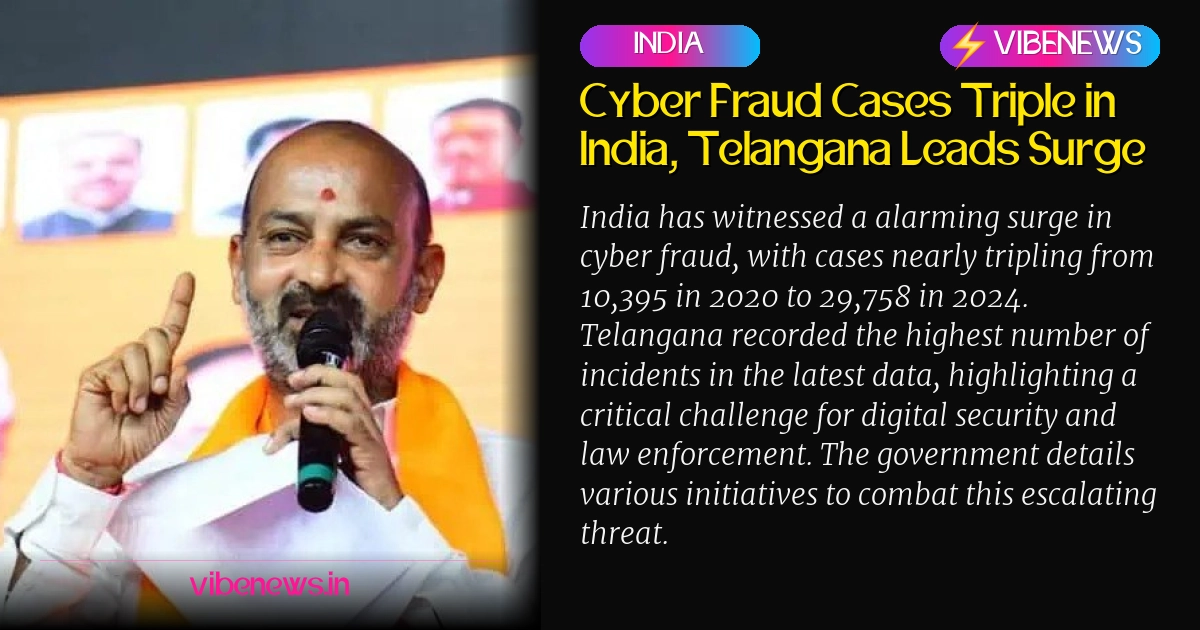
India is facing a significant challenge in the realm of digital security, as cyber fraud cases have surged dramatically across the nation. Government data presented to Parliament reveals that incidents have nearly tripled, escalating from 10,395 in 2020 to a staggering 29,758 by 2024. This alarming trend underscores the growing sophistication of cybercriminals and the increasing vulnerability of the digital populace.
The Minister of State for Home Affairs, Bandi Sanjay Kumar, provided these figures in a written reply to the Rajya Sabha. The data, compiled by the National Crime Records Bureau (NCRB), illustrates a consistent upward trajectory: 10,395 cases in 2020, 14,007 in 2021, 17,470 in 2022, 19,466 in 2023, and a sharp jump to 29,758 in 2024. This continuous rise reflects the rapid digital transformation of the country and the parallel evolution of online criminal activities.
Understanding the Fraud Landscape
An analysis of the identified categories for 2024 paints a clear picture of the prevalent types of cyber fraud. Online banking fraud emerged as the most frequent, accounting for 4,659 cases. This was closely followed by credit or debit card fraud, which registered 3,829 incidents, indicating persistent vulnerabilities in digital payment ecosystems.
Marketing or investment fraud also contributed significantly to the numbers with 3,044 cases, often preying on individuals seeking quick financial gains. Other notable categories included ATM fraud (1,659 cases), fraud calls or vishing (1,264 cases), and scams involving gaming apps or websites (1,019 cases). OTP fraud and e-wallet or UPI fraud, though lower in volume, remain critical areas of concern, with 965 and 723 cases respectively. The government noted that detailed data for several of these categories, such as gaming apps, investment fraud, vishing, and e-wallet fraud, has only been maintained since 2024, suggesting a recent focus on these emerging threats.
Regional Impact and Reporting Challenges
Geographically, Telangana has emerged as a hotspot for cyber fraud, recording the highest number of cases in 2024 with 18,922 incidents. This figure is significantly higher than other states, with Bihar following at 4,020 cases, Maharashtra at 2,827, and Odisha at 1,546. The disproportionate number of cases in Telangana could be attributed to various factors, including high digital literacy, increased online transactions, or potentially more robust reporting mechanisms within the state.
A critical limitation highlighted by the minister is that the NCRB does not maintain data on the exact amount of money lost or recovered in these cyber fraud cases. This gap in data makes it challenging to fully comprehend the financial impact on victims and the broader economy, as well as to accurately assess the effectiveness of recovery efforts.
National Efforts to Combat Digital Crime
In response to the escalating threat, the Ministry of Home Affairs has established the Indian Cyber Crime Coordination Centre (I4C) to orchestrate a unified national approach to tackling cybercrimes. This initiative aims to bring together various stakeholders, including law enforcement agencies, cybersecurity experts, and public and private sector entities, to create a robust defense against digital threats.
A key component of this strategy is the National Cyber Crime Reporting Portal, which provides citizens with a centralized platform to report all types of cybercrimes. Complementing this, the Citizen Financial Cyber Fraud Reporting and Management System (CFCFRMS), launched in 2021, plays a crucial role in mitigating financial losses. This system enables immediate reporting of financial frauds, facilitating prompt action to prevent the siphoning of funds. According to the government’s reply, the CFCFRMS has been instrumental in saving over Rs 11,158 crore across more than 32.80 lakh complaints up to June 30, 2026, demonstrating its significant impact.
While national platforms exist, the minister clarified that the conversion of cybercrime complaints into First Information Reports (FIRs) and subsequent investigative actions are primarily handled by the respective state and Union Territory law enforcement agencies. This decentralized approach necessitates strong coordination and capacity building at the local level.
Strengthening Cyber Policing and Public Awareness
To further bolster cyber policing capabilities, the government has implemented a range of measures. These include the Samanvay platform, designed for data sharing and analytics among agencies, and the Cyber Fraud Mitigation Centre. The Sahyog portal facilitates collaborative efforts, while Joint Cyber Coordination Teams enhance inter-agency operations. A cyber criminal suspect registry helps in tracking repeat offenders, and the Cyber Commando programme aims to train specialized personnel.
Additionally, National-Digital Investigation Support Centres (N-DISC) provide technical assistance for complex investigations. Standard operating procedures (SOPs) have been developed to streamline complaint handling, ensuring a consistent and efficient response across jurisdictions. Recognizing the importance of prevention, nationwide public awareness campaigns are regularly conducted to educate citizens about common cyber threats and safe online practices, empowering them to protect themselves from falling victim to these evolving scams.
Editorial Context
The tripling of cyber fraud cases in India is not merely a statistical anomaly; it represents a profound challenge to the nation’s digital trust and economic stability. As India continues its rapid journey towards a cashless and digitally integrated society, the integrity of its online ecosystems becomes paramount. The escalating fraud figures threaten to erode public confidence in digital transactions, potentially hindering financial inclusion efforts and the broader digital economy.
The concentration of cases in states like Telangana, a hub for technology and digital adoption, underscores the double-edged sword of technological progress. While digital services offer unparalleled convenience, they also create new avenues for exploitation, particularly for a populace that may still be adapting to the nuances of online security. The lack of data on financial losses further complicates policy responses, making it difficult to quantify the true economic drain and the individual hardships caused by these crimes.
In the long term, addressing this crisis requires a multi-pronged strategy that goes beyond reactive measures. It necessitates continuous investment in advanced cybersecurity infrastructure, proactive intelligence gathering to dismantle criminal networks, and a sustained, comprehensive public education drive. Furthermore, enhancing the capacity of state-level law enforcement agencies, fostering greater inter-agency cooperation, and developing robust legal frameworks are crucial to ensure that digital criminals are brought to justice and that India’s digital future remains secure and trustworthy for all its citizens.
TL;DR
- Cyber fraud cases in India nearly tripled from 10,395 in 2020 to 29,758 in 2024, as reported by the government to the Rajya Sabha.
- Telangana recorded the highest number of cyber fraud cases in 2024 with 18,922 incidents, followed by Bihar (4,020) and Maharashtra (2,827).
- Online banking fraud (4,659 cases) and credit/debit card fraud (3,829 cases) were the most prevalent types of cyber fraud in 2024.
- The Indian Cyber Crime Coordination Centre (I4C) and the Citizen Financial Cyber Fraud Reporting and Management System (CFCFRMS) are key government initiatives to combat cybercrime.
- CFCFRMS has helped save over Rs 11,158 crore across more than 32.80 lakh complaints by facilitating immediate reporting of financial frauds.
- The NCRB does not maintain data on the amount of money lost or recovered in cyber fraud cases, posing a challenge for comprehensive impact assessment.