HYDERABAD — The Telangana government has formulated an emergency intervention to build a 14-month foodgrain buffer stock to safeguard 3.42 crore Public Distribution System beneficiaries against severe climate disruptions and crop deficits triggered by El Niño, Civil Supplies and Irrigation Minister N. Uttam Kumar Reddy announced on Monday, October 19, 2026.
Global Climate Anomalies and the Fight for Food Security
As abnormal oceanic heating cycles driven by El Niño threaten global agricultural stability and induce erratic weather patterns worldwide, administrative apparatuses are being forced into defensive stockpiling to insulate vulnerable populations. The destabilization of monsoon systems highlights a fragile international dynamic where climate shocks translate directly into severe domestic market volatility and depleted grain reserves. Rather than relying on seasonal harvest forecasts that remain hostage to volatile atmospheric trends, governments are compelled to pre-emptively lock in reserves to survive protracted agricultural shortfalls.
Addressing a high-level review meeting at his Secretariat chambers alongside Civil Supplies Commissioner Stephen Ravindra, Minister Reddy highlighted that state operations can no longer hinge entirely upon the prospective yields of forthcoming paddy seasons. The administrative directive mandates rigorous, preemptive procurement planning to ensure that distribution channels remain operational without disruption, even under conditions of severe rainfall deficits and subsequent regional harvest collapses.
Regional Crisis: Drought and Vulnerability Across Telangana
For Telangana, these global weather distortions represent an immediate domestic crisis, as drought conditions have already gripped 315 out of the state’s 621 administrative mandals. The sharp decline in regional moisture levels has compelled the state administration to seek formal drought relief interventions from the central government, emphasizing the acute stress confronting agrarian livelihoods and localized water security. With ground realities deteriorating across more than half of the state’s administrative divisions, insulating the rural and urban poor through state food inventories has transformed into an urgent priority.
The administrative burden of maintaining this safety net requires approximately 2.38 lakh metric tonnes of rice each month, totaling an annual commitment of 28.56 lakh metric tonnes. This massive volume sustains beneficiaries under the Central Pool Public Distribution System, state welfare programmes, and critical nutrition initiatives such as the school mid-day meal scheme across all districts.
The government will remain prepared to protect the food security of millions of beneficiaries even if future crops were affected by natural calamities.
Current Stockpile Dynamics and Strategic Reserves
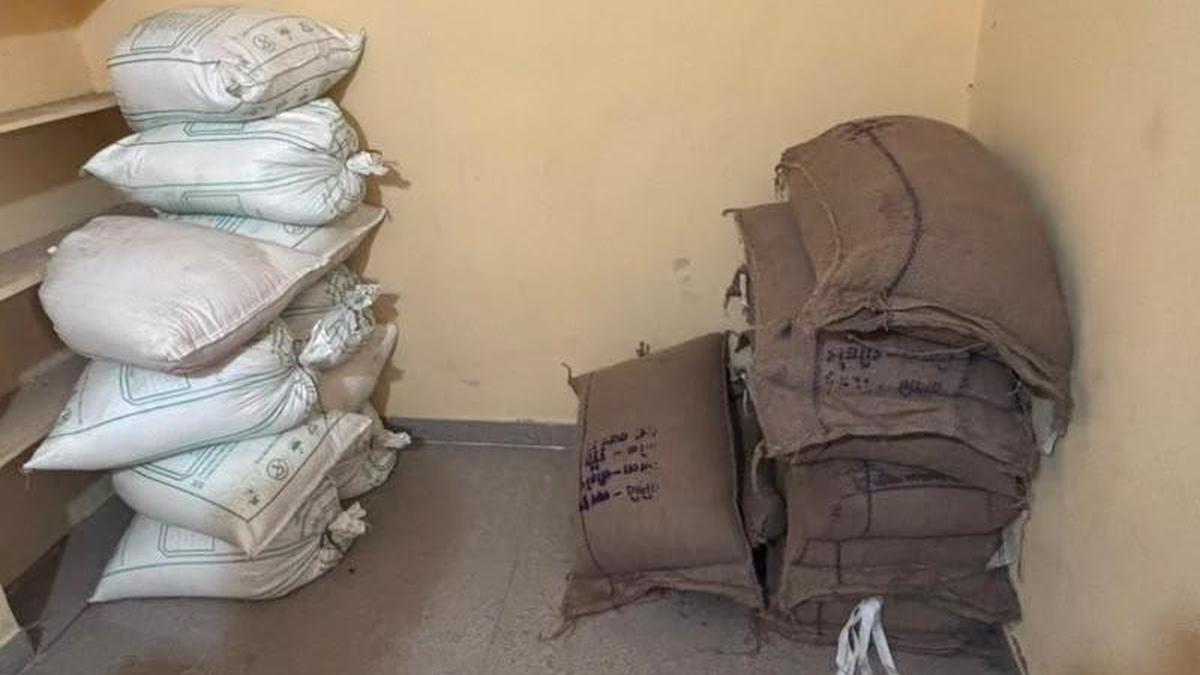
Data compiled by the Civil Supplies Department indicates that as of October 16, government buffer godowns held an inventory of 9.64 lakh metric tonnes of rice. This baseline supply comprises 3.50 lakh metric tonnes earmarked for central pool quotas and associated welfare schemes, alongside 6.14 lakh metric tonnes held under the direct custody of the state pool.
State authorities anticipate an additional inflow of 18.39 lakh metric tonnes through identified sources and pending Custom Milled Rice (CMR) consignments. When integrated with existing holdings, Telangana’s aggregate stockpile is projected to reach 28.03 lakh metric tonnes. This combined volume provides a guaranteed supply runway of 11.7 months, sustaining public distribution commitments through September 2027.
To guarantee that these strategic projections materialize on schedule, the Civil Supplies Department has been instructed to establish strict monitoring mechanisms over rice millers and delivery logistics. Ensuring timely receipt of milled grain is treated as a non-negotiable imperative to prevent supply bottlenecks during the looming deficit periods.
Broadening the Public Distribution Safety Net
Beyond securing basic grain volumes, the administration is preparing contingency measures to buffer households against surging open-market food inflation. Officials presented detailed expenditure models during the Secretariat review to evaluate the subsidized distribution of critical household staples through the existing fair price network.
The basket of commodities under consideration encompasses wheat flour, red gram, palm oil, refined sugar, tamarind, and chilli powder. Departmental officers have been tasked with determining exact per-capita allocation quotas, mapping procurement logistics, and calculating the net financial commitments necessary before the proposal is submitted for formal cabinet approval. By establishing multi-commodity buffers, the state seeks to establish a comprehensive defence against escalating environmental and market turbulence.
TL;DR
- Telangana plans a 14-month foodgrain buffer to protect 3.42 crore citizens.
- Stockpiles stand at 9.64 lakh metric tonnes, targeting 28.03 lakh metric tonnes.
- Drought conditions have officially impacted 315 out of 621 mandals.
- Projected reserves will cover welfare and PDS distribution through September 2027.
- The state is evaluating subsidized distribution of wheat flour, oil, and pulses.