Regulatory Action on Popular Spice Brands
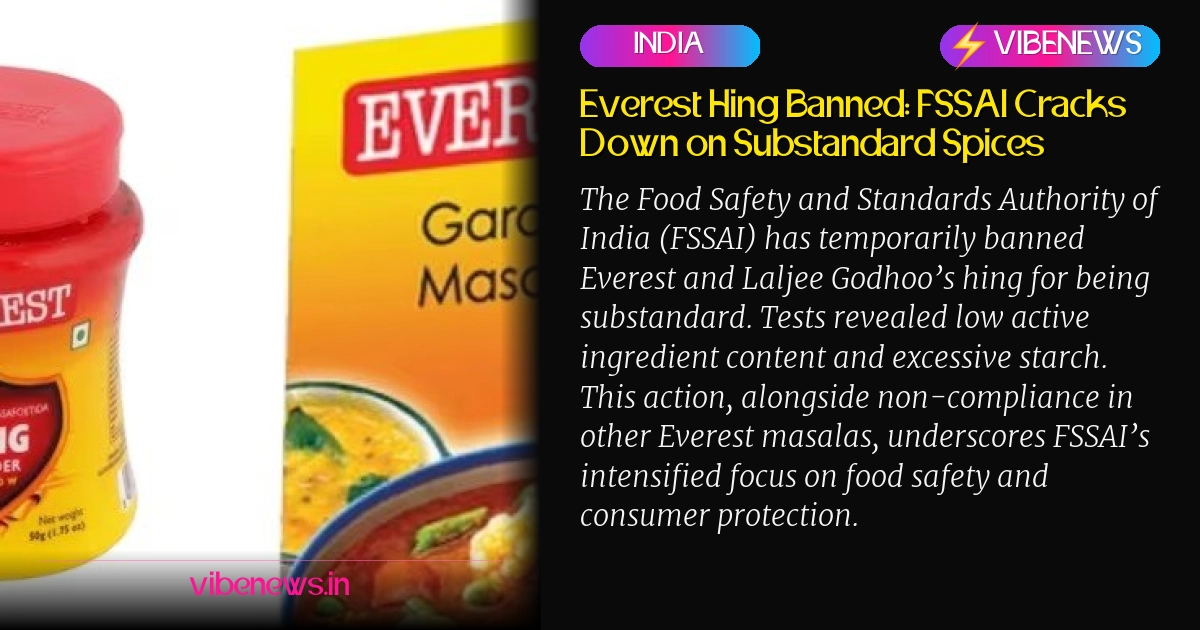
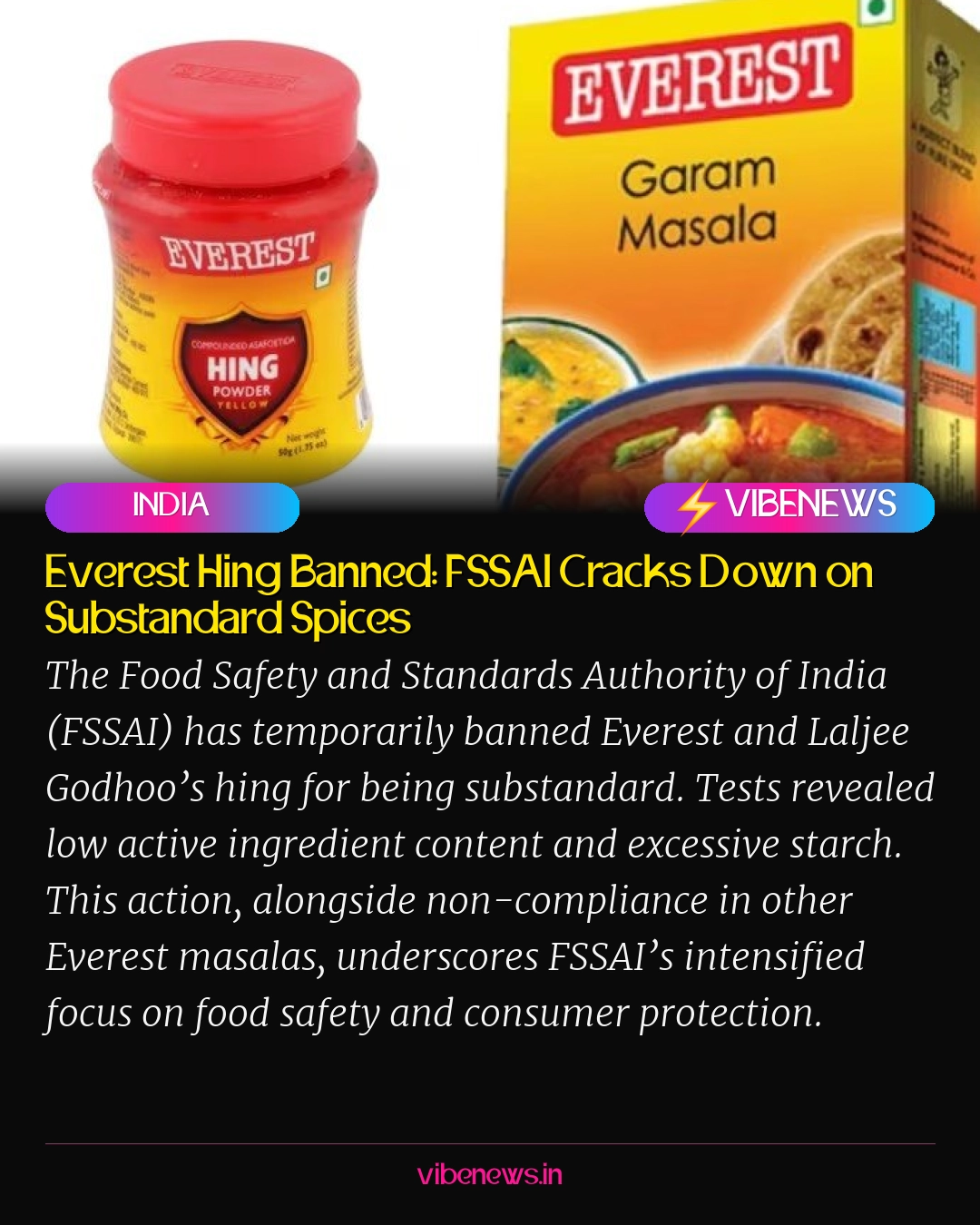
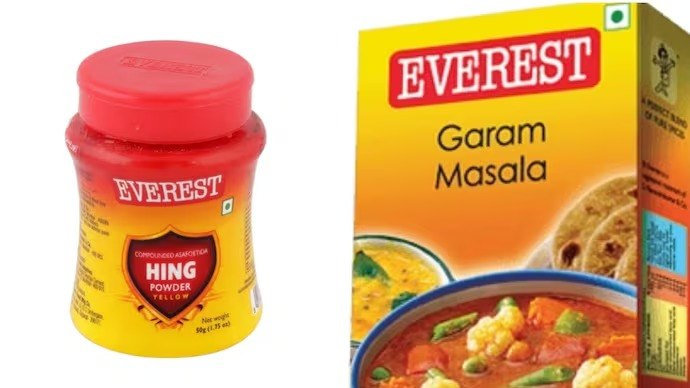
The Food Safety and Standards Authority of India (FSSAI) has taken decisive action against two prominent spice manufacturers, Everest Food Products and Laljee Godhoo, by temporarily banning the sale of their hing (asafoetida) products. This regulatory move follows extensive laboratory tests that conclusively determined the products to be substandard and non-compliant with established food safety norms.
Both companies have received directives to provide comprehensive explanations for these violations. They are also required to submit detailed action plans outlining how they intend to achieve full compliance with the prescribed standards. Furthermore, FSSAI has advised a voluntary recall of all substandard products currently circulating in the market, with the ban remaining in effect until compliance is fully demonstrated.
Unpacking the Quality Violations
The FSSAI’s investigation, initiated after a consumer complaint, involved collecting samples from manufacturing units in Mumbai and Everest’s facility in Umbergaon, Gujarat. The core issue identified in compounded hing, a blended powder mixed with edible starches or flour for daily use, was a significantly lower-than-mandated alcohol-soluble extract content.
Existing regulations stipulate that compounded hing must contain at least 5 per cent alcohol-soluble extract. However, tests revealed that the samples from Everest and Laljee Godhoo contained only 0 to 3 per cent. This stark discrepancy indicates that manufacturers were using 30 to 40 per cent less raw hing than required, compromising the product’s quality and authenticity.
Beyond compounded hing, six varieties of raw hing collected from the Laljee Godhoo unit were also found to be in violation. These samples contained between 15 and 32 per cent starch, dramatically exceeding the permitted maximum of 1 per cent. Such high levels of starch suggest adulteration, diluting the purity and efficacy of the raw ingredient.
While the hing products faced an outright ban, FSSAI also detected non-compliance in three other Everest products: egg curry masala, chicken masala, and garam masala. Although these specific products have not been banned, the findings underscore a broader concern regarding quality control across the company’s product range.
FSSAI’s Broader Vigilance
This crackdown on substandard spices is not an isolated incident but rather indicative of FSSAI’s intensified commitment to safeguarding public health and ensuring food integrity. The authority’s proactive surveillance, triggered by a consumer complaint, highlights the critical role of public feedback in identifying and addressing food safety concerns.
The FSSAI operates under a mandate to regulate and monitor the manufacturing, processing, distribution, sale, and import of food to ensure safe and wholesome food for human consumption. Its actions are crucial in maintaining consumer trust in packaged food products, a sector that forms a significant part of the Indian economy and daily life.
In a related development, FSSAI recently informed the Supreme Court about its proposal to introduce a bright red, hexagonal warning label on the front of packaged foods containing excessive levels of sugar, salt, or saturated fat. This proposal emerged days after a Supreme Court bench, led by Justice JB Pardiwala, reprimanded FSSAI and the government for delays in implementing such front-of-pack warning labels.
The proposed labeling changes have ignited a broader debate concerning the responsibility of food companies to transparently disclose the health risks associated with their products. Clearer labels are designed to empower consumers, enabling them to identify products with high levels of potentially harmful ingredients and make more informed dietary choices.
The Path to Enhanced Consumer Trust
The temporary ban on hing and the identification of non-compliant masalas send a strong message to the entire food industry about the imperative of adhering to quality standards. For consumers, these actions reinforce the FSSAI’s role as a vigilant guardian, working to protect them from adulterated or substandard products.
The directive for a voluntary recall of substandard products is a critical step in mitigating potential harm and restoring consumer confidence. It places the onus on manufacturers to not only rectify their processes but also to actively remove problematic items from circulation, demonstrating accountability.
The spice industry in India is vast and diverse, with numerous players ranging from large corporations to small-scale producers. Maintaining consistent quality across this spectrum is a significant challenge, but FSSAI’s recent actions signal a zero-tolerance approach to violations that compromise public health and consumer trust.
Editorial Context: A New Era for Food Safety
The FSSAI’s recent actions, from banning substandard hing to proposing stringent front-of-pack warning labels, mark a significant shift towards a more robust and proactive food safety regime in India. These developments are not merely isolated regulatory interventions but rather indicators of a broader strategic intent to elevate food quality standards and enhance consumer protection across the nation.
In the long term, such stringent enforcement will compel manufacturers to invest more heavily in quality control, supply chain transparency, and adherence to prescribed formulations. This could lead to a more reliable and trustworthy food market, where consumers can make purchasing decisions with greater confidence, knowing that regulatory bodies are actively monitoring product integrity.
The emphasis on clear labeling, alongside the crackdown on adulteration, signifies a holistic approach to public health. It empowers consumers with information while simultaneously holding producers accountable. This dual strategy is crucial for fostering a culture of food safety that benefits both individual well-being and the reputation of India’s vast food industry on a global stage.
TL;DR
- FSSAI temporarily banned Everest Food Products and Laljee Godhoo’s hing due to substandard quality.
- Laboratory tests found compounded hing had 0-3% alcohol-soluble extract, far below the 5% minimum.
- Raw hing from Laljee Godhoo contained 15-32% starch, significantly exceeding the 1% permitted maximum.
- Everest’s egg curry, chicken, and garam masalas were also found non-compliant, though not banned.
- Companies are directed to explain violations, submit action plans, and voluntarily recall substandard products.
- This action aligns with FSSAI’s broader push for food safety, including a proposed front-of-pack warning label for high sugar, salt, or fat products.