India Dismisses US Sanctions Call Against RSS
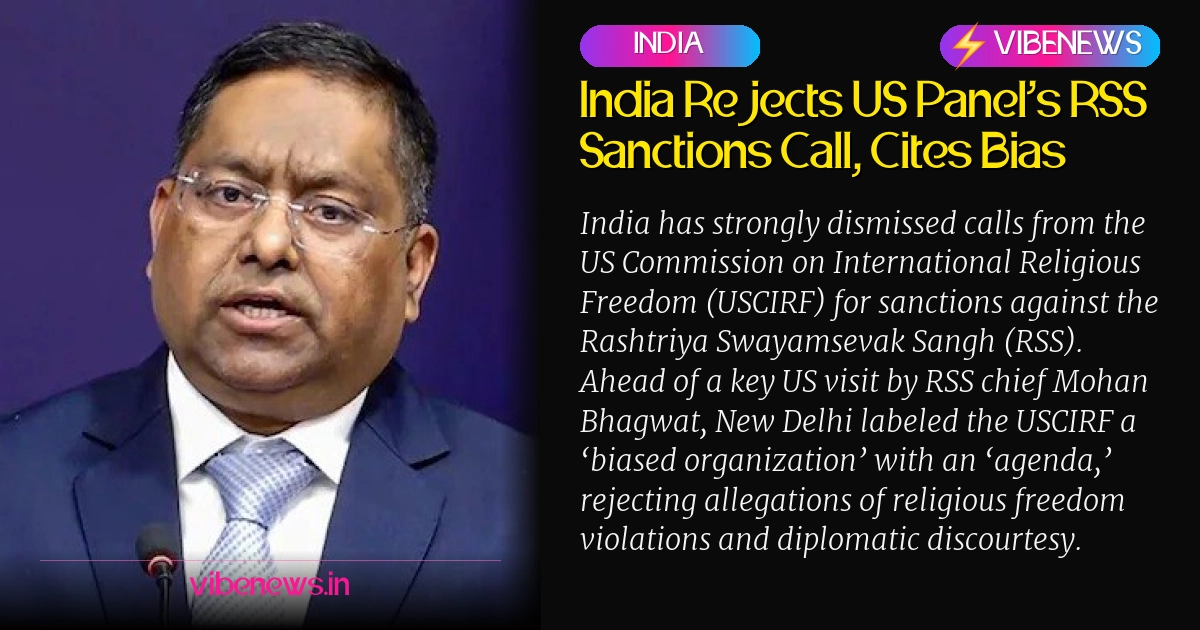
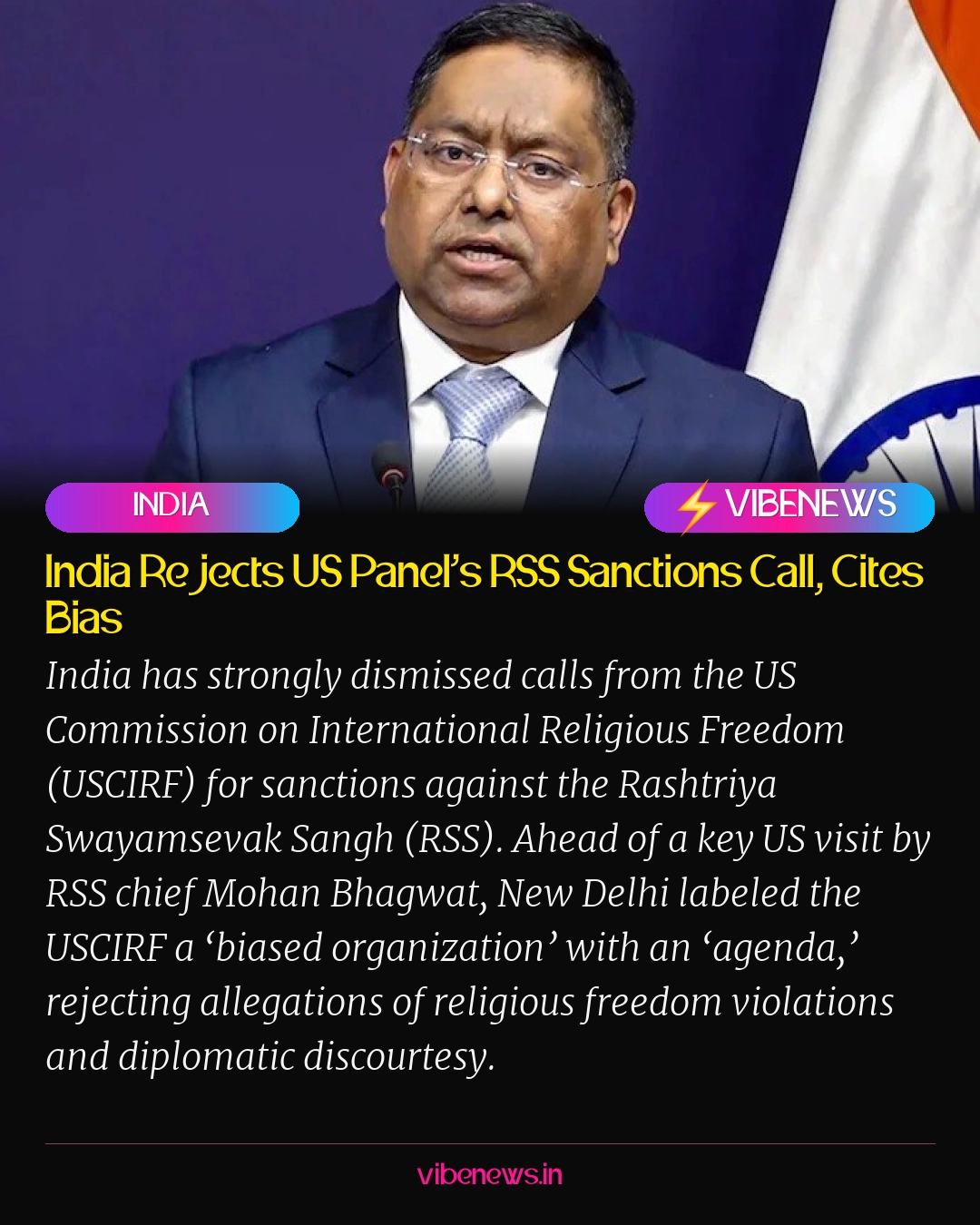
India has firmly rejected recent remarks by senior officials of the US Commission on International Religious Freedom (USCIRF) advocating for sanctions against the Rashtriya Swayamsevak Sangh (RSS). The Ministry of External Affairs (MEA) also pushed back against suggestions that Washington should withhold diplomatic courtesies from RSS leaders, a stance articulated just weeks before a potential high-profile visit by RSS chief Mohan Bhagwat to the United States.
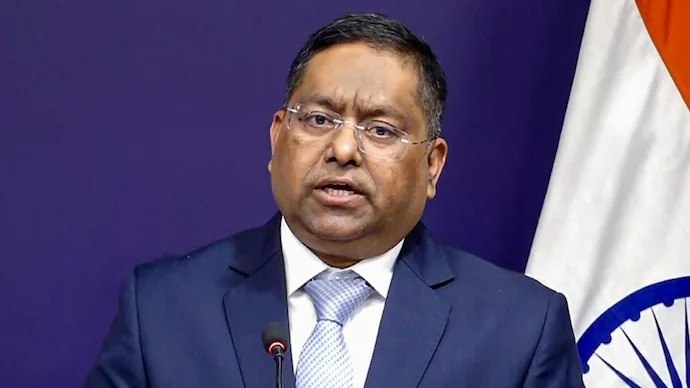
MEA spokesperson Randhir Jaiswal characterized the USCIRF as a prejudiced entity, asserting that its comments regarding India were both disparaging and inflammatory. He emphasized that the organization operates with its own agenda and lacks credibility, advising against engaging with such bodies.
The US Commission’s Stance
The USCIRF’s recent statements, posted on its official X account, intensified its long-standing criticism of India’s religious freedom record. Commissioner Gene Mills explicitly called for the US Government to refrain from extending high-level meetings or diplomatic courtesies to RSS leaders, including those holding positions within the Indian government.
Mills further urged the US to consider imposing targeted sanctions on RSS members found responsible for violations of Freedom of Religious Belief (FoRB). This recommendation aligns with the commission’s broader advocacy for punitive measures against entities it deems responsible for religious freedom abuses.
USCIRF Chair Asif Mahmood echoed these concerns, describing the RSS as a vast umbrella organization. He alleged that various sub-groups affiliated with the RSS have been implicated in attacks against religious minorities across India, contributing to an environment of intolerance.
A History of Criticism
These latest remarks follow the USCIRF’s annual report released in March, which extensively criticized India over alleged religious freedom violations. In that report, the commission recommended targeted sanctions against specific individuals and entities, including the RSS and India’s external intelligence agency, the Research and Analysis Wing (RAW).
The USCIRF also reiterated its recommendation for the US State Department to designate India as a ‘Country of Particular Concern’ (CPC). This designation, under the International Religious Freedom Act (IRFA), is reserved for nations engaging in or tolerating systematic, ongoing, and egregious violations of religious freedom.
Understanding the Rashtriya Swayamsevak Sangh
The Rashtriya Swayamsevak Sangh, founded in 1925, is a Hindu nationalist volunteer organization that serves as the ideological parent of India’s ruling Bharatiya Janata Party (BJP). With millions of members and a vast network of affiliated organizations, the RSS plays a significant role in shaping India’s socio-political landscape, advocating for its vision of a Hindu nation (Hindutva).
Its influence extends across various sectors, including education, labor, and tribal welfare, through its numerous offshoots. The organization emphasizes cultural nationalism, discipline, and self-reliance, often drawing both fervent support and sharp criticism for its stance on religious minorities and its historical trajectory.
India’s Consistent Position on External Scrutiny
India has consistently maintained that religious freedom is robustly protected under its constitution and that its internal affairs should not be subject to external interference. New Delhi views reports and recommendations from bodies like the USCIRF as biased, ill-informed, and often driven by specific agendas rather than an objective assessment of facts on the ground.
The government frequently highlights India’s pluralistic society and democratic framework as evidence of its commitment to protecting all faiths. This diplomatic pushback underscores India’s firm stance against what it perceives as unwarranted international scrutiny of its domestic policies and societal dynamics.
The Diplomatic Implications of a High-Profile Visit
The timing of the USCIRF’s renewed calls for sanctions is particularly noteworthy given the anticipated visit of RSS chief Mohan Bhagwat to the United States. Such a visit would represent a significant moment for the RSS, signaling its growing international outreach and its efforts to engage with the Indian diaspora and American policymakers.
While the US government has not officially commented on the USCIRF’s recommendations or Bhagwat’s potential visit, the commission’s statements could complicate diplomatic optics. India’s swift and strong rejection aims to preempt any potential diplomatic snubs or challenges to the legitimacy of its leaders on foreign soil.
Editorial Context
This diplomatic spat between India and the USCIRF is more than a routine exchange; it reflects a deeper, ongoing tension in the broader India-US relationship concerning human rights and religious freedom. While strategic and economic ties between the two democracies have strengthened considerably, issues of internal governance and societal pluralism remain points of friction, particularly for certain US governmental and non-governmental bodies.
The persistent calls for sanctions and the ‘Country of Particular Concern’ designation, even if not adopted by the US State Department, contribute to a narrative that can impact India’s global image and its standing in international forums. For India, defending its sovereignty and rejecting what it perceives as biased assessments is crucial for its diplomatic posture. For the RSS, navigating this international scrutiny while expanding its global footprint presents a complex challenge, highlighting the intricate interplay between domestic ideology and international diplomacy.
TL;DR
- India has unequivocally rejected the US Commission on International Religious Freedom’s (USCIRF) call for sanctions against the Rashtriya Swayamsevak Sangh (RSS).
- New Delhi labeled the USCIRF as a ‘biased organization’ with its own agenda, lacking credibility.
- USCIRF officials recommended sanctions on RSS members and urged the US government to withhold diplomatic courtesies from its leaders.
- The commission also reiterated its recommendation to designate India as a ‘Country of Particular Concern’ (CPC) due to alleged religious freedom violations.
- The controversy emerges ahead of a potential high-profile visit by RSS chief Mohan Bhagwat to the United States.
- USCIRF Chair Asif Mahmood alleged that RSS sub-groups have carried out attacks on religious minorities in India.