The Growth Debate Intensifies
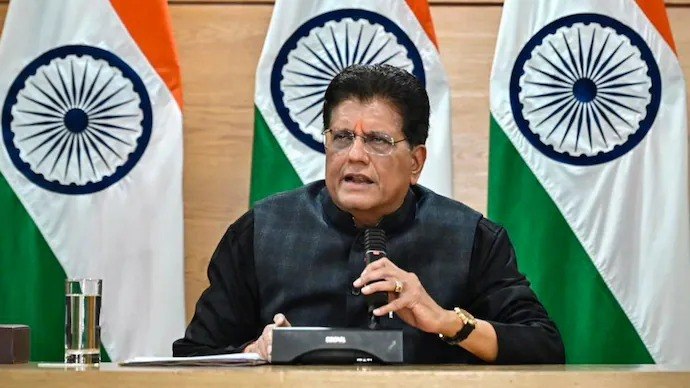
Union Minister Piyush Goyal recently launched a sharp critique against economists and critics questioning India’s latest Gross Domestic Product (GDP) figures. He asserted that the country’s robust 7.8% real economic growth in the first quarter of fiscal 2026-27 is a testament to the hard work of 140 crore Indians, and cannot be dismissed by comparing disparate data series.
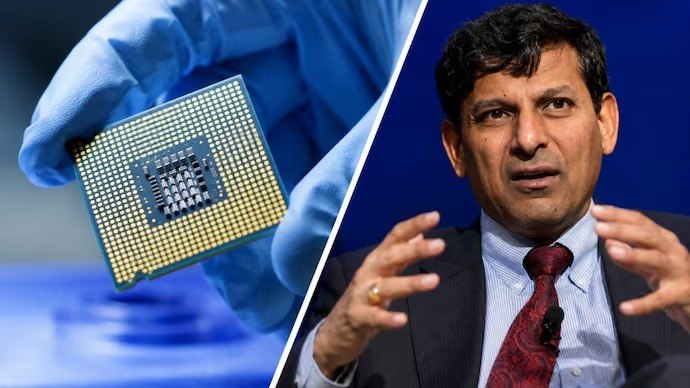
Goyal’s remarks came amidst a contentious public debate. Critics, including former finance secretary Subhash Chandra Garg and economist Raghuram Rajan, have raised concerns about the methodology behind the numbers. While not naming them directly, Goyal accused a few individuals of being "jobless economists" who appear on television channels to harm the country’s economic narrative.
The minister emphasized that the government does not fabricate economic data. He urged the public not to be swayed by what he termed a negative narrative. Goyal also targeted opposition leaders, alleging they sought to portray India as a "dead economy," a notion he confidently predicted would fail.
Understanding the Methodological Shift
At the heart of the controversy is the government’s transition to a new 2022-23 base-year GDP series, introduced in February 2026. Critics, notably Subhash Chandra Garg, argued that if the previous year’s GDP had not been revised downwards, the first-quarter growth would appear closer to 2.6%.
Saurabh Garg, Secretary in the Ministry of Statistics and Programme Implementation (MoSPI), firmly rejected this comparison. He labeled it an "apples and oranges" exercise, explaining that critics were comparing figures from different GDP series and using current-price estimates instead of the constant-price measures essential for calculating real growth.
MoSPI clarified that the Rs 86.05 lakh crore Q1 FY2025-26 figure cited by critics belonged to the old 2011-12 base-year series. Under the new 2022-23 series, the corresponding Q1 FY2025-26 current-price GDP was initially estimated at Rs 80.32 lakh crore, subsequently revised to Rs 80.44 lakh crore, and then to Rs 80 lakh crore after incorporating updated data like the new Index of Industrial Production (IIP) and Producer Price Index (PPI).
These revisions, MoSPI stated, are part of the normal GDP revision cycle. They reflect the incorporation of additional information, updated data sources, and methodological changes, not an attempt to artificially inflate the latest growth rate.
Sectoral Nuances and Deflators
The ministry also addressed specific technical questions, such as a negative implicit Gross Value Added (GVA) deflator for manufacturing. MoSPI explained that manufacturing GVA is calculated using a double-deflation method, where output and intermediate consumption are separately adjusted for price changes.
When input prices rise faster than output prices, nominal GVA can grow more slowly than real GVA, leading to a negative implicit deflator. This can occur even when both output and input prices are increasing, as seen in sectors like textiles, basic metals, and rubber and plastic products during periods of energy and raw-material price shocks.
Furthermore, MoSPI clarified why the GDP deflator, which was around 2.5%, does not always align with consumer or wholesale inflation. The GDP deflator captures price effects across the entire economy, including investment, government spending, exports, and services, using over 300 individual price deflators. This broader scope differs significantly from the Consumer Price Index (CPI) or Wholesale Price Index (WPI), which track specific baskets of goods and services.
The ministry also explained the sharp divergence between nominal and real growth in mining and quarrying. While real GVA contracted 2.4% in Q1 FY27 due to weak industrial production, producer prices for mining rose sharply, particularly for crude petroleum and natural gas. This led to a substantial 22.3% nominal growth despite the real contraction.
Addressing Statistical Discrepancies
MoSPI also cautioned against interpreting statistical discrepancies between GDP estimates derived from production and expenditure approaches as proof of over or understatement. These discrepancies are balancing items that reflect differences between the two approaches and can change as more comprehensive data becomes available.
The ministry noted that such discrepancies typically become very small or zero in final current-price estimates, citing previous fiscal years as examples. This suggests that initial discrepancies are a normal part of the estimation process, which refines over time.
Editorial Context
The ongoing debate surrounding India’s GDP growth figures and the government’s defense highlights several critical long-term implications. Firstly, it underscores the importance of public trust in official economic data, especially as India positions itself as a major global economic power. Transparency and clear communication regarding methodological changes are paramount to maintaining this trust, both domestically and internationally.
Secondly, the transition to a new base year and updated methodologies, while standard practice globally, inevitably invites scrutiny. This period of adjustment requires robust explanations from statistical bodies to ensure that the public and analysts fully understand the basis of the new figures. The detailed clarifications from MoSPI are crucial in demystifying complex economic calculations.
Finally, the political dimension of this debate, with ministers accusing critics of undermining national achievements, reflects the high stakes involved in economic performance. Sustained high growth is vital for job creation, poverty reduction, and infrastructure development. How these debates are managed will influence policy discourse and investor confidence, shaping India’s economic trajectory for years to come.
TL;DR
- Union Minister Piyush Goyal defended India’s 7.8% Q1 FY27 GDP growth, criticizing economists who questioned the figures.
- The Ministry of Statistics and Programme Implementation (MoSPI) clarified that claims of 2.6% growth were based on comparing different GDP series and price measures.
- India transitioned to a new 2022-23 base-year GDP series in February 2026, incorporating updated data and methodologies.
- MoSPI explained technical aspects like double deflation in manufacturing and the GDP deflator’s divergence from CPI/WPI.
- The government asserts the 7.8% growth reflects genuine economic activity and is not an artificial inflation of numbers.
- Statistical discrepancies between production and expenditure approaches are normal and tend to resolve in final estimates.