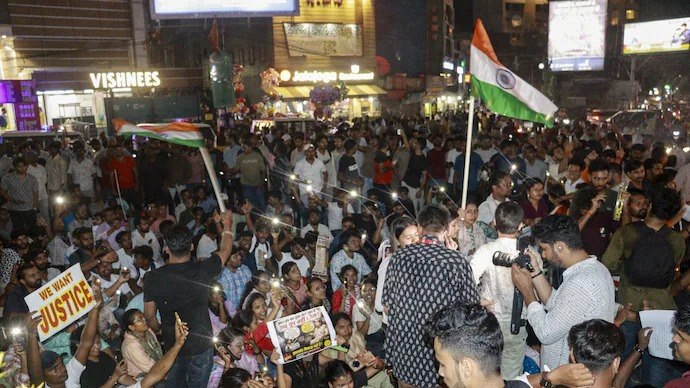
The Jharkhand government has announced the cancellation of the Jharkhand Staff Selection Commission Combined Graduate Level (JSSC-CGL) examination, a move that comes after weeks of sustained student protests across the state. Chief Minister Hemant Soren confirmed that all recruitment processes conducted by the Lucknow-based management agency TSR Data Processing Private Limited (TDPL) since 2014 would be subject to a comprehensive investigation by the Crime Investigation Department (CID).
This significant decision also entails the nullification of all results previously published by TDPL, signaling a major overhaul in the state’s public recruitment system. The announcement was met with widespread jubilation among protesting students, who had been agitating at Ranchi’s Jaipal Singh Munda Ground and other locations, demanding accountability and transparency.
Addressing Systemic Irregularities
Chief Minister Soren emphasized the government’s commitment to addressing the deep-seated concerns raised by the protesters. He acknowledged that previous discussions between the government and student representatives had remained inconclusive, underscoring the gravity of the situation. The decision to cancel the JSSC-CGL exam and initiate a CID probe into a decade’s worth of examinations reflects a recognition of systemic failures within the recruitment framework.
Soren revealed that preliminary investigations by the CID and Special Investigation Team (SIT) had already brought to light several incriminating facts. He noted that individuals recruited through the JSSC were being apprehended in connection with alleged fraud and examination rigging, indicating a widespread network of corruption. The Chief Minister reiterated that the government had already enacted a law against paper leaks, demonstrating a proactive stance towards safeguarding student interests and ensuring fair competition.
The Genesis of the Agitation
The student protest, which eventually swelled into a major statewide agitation, commenced on July 25. Initially, a small group of students gathered at Ranchi’s Vapu Batika Ground to voice grievances over alleged irregularities and paper leak allegations in both the Jharkhand Public Service Commission (JPSC) and JSSC-CGL examinations. These initial concerns quickly resonated with a larger student body, frustrated by repeated instances of compromised recruitment processes.
As the movement gained momentum, prominent figures emerged, including Devendra Nath Mahato, leader of the Jharkhand Loktantrik Krantikari Morcha (JKLM), who embarked on an indefinite hunger strike. His resolve inspired several other students to join the hunger strike, intensifying pressure on the state government. The students’ primary demands centered on the cancellation of the JSSC-CGL examination and a thorough investigation, preferably by the Central Bureau of Investigation (CBI), into the alleged malpractices.
Escalation and Resolution
The deadlock between the government and protesting students persisted through multiple rounds of talks. On August 10, the situation escalated dramatically when students marched towards the state Assembly, only to be met with lathi charges and water cannons by law enforcement. These confrontational tactics further fueled public sympathy for the students’ cause and highlighted the urgency of a resolution.
Following Chief Minister Soren’s announcement, scenes of euphoria erupted at the protest sites. Students celebrated with slogans, tears of joy, and firecrackers, marking a hard-won victory. Devendra Nath Mahato, upon hearing the news, expressed profound gratitude to the people of Jharkhand and ended his hunger strike in the presence of cabinet ministers Dipika Pandey Singh and Irfan Ansari, who visited the protest ground. Mahato lauded the government’s decision to take student concerns seriously and pursue those involved in corruption, including the masterminds behind the rigging gangs.
The student leader also called for robust legislative measures to prevent future instances of cheating and fraud, urging the government to guarantee the integrity of the examination system. Noted education reformist Sonam Wangchuk, who had previously supported Mahato during his hunger strike, extended his congratulations via video call, acknowledging the dedication and hard work of the students.
The Path to Reform and Trust
The cancellation of the JSSC-CGL exam and the subsequent CID probe represent more than just a response to student demands; they signify a critical juncture for governance in Jharkhand. The Chief Minister acknowledged that while a Standard Operating Procedure (SOP) for conducting examinations existed, it was not properly adhered to, leading to the irregularities observed. The government has pledged to work towards ensuring a transparent and reformed examination system, including the creation of a portal for student grievances, which will feed into an expert team examining the issue, headed by Amitabh Kaushal.
This comprehensive approach, spanning investigations, cancellations, and future reforms, aims to rebuild trust among the state’s youth, who often view public sector jobs as a crucial pathway to economic stability. The long-term implications of such widespread irregularities, stretching back a decade, are profound, impacting thousands of aspirants who invested years in preparation, only to face compromised opportunities.
Editorial Context
The Jharkhand government’s decisive action to cancel the JSSC-CGL examination and launch a CID probe into all recruitment processes since 2014 holds significant long-term implications for the state and potentially for India’s broader public sector recruitment landscape. This development is not merely a localized response to student unrest; it underscores a pervasive national challenge concerning the integrity of competitive examinations, which are vital for social mobility and equitable opportunity.
For Jharkhand, this move is a critical step towards restoring public faith in its institutions. A decade-long investigation suggests a deeply entrenched system of corruption, which, if left unaddressed, could severely erode the aspirations of its youth and foster widespread cynicism towards governance. The government’s willingness to acknowledge past failures and commit to a thorough investigation, despite the political risks, sets a precedent for accountability.
Furthermore, the incident highlights the urgent need for robust, technology-driven reforms in examination conduct, from paper setting and distribution to evaluation and result declaration. The demand for a CBI probe, though not fully met, reflects a desire for independent, high-level scrutiny that transcends state-level political influences. The outcome of the CID investigation and the subsequent reforms will be closely watched, not only by job aspirants in Jharkhand but also by other states grappling with similar issues of paper leaks and recruitment scams. This moment could define the future of fair employment practices in the state, shaping the trust between its government and its most valuable asset: its young, educated populace.
TL;DR
- The Jharkhand government has cancelled the Jharkhand Staff Selection Commission Combined Graduate Level (JSSC-CGL) examination.
- Chief Minister Hemant Soren ordered a Crime Investigation Department (CID) probe into all recruitment processes conducted by TSR Data Processing Private Limited (TDPL) since 2014.
- All results previously published by TDPL have been nullified as part of the government’s decision.
- The cancellation and probe follow weeks of intense student protests over alleged paper leaks and irregularities in state examinations.
- Student leader Devendra Nath Mahato ended his indefinite hunger strike after the government’s announcement, expressing gratitude for the action taken.
- The government plans to implement reforms, including a new portal for student grievances and an expert team led by Amitabh Kaushal, to ensure transparency in future examinations.